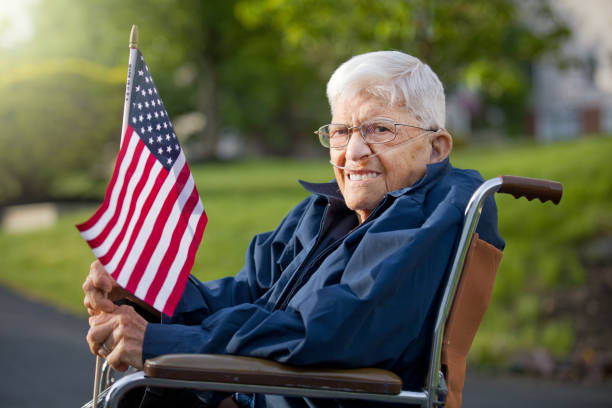
When the uniform was folded and placed carefully into storage, the quiet that followed felt heavier than any pack he had ever carried.
For more than three decades, Daniel’s life began before sunrise. He rarely missed a formation. Whether under scorching desert heat or in bitter mountain cold, he stood where he was assigned, did what was asked, and carried responsibilities that extended far beyond himself. On his shoulders rested not only equipment and training—but loyalty, discipline, and a deep belief that his service mattered.
He joined the United States Army at nineteen. At that age, many young adults are still searching for direction. Daniel believed he had found his. Service meant structure. Duty meant identity. Sacrifice meant something solid and lasting.
Over the years, he deployed overseas during the height of the Iraq War. His letters home were carefully written. He spoke about sunsets over endless sand, about stars that seemed brighter than anywhere else in the world. He described friendships and teamwork. He did not describe the tension of long nights, the uncertainty of unfamiliar roads, or the emotional toll of constant vigilance. Some experiences are difficult to put into words. Others are simply easier left unwritten.
When he eventually returned home, there were handshakes and warm greetings. Flags waved. Gratitude was expressed. But public celebration is brief by nature. People return to their routines. News cycles move forward. Life resumes its normal pace.
For Daniel, however, the internal transition was not so simple.
The Day After the Ceremony
Retirement arrived with a formal gathering, respectful applause, and a folded flag placed carefully in his hands. After decades defined by rank, responsibility, and clear objectives, he woke up the next morning without a schedule dictated by orders.
No boots placed neatly by the bed.
No uniform waiting on a hanger.
No team counting on his leadership.
Just a quiet house.
He had worked toward this moment for years. Financial stability. Predictability. Rest. Yet rest can feel unfamiliar to someone conditioned for constant readiness. Peace, when it finally arrives, does not always feel comfortable.
The first weeks passed slowly. He tried to establish routines—morning walks, home projects, catching up on reading. But the rhythm felt different. In uniform, each day carried urgency. Outside of it, time seemed unstructured, almost shapeless.
Daniel’s pension covered essential expenses, but physical strain from years of service began to surface more clearly. Chronic back pain from carrying heavy equipment. Knee issues from long patrols and training exercises. Regular medical appointments became part of the new routine.
Some injuries were visible and measurable. Others were more difficult to explain.
Unexpected loud noises made him tense. Large crowds felt overwhelming. Sleep sometimes came in short intervals rather than deep rest.
Seeking support, Daniel visited the U.S. Department of Veterans Affairs. The waiting rooms were often full. Veterans from different eras sat quietly beside one another. Each carried a story shaped by service.
The process required patience.
Forms.
Evaluations.
Follow-ups scheduled months ahead.
Daniel had once coordinated complex operations in high-pressure environments. Yet navigating administrative systems in civilian life felt unexpectedly challenging. The skills that had made him effective in uniform did not always translate smoothly into paperwork and automated phone systems.
Changes at Home
Maria, his wife, noticed subtle shifts before he acknowledged them himself.
The laughter that once filled their kitchen grew less frequent. He spent long stretches sitting on the porch, watching the street without really seeing it. Occasionally, she found him gripping the arms of his chair, shoulders tight, as if bracing for something.
“Are you alright?” she would ask gently.
“I’m fine,” he would respond automatically. For years, strength meant endurance. It meant handling pressure quietly.
But adjusting to civilian life is not simply a matter of willpower.
The most difficult part was not physical discomfort. It was not the administrative delays. It was the quiet sense of displacement.
In uniform, Daniel had purpose woven into every hour. Outside of it, he sometimes felt invisible.
Potential employers thanked him for his years of service but often selected applicants with recent civilian experience. Community members expressed appreciation during holidays, yet everyday interactions rarely reflected an understanding of what long-term service can mean to someone’s identity.
On national celebrations, fireworks—symbols of joy for many—sent him indoors. The sharp sounds triggered tension rather than excitement. Neighbors did not always understand.
Gradually, questions began forming in his mind:
Who am I now?
What defines me without a rank?
Does service end when active duty does?
Memory and Meaning
One afternoon, while organizing old belongings, Daniel opened a footlocker he had not touched in years. Inside were photographs from deployments. Faces smiling despite challenging environments. Friends who had shared meals, long conversations, and difficult missions.
Some of those friends had moved on to new chapters of life. Others had not returned home.
He studied the images carefully, remembering inside jokes and conversations about future plans. In that quiet moment, emotion surfaced—grief, pride, nostalgia, gratitude. It was not regret. It was recognition of a life chapter that had shaped him profoundly.
Service had not simply been a career. It had been a community.
The transition from military structure to civilian flexibility is often described as an “adjustment.” Yet for many veterans, it represents a full redefinition of identity. Structure becomes optional. Camaraderie becomes less constant. Clear missions are replaced with open-ended possibilities.
That open space can feel liberating—or overwhelming.
A Broader Reality
Across the country, thousands of service members transition out of active duty each year. Some adapt quickly, leveraging leadership skills and discipline into new careers. Others encounter obstacles—health concerns, employment challenges, or feelings of isolation.
Research has shown that veterans can face elevated risks of depression and other mental health challenges compared to the general population. Behind statistics are individuals—people who once operated in high-stakes environments and later returned to everyday neighborhoods.
The public often sees service through ceremonial moments: parades, patriotic songs, commemorative speeches. What is less visible is the daily work of reintegration.
Navigating health systems.
Translating military experience into civilian resumes.
Rebuilding social networks.
Learning to slow down after years of urgency.
These experiences are rarely dramatic. They unfold quietly—in living rooms, at kitchen tables, in waiting areas.
A Turning Point
Several months after retirement, Daniel received an invitation from a local veterans’ support group. They met weekly at a community center for coffee and conversation.
At first, he hesitated. He did not want to dwell on the past. He did not want to appear as though he was struggling.
Maria encouraged him gently. “Just try once,” she said.
The first meeting was modest: folding chairs, simple refreshments, introductions that felt slightly awkward. But as the conversation progressed, stories began to emerge.
One man described difficulty sleeping through the night. Another spoke about feeling out of place in busy shopping centers. A third explained how hard it had been to translate military accomplishments into civilian job interviews.
There was no judgment. No exaggeration. Just shared understanding.
For the first time since leaving active duty, Daniel felt recognized without having to explain every detail.
That weekly gathering became a steady anchor.
They did not solve every problem. Medical appointments still required patience. Physical discomfort did not disappear. But the emotional weight was no longer carried alone.
Redefining Service
Over time, Daniel began contributing more actively. He offered to help new retirees navigate benefits applications at the U.S. Department of Veterans Affairs. Having once struggled with confusing processes, he wanted to simplify the experience for others.
He also volunteered at a local high school, speaking to students about leadership, discipline, and resilience. He did not romanticize conflict. Instead, he emphasized preparation, teamwork, and the importance of mental health awareness.
After one presentation, a student approached him quietly.
“My parent served,” the student said. “They don’t talk about it much. But I think they feel some of what you described.”
That moment shifted something inside Daniel.
Perhaps his mission had not ended. It had simply evolved.
Service, he realized, is not confined to a uniform. It can take the form of mentorship, advocacy, and honest conversation.
Living With the Past, Building the Future
Years later, Daniel still has challenging nights. His knees ache when the weather changes. Fireworks remain uncomfortable. But he no longer feels invisible.
He understands that strength includes asking for help. He understands that identity can expand rather than disappear.
He mentors younger veterans preparing to transition from active duty. He advises them to begin planning early—professionally, financially, emotionally. He encourages them to build civilian networks before retirement rather than after.
He reminds them:
Purpose is not assigned by rank alone.
Community does not vanish when uniforms are stored.
Asking for support is not weakness.
The quiet battles—navigating change, adapting to new roles, managing health—often require as much courage as visible ones.
A Nation’s Responsibility
Public gratitude is meaningful. Ceremonies matter. Recognition is important. But lasting support extends beyond applause.
Communities can help by:
-
Supporting veteran-focused organizations.
-
Encouraging open conversations about mental health.
-
Recognizing transferable skills veterans bring to civilian workplaces.
-
Ensuring accessible healthcare systems remain well-resourced.
Transition is not a single event. It is a process.
When society invests in that process—through understanding, policy, and compassion—it strengthens not only veterans but communities as a whole.
The Ongoing Journey
Daniel’s story is fictional, yet it reflects experiences shared by many former service members. Each individual’s path is unique. Some transition smoothly into entrepreneurship, education, or public service. Others need time and structured support to redefine their roles.
They do not necessarily seek admiration.
They do not expect constant recognition.
They hope for opportunity.
For understanding.
For acknowledgment that service leaves lasting marks—both visible and invisible.
When you see a veteran standing quietly during the national anthem, hand over heart, eyes distant, remember: their memories are layered. Pride and sacrifice coexist. Achievement and loss can occupy the same space.
And sometimes, the bravest chapter begins after the uniform is removed.
Learning to build a new identity.
Learning to accept support.
Learning to rest without feeling unproductive.
Because courage is not limited to moments of conflict. It is also found in vulnerability, in adaptation, and in the decision to keep moving forward even when the path is unfamiliar.
A Different Kind of Strength
Daniel once believed his purpose was defined entirely by national defense. Today, he understands it more broadly.
He serves by listening to younger veterans.
He serves by speaking honestly about transition challenges.
He serves by showing students that leadership includes humility.
In many ways, his impact now reaches further than it did during active duty.
The battlefield shaped him.
But community sustains him.
And perhaps that is the enduring lesson:
When formal missions conclude, the human story continues. Support networks matter. Family matters. Community matters. Policies matter. Compassion matters.
Service members dedicate years to protecting others. Ensuring their well-being after active duty is not charity—it is collective responsibility.
Daniel no longer measures his worth by rank or title. He measures it by presence—by showing up for coffee meetings, by guiding someone through paperwork, by standing steady for a young person who needs reassurance.
The uniform may rest in storage.
But the values remain active.
And sometimes, the most meaningful victories are quiet ones—achieved not with headlines, but with steady steps toward healing, connection, and renewed purpose.
Because learning how to live fully after service may be one of the greatest acts of courage of all.