Introduction: Rediscovering a Once-Essential Household Tool
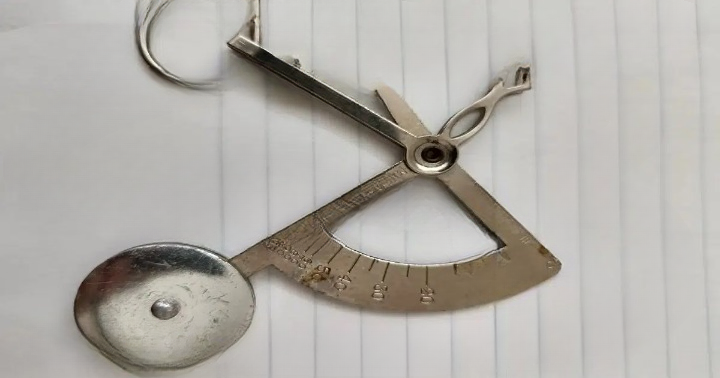
Every so often, an old household object resurfaces online and sparks a wave of curiosity. Someone shares a photo of a metal device with a small platform and a round dial, asking, “Does anyone know what this is?” Within minutes, guesses begin pouring in. Some people recognize it instantly. Others are baffled. A few are certain it belongs in a museum.
The object in question is often a postal scale—a device that once occupied desks, counters, and office tables across homes and businesses. While it may look unremarkable at first glance, this modest instrument played a vital role in everyday life for generations.
Today, with digital postage calculators and automated shipping kiosks, it’s easy to overlook how important such a tool once was. Yet for decades, the postal scale was indispensable. It helped families stay connected, allowed businesses to operate efficiently, and ensured that letters and parcels reached their destinations without costly delays.
This article takes a deep dive into the history, function, cultural significance, and modern relevance of the postal scale. Far from being just a forgotten gadget, it represents a fascinating chapter in the story of communication, commerce, and craftsmanship.
What Is a Postal Scale?
At its core, a postal scale is a weighing device specifically designed to measure the weight of letters, envelopes, and parcels before mailing. Its purpose was simple but essential: determine the correct postage required for an item based on its weight.
Before electronic systems and online shipping labels became commonplace, postage costs were determined strictly by weight (and sometimes distance). Even a small difference in ounces could change the price required to send a letter or package.
A postal scale allowed individuals and businesses to:
-
Weigh mail accurately
-
Calculate proper postage
-
Avoid underpayment or overpayment
-
Prevent delivery delays
Though simple in concept, the device played a crucial role in ensuring that communication and commerce flowed smoothly.
How Postal Scales Worked
Traditional postal scales relied on mechanical principles. Most models featured:
-
A flat platform or tray where mail was placed
-
A spring-based internal mechanism
-
A dial with clearly marked measurements (ounces, pounds, or grams)
-
A needle indicator that pointed to the weight
When an envelope or parcel was placed on the platform, the internal spring compressed according to the load. This movement caused the needle to rotate across the dial, displaying the weight.
The process required no electricity, batteries, or software updates—just basic mechanical engineering. It was reliable, straightforward, and durable.
Some models used balance-beam mechanisms, similar to laboratory scales, where weights were adjusted along a horizontal beam until equilibrium was reached. These designs were often used in commercial settings requiring higher precision.
The beauty of these devices lay in their clarity. There were no digital displays or complex interfaces. The user placed the item on the scale, observed the dial, and determined the appropriate postage.
Why Postal Scales Were Once Indispensable
To understand the importance of the postal scale, it helps to imagine a time before email, text messaging, and online billing.
For much of the 19th and 20th centuries, postal mail was the primary method of communication for:
-
Personal letters
-
Business correspondence
-
Invoices and payments
-
Contracts and legal documents
-
Catalog orders
-
Gift shipments
Families relied on mail to stay connected across cities and countries. Businesses depended on it for transactions and record-keeping. Government agencies conducted official communication through physical letters.
In this context, accurate postage was essential.
Avoiding Costly Mistakes
If a letter was underpaid, it could be:
-
Returned to the sender
-
Delayed in transit
-
Delivered with postage due upon arrival
Overpaying wasn’t ideal either, especially for businesses that sent hundreds or thousands of items. Even small miscalculations added up over time.
A postal scale eliminated guesswork. It saved money, time, and inconvenience.
Supporting Small Businesses
For small businesses, the postal scale was particularly valuable. Entrepreneurs who sold products by mail—long before e-commerce—used scales daily.
Accurate weighing meant:
-
Fair shipping costs
-
Reliable customer service
-
Efficient inventory management
In many ways, the postal scale quietly supported early mail-order commerce, which laid the groundwork for today’s online retail systems.
The Craftsmanship Behind Vintage Postal Scales
One reason postal scales continue to attract attention today is their design. Many vintage models were built with care and durability in mind.
Common materials included:
-
Cast iron
-
Steel
-
Brass
-
Aluminum
-
Wood bases
The dials were often printed with elegant typography. Some featured glass covers protecting the needle and markings. Others included decorative elements that reflected the aesthetic tastes of their era.
Unlike many modern gadgets designed for short lifespans, these scales were built to endure decades of use. It’s not uncommon to find a century-old postal scale still functioning accurately.
Their mechanical precision and solid construction stand as reminders of an era when tools were made to last.
The Evolution of Postal Measurement
Postal scales did not emerge overnight. Their development paralleled the growth of organized postal systems around the world.
As national postal services expanded during the 18th and 19th centuries, standardized postage rates became necessary. Weight-based pricing required reliable measurement tools.
Manufacturers responded by producing specialized scales for home and commercial use. Over time, designs evolved to improve accuracy, portability, and ease of reading.
By the early 20th century, compact desktop postal scales were common fixtures in offices and households that frequently mailed items.
The Decline in Everyday Use
The rise of digital technology gradually reduced the presence of postal scales in private homes.
Several factors contributed:
-
Email and digital communication reduced the need for physical letters.
-
Online postage systems automatically calculated shipping costs.
-
Carrier pickup services allowed parcels to be weighed at collection points.
-
Shipping apps and software integrated weight estimation tools.
For many households, mailing became less frequent. The need for a dedicated postal scale diminished.
However, this shift did not render the device obsolete. Instead, its role evolved.
Postal Scales in the Modern Era
Though no longer common in every home, postal scales remain highly relevant in specific contexts.
Small Business Shipping
Independent sellers, artisans, and online retailers rely on accurate weight measurements daily. Whether shipping handmade crafts or reselling products, precise postage calculations are essential for profitability.
Home-Based Enterprises
With the growth of home-based businesses and side ventures, postal scales have experienced renewed interest. Accurate weighing prevents:
-
Overpaying for shipping
-
Unexpected fees
-
Customer dissatisfaction
Hobby and Specialty Uses
Collectors, hobbyists, and individuals who frequently mail documents or care packages also benefit from owning a scale.
While many modern versions are digital, mechanical models continue to be appreciated for their reliability and independence from power sources.
Postal Scales as Collectibles
Beyond practical use, vintage postal scales have become collectible items.
Enthusiasts are drawn to:
-
Unique industrial designs
-
Historical significance
-
Brand heritage
-
Mechanical craftsmanship
Well-preserved models often appear at estate sales, antique shops, and online marketplaces. Some rare designs command impressive prices, especially those from notable manufacturers or specific historical periods.
Collectors appreciate them not only as tools but as artifacts that reflect the evolution of communication and commerce.
The Aesthetic Appeal of Mechanical Tools
In a world dominated by touchscreens and automated systems, mechanical devices offer a different experience.
Using a manual postal scale involves:
-
Placing an item carefully
-
Observing the needle’s movement
-
Interpreting a dial
-
Making a conscious decision
This tactile interaction fosters a sense of involvement. There is no algorithm operating invisibly. The user participates directly in the process.
For many people, this hands-on engagement is refreshing. It reconnects them with the mechanics behind everyday tasks.
The Postal Scale and the Human Element
Perhaps what makes the postal scale so compelling is what it represents.
Each letter weighed on its platform once carried:
-
News from loved ones
-
Business opportunities
-
Official documents
-
Personal sentiments
The scale stood quietly in the background, facilitating these exchanges.
It reminds us that communication once required deliberate effort. Writing, sealing, weighing, stamping, and mailing were intentional acts. The postal scale played a small but vital part in that ritual.
Lessons in Durability and Design
The enduring presence of vintage postal scales teaches valuable lessons about product design:
-
Simplicity promotes longevity.
-
Quality materials enhance lifespan.
-
Purpose-driven tools retain value.
-
Mechanical systems can outlast digital ones.
In an age of rapid technological turnover, these principles feel increasingly relevant.
A Symbol of Connection
While modern communication is faster and more convenient, the postal scale represents a period when physical mail connected people across distances.
It symbolizes:
-
Patience
-
Precision
-
Reliability
-
Craftsmanship
Though it may no longer sit on every desk, its legacy remains embedded in the systems we use today.
Conclusion: More Than Just a Weighing Device
The postal scale may appear modest, but its impact was profound. It supported communication networks, empowered businesses, and ensured fairness in postage systems.
Today, it lives on in several forms:
-
As a practical tool for shippers
-
As a collectible artifact
-
As a decorative reminder of a bygone era
-
As a testament to thoughtful engineering
What was once a household necessity has become a symbol of history and craftsmanship. Far from being obsolete, the postal scale continues to tell a story—one of precision, connection, and enduring design.
In rediscovering this humble device, we gain insight into how small tools quietly shape large systems. The postal scale may not command attention like modern technology, but its contribution to communication and commerce is undeniable.
It stands as a reminder that even the simplest objects can leave a lasting mark on everyday life.