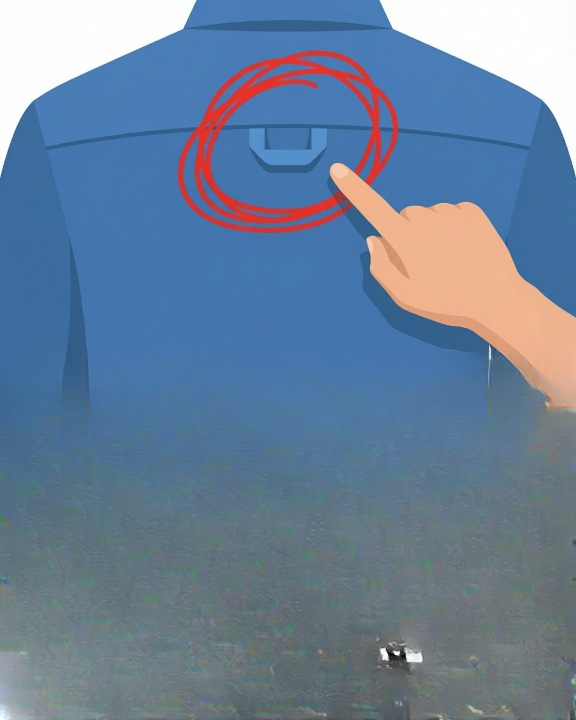
You know that tiny little loop on the back of some button-down shirts, right beneath the collar? For most people, it’s so small and subtle that you might not notice it until you actively look for it. I had seen it countless times on my husband’s shirts but never gave it much thought. One day, curiosity got the better of me, and I asked him what it was for. He stared at those loops with a mix of surprise and confusion, admitting he had no idea they even existed.
For years, I assumed it was some quirky design leftover from factory production—a random little tab of fabric with no real purpose. Perhaps it was there because someone thought it looked “finished” or “extra.” Turns out, it actually has a fascinating history, stretching from practical naval use to preppy Ivy League style, and even today, it can serve subtle, practical purposes.
Let’s dive in.
The Origins: Naval Efficiency in the Early 1900s
To understand the loop, we need to rewind to the early 20th century, when the practical needs of sailors shaped clothing design. Imagine life aboard a U.S. Navy ship: cramped quarters, minimal storage, and no walk-in closets or wardrobe space. Sailors needed uniforms that were not only durable but also functional, easy to store, and wrinkle-free. Enter the “locker loop.”
Also called the backstay loop, this small fabric tab was placed on the back of the shirt just below the collar. Its primary function was simple yet ingenious: it allowed sailors to hang their shirts on hooks. Not hangers, not shelves—just hooks or pegs in their crowded lockers. By using this loop, sailors could keep their dress shirts off the floor, prevent wrinkles, and maintain a neat appearance despite living on a rocking ship.
From a design perspective, it was brilliant. Something so small and unobtrusive made a real difference in the daily lives of sailors. The “locker loop” may seem insignificant today, but back then, it solved a real problem: keeping uniforms tidy in extremely tight quarters.
From Function to Campus Fashion
By the mid-20th century, the locker loop transitioned from the Navy to college campuses, especially those of the Ivy League. Students began wearing shirts with these loops, not out of necessity but as a subtle nod to preppy style and maritime tradition.
On campus, the loop carried a sense of symbolism. It suggested a clean, classic, and slightly intellectual aesthetic. Wearing a shirt with a locker loop implied attention to detail and a nod to heritage. This was less about hanging shirts on hooks (most students had closets) and more about style and identity.
Over time, the loop became more than just functional—it became a hallmark of preppy fashion. Think crisp Oxford button-down shirts paired with khakis, loafers, and a casual, polished look. The loop represented an understated sophistication, a small detail that added charm and character to a garment.
The Loop in Modern Menswear
Today, the locker loop is largely decorative, yet designers often treat it as a subtle style element. Some brands experiment with contrasting colors, stitching patterns, or different fabrics for the loop, transforming it into a “signature detail” that only those familiar with menswear might notice.
While most people no longer hang shirts on locker hooks, the loop can still be surprisingly practical for travelers. A small loop can be used to hang shirts temporarily on a hotel door, a bathroom hook, or inside a garment bag. For anyone who travels frequently, this tiny piece of fabric can keep shirts wrinkle-free without requiring a hanger—showing that even decorative elements can retain hidden functionality.
Fun Anecdotes and Cultural Curiosities
Fashion history is full of quirky stories, and the locker loop is no exception. One urban legend I came across involves a college tradition where students would remove the loop from their shirt to signify that they were “taken” or in a relationship. While there’s no evidence this practice is still common, it highlights how even a small garment detail can acquire symbolic meaning.
Other stories suggest that the loop became a subtle status symbol among certain circles. Wearing a shirt with a locker loop implied attention to classic styles and a nod to tradition—subtle, understated, and yet meaningful to those “in the know.”
Practical Tips: Using Your Shirt Loop Today
Even if the fashion world now treats the locker loop as decorative, it can still be useful in everyday life. Here are some ways to make the most of it:
-
Travel Companion: Use the loop to hang shirts in hotel rooms or bathrooms when a hanger isn’t available. It’s a quick and easy way to prevent wrinkles during trips.
-
Closet Organization: Loops can be handy when trying to hang shirts in tight or crowded closets. Even a simple hook can save space and prevent garments from touching the floor.
-
Subtle Design Appreciation: Fashion enthusiasts can enjoy the loop as a detail that shows craftsmanship, thoughtfulness, and nods to historical design.
The Enduring Appeal
The reason the locker loop endures in men’s fashion is twofold: tradition and subtle elegance. It’s a nod to history that has evolved into a style statement. Even when its original function is no longer necessary, the loop remains a recognizable hallmark of thoughtful menswear.
It bridges practicality and design, heritage and modernity. Something as small as a fabric tab can carry centuries of history—from the decks of Navy ships to Ivy League quads, and now into contemporary wardrobes around the world.
Why Designers Still Include Loops
Fashion designers often include locker loops not just out of nostalgia but as a conscious detail to signal quality. Shirts without loops are common, but premium or heritage brands frequently incorporate them as a subtle differentiator. The loop tells customers that attention has been paid to small, thoughtful touches—details that might be overlooked at first glance but contribute to overall garment quality and identity.
Some designers even play with color contrast, stitch patterns, or embroidered accents on loops, making them an almost “hidden” branding opportunity for enthusiasts. It’s a clever way to honor tradition while keeping the garment fresh and modern.
Cultural Symbolism of Small Details
Small fashion details often carry meaning beyond their immediate utility, and the locker loop is no exception. It signals:
-
Heritage: A subtle nod to naval and collegiate traditions.
-
Attention to Detail: Wearing a shirt with a loop suggests care in style and craftsmanship.
-
Subtle Sophistication: The loop represents understated elegance—classic, neat, and slightly intellectual.
Fashion is often about these small signals. People may not consciously notice a loop, but subconsciously it contributes to the perception of polish and thoughtfulness.
Beyond Menswear: Influence on Broader Fashion
While locker loops are most commonly associated with men’s button-down shirts, the concept of functional yet decorative details has influenced broader fashion. Women’s clothing, jackets, and even accessories sometimes feature subtle loops or tabs that reference practical origins. These details provide visual interest, convey quality, and connect contemporary clothing to historical roots.
The Science of Fashion Evolution
The locker loop is an example of fashion evolution. It started as a purely practical item, designed for sailors in confined spaces. Then it transitioned to a symbolic, stylistic element among Ivy League students, becoming associated with preppy fashion. Finally, it became an enduring design detail, appreciated for both subtle utility and aesthetic value.
This progression is a common theme in clothing history: functional items often evolve into fashion symbols, gaining new meanings while retaining traces of their original purpose.
Conclusion: A Small Loop, a Big Story
Next time you put on a button-down shirt and feel that tiny tab brushing against your neck, take a moment to appreciate it. What seems like an inconsequential piece of fabric actually has centuries of history behind it. From Navy sailors hanging their shirts in crowded lockers to Ivy League students signaling style and sophistication, to modern travelers using it to prevent wrinkles, the locker loop is a testament to thoughtful design.
It’s a reminder that even small details can have significance. Fashion is full of such stories, and paying attention to them enriches how we experience clothing—not just as something to wear, but as something to understand, appreciate, and enjoy.
So, whether you’re a preppy style aficionado, a traveler, or just someone who likes neat, wrinkle-free shirts, the next time you notice that loop, remember: it’s not just a piece of fabric—it’s a tiny slice of history, tradition, and clever design.