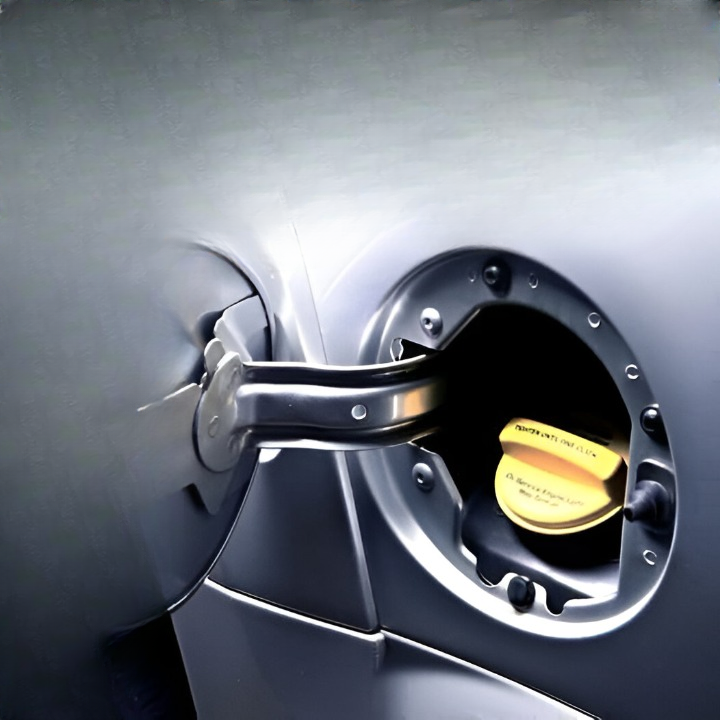
If you have ever pulled into a fuel station and realized the fuel pump is on the opposite side of your vehicle, you are certainly not alone. Many drivers have experienced that brief moment of confusion when they stop the car, step out, and suddenly notice the fuel door is nowhere near the pump.
It might seem like a small inconvenience, but it raises an interesting question: why are fuel tanks located on different sides in different cars? If car manufacturers standardized the placement, drivers everywhere could avoid this small but common frustration.
The reality is that the placement of a car’s fuel tank and fuel door is not random. In fact, the location is carefully decided during the vehicle’s design process. Engineers consider several important factors, including vehicle balance, safety regulations, manufacturing efficiency, and internal space constraints.
Understanding why fuel doors appear on different sides of different vehicles reveals a lot about how modern cars are engineered. What may appear to be a simple design choice is actually the result of multiple technical decisions working together.
In this article, we will explore the main reasons why fuel tanks are placed on different sides of vehicles and how manufacturers determine the most practical location.
The Role of Vehicle Design and Engineering
One of the most significant factors affecting fuel tank placement is overall vehicle design. When engineers create a new car, they must fit dozens of important components into a limited amount of space.
Underneath a modern car, there are many systems competing for room. These include:
-
The engine and transmission
-
Exhaust system
-
Suspension components
-
Fuel lines
-
Electrical wiring
-
Safety structures
-
Drive shafts and axles
Each of these elements must be carefully positioned to ensure the vehicle functions correctly. Because space is limited, engineers often place the fuel tank wherever it fits best without interfering with other components.
This means the side of the car that holds the fuel filler door is sometimes determined simply by which side has the most available space for the tank and fuel line routing.
Different vehicle models have different internal layouts, which explains why fuel doors vary between manufacturers and even between models from the same brand.
Weight Distribution and Vehicle Balance
Another important factor is weight distribution.
Every vehicle must maintain proper balance to ensure stable handling and safe driving performance. Engineers work carefully to distribute weight evenly across the car, particularly between the left and right sides.
A fuel tank can weigh a considerable amount when full. Depending on the size of the vehicle, the fuel tank alone may hold between 40 and 100 liters of fuel. This adds significant weight that engineers must account for when designing the vehicle.
If too much weight is concentrated on one side of the car, it can affect handling, cornering stability, and suspension performance.
To avoid this issue, engineers may place the fuel tank on the side that helps balance the weight of other heavy components. For example:
-
If the engine or battery places extra weight on one side, the fuel tank may be placed on the opposite side.
-
If the exhaust system occupies significant space underneath the vehicle, the tank may be moved to the other side.
These small adjustments help maintain a balanced vehicle that performs safely and efficiently on the road.
Safety Considerations in Fuel Tank Placement
Safety is one of the most important considerations in any automotive design decision, including where the fuel tank is placed.
Vehicle manufacturers must follow strict safety standards and crash regulations when designing fuel systems. Engineers perform extensive testing to ensure that the fuel tank remains protected during collisions.
The tank is typically positioned in an area that reduces the likelihood of damage during common types of accidents. In many vehicles, the safest place for the fuel tank is near the center of the vehicle, often beneath the rear seats or slightly ahead of the rear axle.
The fuel filler door must connect to the tank through a pipe, and the routing of this pipe determines which side of the vehicle the fuel door appears on.
Engineers design this system to:
-
Minimize the risk of fuel leakage
-
Protect the tank from direct impact
-
Maintain structural integrity during crashes
Because each vehicle has a unique structure and crash-safety design, the fuel filler location may differ from model to model.
Manufacturing Efficiency and Assembly Lines
Another practical reason for varying fuel door locations is manufacturing efficiency.
Car factories produce thousands of vehicles using highly optimized assembly lines. Even small improvements in efficiency can save manufacturers significant time and resources.
If placing the fuel tank or filler pipe on a particular side simplifies assembly or reduces the number of steps required during production, engineers may choose that configuration.
For example, positioning the fuel system on one side may allow:
-
Faster installation during assembly
-
Easier access for workers or robotic tools
-
More efficient routing of fuel lines and sensors
While this may not affect the driver directly, it can improve production speed and reduce manufacturing costs.
Because every vehicle platform is designed differently, these production considerations sometimes result in different fuel door placements across models.
Interior Space and Vehicle Packaging
Modern vehicles are designed to maximize interior space, passenger comfort, and cargo capacity. This goal also influences where the fuel tank and filler door can be placed.
Car designers must balance multiple priorities, including:
-
Comfortable seating positions
-
Large trunk or cargo areas
-
Suspension travel
-
Structural reinforcement zones
The fuel tank must fit within this design without reducing passenger or luggage space. In some vehicles, particularly compact cars and SUVs, the fuel tank is carefully shaped to fit around structural elements under the floor.
Because of these packaging constraints, the location of the fuel filler pipe may end up on whichever side allows the simplest connection between the filler door and the tank.
Driver Convenience: A Secondary Consideration
Many drivers assume that fuel door placement is chosen mainly for convenience. For example, some people prefer having the fuel door on the driver’s side so they can easily access it after stepping out of the car.
While convenience is sometimes considered, it is usually not the primary factor in the decision.
Engineering requirements such as safety, space, and balance tend to take priority over driver convenience. If the most practical location for the fuel tank results in a passenger-side fuel door, manufacturers are unlikely to redesign the entire system simply to change the side.
That said, some brands do consider user convenience when multiple design options are possible. In certain cases, designers choose a side that allows easier access for drivers.
However, this tends to be more of an additional benefit rather than the main reason for the placement.
Differences Between Countries and Driving Sides
Another question people often ask is whether fuel doors are placed differently in countries where vehicles drive on the opposite side of the road.
For example, in countries such as the United Kingdom, Australia, and Japan, vehicles drive on the left side of the road, and the driver sits on the right side of the car.
Some might assume that vehicles in these countries always have the fuel door on a specific side to make fueling easier. In reality, this is not always the case.
Many modern cars are designed as global models that are sold in multiple markets around the world. Instead of redesigning the entire fuel system for each country, manufacturers often keep the same configuration across all markets.
As a result, the location of the fuel door may not change even if the car is sold in countries with different driving rules.
This means drivers in certain regions may occasionally find themselves stretching the fuel hose across the car to reach the fuel filler.
Why There Is No Universal Standard
Considering how common fueling a vehicle is, it might seem logical for all manufacturers to adopt a universal standard for fuel door placement.
However, creating such a standard would limit design flexibility and could complicate engineering decisions.
Each car model is built on a unique platform with different dimensions, structures, and component layouts. Forcing all vehicles to place the fuel tank on the same side could lead to:
-
Reduced design flexibility
-
Less efficient packaging of components
-
Increased manufacturing complexity
-
Potential compromises in safety or performance
Because of these factors, manufacturers prefer to determine the most practical location for each individual vehicle design.
A Helpful Tip for Drivers
Although fuel door placement varies between vehicles, there is a simple way to quickly determine which side your fuel filler is on.
Most modern cars include a small arrow symbol on the fuel gauge located on the dashboard.
Next to the fuel pump icon, you will usually see a small triangle pointing either left or right. This arrow indicates the side of the vehicle where the fuel door is located.
This feature is particularly useful when:
-
Driving a rental car
-
Borrowing someone else’s vehicle
-
Using a new vehicle for the first time
Many drivers are unaware of this small but helpful indicator, even though it has been included in many vehicles for years.
The Complexity Behind Simple Design Decisions
The placement of a fuel tank might seem like a minor detail, but it reflects the complexity of automotive engineering.
Vehicle designers must consider numerous factors simultaneously, including:
-
Safety regulations
-
Mechanical layout
-
Weight balance
-
Passenger comfort
-
Manufacturing efficiency
-
Global market compatibility
Every component of a car is part of a larger system, and even small decisions can affect multiple aspects of the vehicle’s performance and production.
Because of this, fuel door placement is rarely chosen for just one reason. Instead, it is the result of several engineering priorities working together.
Final Thoughts
The next time you stop at a fuel station and notice the fuel door is on a different side than expected, it may help to remember that the decision was not random.
Automotive engineers carefully choose the location of the fuel tank and filler system based on factors such as:
-
Vehicle balance
-
Safety design
-
Available space
-
Manufacturing efficiency
While it may occasionally cause a moment of confusion at the pump, the placement ultimately reflects the careful planning that goes into building modern vehicles.
Understanding these design considerations gives drivers a greater appreciation for the complex engineering behind everyday vehicles.
And with the help of the small arrow on the dashboard fuel gauge, you can always quickly check which side your fuel door is on before pulling up to the pump.