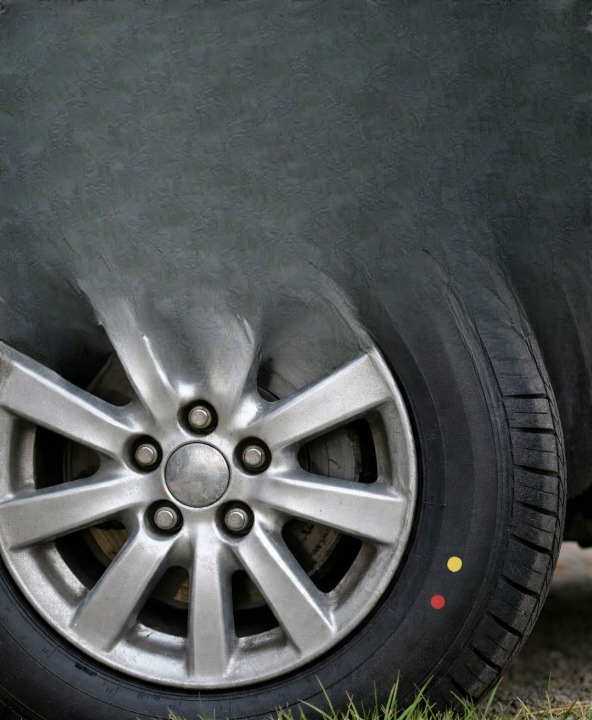
If you have ever taken a close look at a brand-new tire before it was installed on a vehicle, you may have noticed small colored markings on the sidewall. In many cases, these markings appear as small red or yellow dots placed at specific points around the tire. For someone unfamiliar with tire manufacturing or vehicle maintenance, these colored dots can seem mysterious. Some drivers assume they are decorative, while others believe they are temporary factory marks that have no real function.
In reality, these dots play an important role in the process of installing and balancing tires correctly. They are used by technicians and mechanics to help align the tire with the wheel in a way that improves balance and performance. When tires are mounted properly, the vehicle can drive more smoothly, and the tires may last longer.
Understanding what these markings mean can help drivers better appreciate the importance of proper tire installation and maintenance. While most people rely on professionals to mount and balance their tires, knowing the purpose of these small details provides insight into how modern vehicles are designed for safety and comfort.
This article explores the meaning of the colored dots found on tires, explains how they assist with wheel balancing, and discusses why proper balance is essential for vehicle performance. We will also examine the factors that can cause tires to lose balance over time and how regular maintenance helps keep your vehicle operating smoothly.
Why Tire Balance Is Important
Before discussing the colored dots themselves, it is helpful to understand why tire balance matters in the first place.
When a vehicle is moving, each wheel rotates thousands of times per mile. If the weight around the wheel is not evenly distributed, small imbalances can cause vibrations that become more noticeable at higher speeds. Even a minor imbalance can affect how the vehicle feels while driving.
Properly balanced wheels provide several benefits:
-
A smoother driving experience
-
Reduced vibration in the steering wheel
-
Even tire wear
-
Improved comfort for passengers
-
Better protection for suspension components
Without proper balance, tires may wear unevenly, which can shorten their lifespan and require replacement sooner than expected.
Because of these factors, technicians take careful steps when installing tires to ensure they are balanced correctly.
The Role of Tire Manufacturing
Modern tires are produced through complex manufacturing processes that involve layers of rubber, steel, and fabric materials. These components are assembled with precision and then molded into their final shape.
Despite advanced production techniques, it is extremely difficult to create a tire that is perfectly uniform in weight and shape. Small variations can occur during manufacturing, leading to slightly heavier or lighter areas around the tire.
These variations are very small and do not mean that the tire is defective. However, they do influence how the tire should be mounted onto the wheel.
To help technicians identify these variations, tire manufacturers add colored markings that indicate certain characteristics of the tire.
The most common markings are yellow dots and red dots.
Understanding the Yellow Dot on Tires
One of the most frequently seen markings on new tires is a yellow dot located somewhere along the sidewall.
What the Yellow Dot Represents
The yellow dot identifies the lightest point of the tire. This information is helpful during the mounting process because technicians can use it to align the tire with the wheel in a way that improves overall balance.
Every wheel has areas that are slightly heavier than others. The valve stem, which allows air to enter and exit the tire, is usually one of the heavier parts of the wheel assembly.
Aligning the Tire With the Valve Stem
To help create a balanced wheel assembly, technicians typically position the yellow dot next to the valve stem when mounting the tire.
This alignment works because it places the lightest part of the tire near one of the heavier parts of the wheel. By doing so, the overall weight distribution becomes more even.
Although modern balancing machines can fine-tune the balance later, starting with this alignment makes the balancing process easier and often requires fewer corrective weights.
Understanding the Red Dot on Tires
Some tires also feature a red dot, which serves a different purpose than the yellow one.
What the Red Dot Indicates
The red dot marks the point of maximum radial force variation, which can be thought of as the stiffest or highest point on the tire.
This point is important when matching the tire with the wheel because wheels themselves may also have slight variations in shape.
Many wheels have a location that represents their lowest or highest point in terms of roundness. Manufacturers sometimes mark this spot with a small indicator such as a colored mark or a notch.
Aligning the Red Dot
When technicians see a red dot on a tire, they may align it with the corresponding mark on the wheel. Doing so helps minimize variations in how the tire contacts the road during rotation.
This process is sometimes referred to as match mounting because it pairs the characteristics of the tire and wheel to achieve the best possible balance.
When Both Red and Yellow Dots Appear
Occasionally, a tire may display both red and yellow dots. In these cases, technicians usually follow specific guidelines when deciding how to mount the tire.
In many situations, the red dot takes priority if the wheel has a corresponding mark indicating its lowest or highest point.
If the wheel does not include such a mark, technicians may instead align the yellow dot with the valve stem.
Professional tire installers are trained to understand these markings and determine the best alignment method for each situation.
How Wheel Balancing Works
After the tire is mounted onto the wheel, the assembly is placed on a balancing machine.
This machine spins the wheel at high speed while measuring weight distribution around the rim. Sensors detect any imbalance and identify where corrective weights should be added.
Small metal weights are then attached to the rim to counteract the heavier areas. These adjustments ensure that the wheel rotates smoothly without wobbling or vibration.
Even when the colored dots are aligned correctly, balancing machines are still used to fine-tune the final result.
Signs That Your Tires May Be Out of Balance
Over time, even properly balanced tires can become slightly unbalanced due to everyday driving conditions.
Drivers may notice certain symptoms when this occurs.
Common signs of tire imbalance include:
-
Vibrations in the steering wheel
-
Shaking felt through the floor or seats
-
Uneven or irregular tire wear
-
Increased road noise at higher speeds
These symptoms may appear gradually, which is why regular tire inspections are recommended.
If any of these signs become noticeable, a technician can check the wheels and rebalance them if necessary.
Common Causes of Tire Imbalance
Several factors can affect tire balance during the lifespan of the tire.
Normal Driving Wear
As tires roll along roads, they experience friction and gradual wear. Over time, this wear can slightly alter the weight distribution around the tire.
Road Impacts
Driving over potholes, curbs, or debris can affect both the tire and the wheel. Even minor impacts can shift the balance of the wheel assembly.
Tire Repairs
If a tire requires repair due to a puncture, the repair materials may add a small amount of weight that changes the balance slightly.
Wheel Damage
Bent or damaged wheels can also cause imbalance, particularly if the rim shape becomes uneven.
Loss of Wheel Weights
The small balancing weights attached to the wheel can sometimes loosen or fall off. When this happens, the wheel may begin vibrating again.
How Often Tire Balancing Should Be Checked
Vehicle maintenance experts often recommend checking tire balance during certain routine services.
Balancing is commonly performed when:
-
Installing new tires
-
Rotating tires between positions on the vehicle
-
Repairing a punctured tire
-
Experiencing steering vibrations
Some drivers also choose to have their tires balanced periodically as part of regular maintenance to ensure optimal performance.
The Relationship Between Tire Balance and Tire Wear
Properly balanced tires wear more evenly over time.
When a tire is unbalanced, certain areas may contact the road surface more heavily than others. This uneven contact can cause patches of tread to wear down faster.
Uneven wear can reduce traction and shorten the lifespan of the tire. In contrast, balanced tires distribute weight more evenly, allowing the tread to wear at a more consistent rate.
This is one reason why tire balancing is considered an important part of vehicle maintenance.
Tire Rotation and Balance
Tire rotation is another maintenance practice that helps promote even tire wear.
During rotation, tires are moved from one position on the vehicle to another. For example, front tires may be moved to the rear, while rear tires move to the front.
Because different positions on the vehicle experience different stresses, rotating the tires helps them wear more evenly.
Many service centers check tire balance at the same time they perform a rotation to ensure optimal performance.
Modern Technology in Tire Balancing
Advances in technology have improved the accuracy of wheel balancing.
Modern balancing machines use electronic sensors and computerized systems to measure weight distribution with high precision.
Some advanced systems can even simulate road conditions to detect variations that might occur while driving.
These technologies allow technicians to achieve extremely precise balance, improving ride comfort and reducing wear on tires and suspension components.
Why Professional Installation Matters
Although colored dots provide helpful guidance, proper tire installation still requires professional equipment and expertise.
Experienced technicians understand how to interpret tire markings and use balancing machines to ensure the final assembly performs correctly.
Attempting to install tires without the proper tools may result in imbalance or incorrect mounting.
For this reason, most drivers rely on trained professionals when replacing or servicing their tires.
How Proper Tire Maintenance Supports Vehicle Safety
Tires play a crucial role in vehicle safety because they are the only parts of the vehicle that make direct contact with the road surface.
Well-maintained tires contribute to:
-
Reliable traction
-
Stable handling
-
Effective braking
-
Comfortable driving conditions
Balanced tires help maintain these qualities by ensuring that the wheel rotates smoothly and consistently.
Ignoring tire maintenance may lead to increased wear, reduced efficiency, and a less comfortable driving experience.
Tips for Keeping Your Tires in Good Condition
Drivers can take several simple steps to keep their tires performing well.
These include:
-
Checking tire pressure regularly
-
Rotating tires at recommended intervals
-
Inspecting tires for visible damage
-
Scheduling periodic balancing checks
-
Avoiding road hazards whenever possible
Following these practices helps extend tire life and maintain safe driving conditions.
Conclusion
The small red and yellow dots found on new tires may appear insignificant at first glance, but they serve an important purpose in the tire installation process. These markings help technicians identify key points on the tire that assist with proper alignment and balancing.
The yellow dot usually marks the lightest point of the tire and is often aligned with the valve stem to help distribute weight evenly. The red dot, when present, indicates a point that may require alignment with specific marks on the wheel to minimize variations during rotation.
Together, these indicators support the process of creating a balanced wheel assembly. When tires are mounted and balanced correctly, drivers benefit from smoother rides, reduced vibrations, and more even tire wear.
While most drivers never need to worry about aligning these markings themselves, understanding their purpose highlights the careful engineering involved in modern tire design. Regular tire maintenance—including balancing, rotation, and inspections—helps ensure that vehicles continue to operate safely and efficiently.
The next time you see colored dots on a tire, you will know that they are part of a thoughtful system designed to support performance, comfort, and reliability on the road.