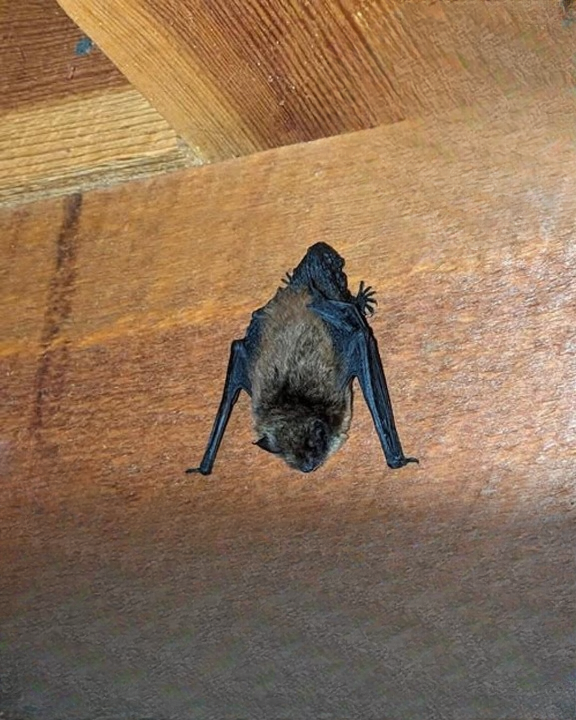
The sudden appearance of a bat inside a home can be surprising and even unsettling for many people. Because bats are often associated with mystery, nighttime activity, and cultural myths, their unexpected presence may raise immediate questions or emotional reactions. Some may wonder whether it is a sign, an omen, or something unusual beyond natural explanation.
However, when examined through a scientific and biological perspective, the presence of a bat indoors is not mysterious at all. It is usually the result of simple environmental factors, natural behavior, and accidental navigation errors.
Understanding why this happens can replace fear with knowledge and help people respond calmly and appropriately when such encounters occur.
Bats Are Not Random Visitors: Understanding Their Natural Behavior
Bats are highly adapted nocturnal mammals that rely on specialized biological systems to navigate and survive in darkness. One of their most important abilities is echolocation—a biological sonar system that allows them to emit sound waves and interpret the returning echoes to understand their surroundings.
This system is extremely effective in open natural environments. However, it is not flawless. In certain conditions, especially in human-made environments, echolocation can become less reliable.
When bats fly near buildings, artificial lighting, reflective glass, or narrow openings, their navigation system can become disrupted. As a result, they may accidentally enter indoor spaces such as houses, attics, garages, or balconies.
In most cases, this is not intentional behavior but rather a navigation error caused by environmental interference.
Common Reasons a Bat Enters a House
There are several scientifically recognized reasons why bats may find their way inside human dwellings.
1. Disorientation from Artificial Light and Structures
Artificial lighting at night can attract insects, which are a primary food source for many bat species. As bats follow insect activity, they may inadvertently move closer to buildings.
Additionally, reflective surfaces such as windows or mirrors can confuse echolocation signals, making it difficult for bats to accurately judge distances or detect barriers. This confusion can lead them into open doors, windows, or ventilation gaps.
2. Searching for Food
Many bat species are insectivores, meaning their diet consists mainly of flying insects such as mosquitoes, moths, and beetles. Houses that are lit at night often attract large numbers of insects, especially around outdoor lights or open windows.
As bats follow their natural feeding instincts, they may enter homes unintentionally while chasing prey. Once inside, the enclosed environment can make it difficult for them to find their way out.
3. Seeking Shelter from Weather Conditions
Weather can also play an important role in bat behavior. Strong winds, heavy rain, or sudden temperature drops may cause bats to seek temporary shelter.
Human structures can provide dark, quiet, and protected spaces such as attics, basements, or wall cavities. Small openings in roofs, vents, chimneys, or broken windows can serve as entry points.
In these situations, the bat is not “invading” a home, but simply responding to environmental stress and survival needs.
4. Accidental Entry Through Small Openings
Bats are capable of squeezing through very small gaps—sometimes as narrow as a few centimeters. This makes it relatively easy for them to enter homes without being noticed.
Once inside, their echolocation system may struggle in confined spaces with sharp angles, reflective surfaces, and limited airflow. This increases the likelihood of repeated circling or confusion.
Cultural Beliefs vs. Scientific Understanding
Throughout history, bats have been surrounded by symbolic meanings in different cultures. In some traditions, they are associated with good fortune, transformation, or renewal. In others, they are linked to fear, darkness, or superstition.
These interpretations are based on cultural storytelling rather than scientific evidence. There is no biological or ecological basis for the idea that a bat entering a home represents a supernatural message or omen.
From a scientific perspective, the event is best understood as a natural interaction between wildlife behavior and human environments.
Are Bats Dangerous? Understanding the Real Risk
In most cases, a bat inside a home does not represent an immediate danger. Bats are generally shy animals that avoid human contact whenever possible.
However, as with any wild animal, it is important to maintain safe behavior:
- Avoid touching or handling the bat
- Keep children and pets away from the area
- Do not attempt to capture it with bare hands
While the risk is low, bats can in rare cases carry certain diseases, which is why direct contact should always be avoided. The key safety principle is simple: observe from a distance and allow the animal to leave naturally.
What to Do If a Bat Enters Your Home
When a bat enters a house, the most important response is calm and controlled action. Panic or sudden movements can make the situation more difficult.
Step 1: Stay calm and reduce activity
Avoid chasing or trying to hit the bat. Sudden movements may increase its stress and make it fly more erratically.
Step 2: Protect people and pets
Ensure that children and animals are kept away from the area where the bat is flying.
Step 3: Create an exit route
Open windows and doors that lead outside, preferably in the direction where the bat entered. Turn off indoor lights and turn on outdoor lighting if possible, as bats may move toward darker spaces or follow natural exit cues.
Step 4: Give it time
In many cases, bats will leave on their own once they detect an open path to the outside. Patience is often the most effective approach.
The Ecological Importance of Bats
Beyond occasional indoor encounters, bats play a crucial role in maintaining healthy ecosystems. They are often misunderstood, but their ecological contributions are significant.
Natural pest control
Many bat species consume large quantities of insects each night, including mosquitoes and agricultural pests. This helps reduce the need for chemical pesticides in some regions.
Pollination and seed dispersal
Some bat species contribute to pollination, especially in tropical environments. They also assist in spreading seeds, supporting forest regeneration and plant diversity.
Environmental balance
By regulating insect populations and supporting plant life, bats contribute to the stability of ecosystems around the world.
Without bats, many ecological systems would face significant imbalance.
Why Understanding Matters
Encounters with wildlife inside human environments can easily trigger fear or misunderstanding. However, most of these events have simple and natural explanations.
A bat entering a house is not a symbolic message or a rare anomaly. It is usually the result of:
- Navigation interference
- Attraction to insects
- Weather-related shelter seeking
- Accidental entry through small openings
Understanding these factors helps reduce unnecessary fear and encourages more informed responses.
Final Thoughts
A bat inside a home may feel unusual or even alarming, but it is almost always a temporary and accidental event. These animals are not seeking human interaction and do not enter homes with intent. Instead, they are responding to environmental cues, survival needs, and occasional navigation challenges.
By understanding bat behavior and ecology, it becomes easier to respond calmly and safely when such encounters occur. Simple actions—like opening exits, reducing lights, and avoiding contact—are usually enough to resolve the situation without harm to either humans or the animal.
Ultimately, bats are not symbols of mystery or danger, but important members of natural ecosystems. Their presence, even when unexpected, reflects the close connection between human environments and the wider natural world.