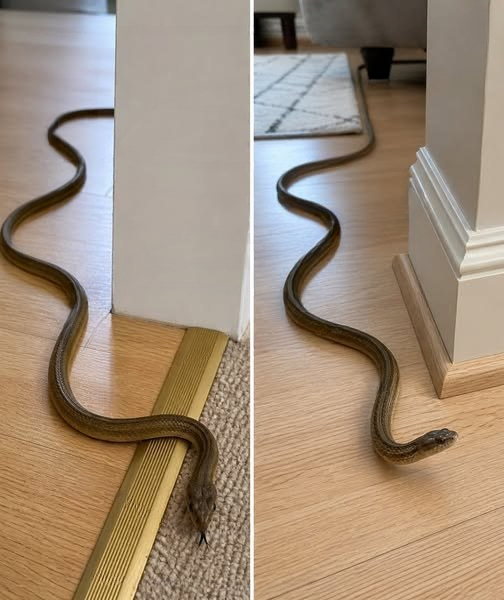
Finding a snake inside your home can trigger instant fear. It feels intrusive, unnatural—almost like a warning sign that something deeper is wrong. Many people immediately wonder if it carries a hidden meaning or symbolizes something ominous.
But the truth is far less mysterious—and far more practical.
In nearly every case, a snake entering your home is not a sign or message. It’s simply an animal responding to its environment and basic survival needs.
Understanding why it happens can turn panic into clarity—and help you respond safely and prevent it from happening again.
Why Snakes Enter Homes in the First Place
Snakes don’t seek out humans. They avoid us whenever possible. If one ends up inside your home, it’s usually for one of four simple reasons:
1. Shelter and Safety
Your home can unintentionally mimic a snake’s natural habitat. Quiet, dark, undisturbed spaces—like basements, garages, crawl spaces, or cluttered storage areas—are ideal hiding spots.
Even tiny openings—cracks in the foundation, gaps under doors, or holes around pipes—can be enough for a snake to slip inside unnoticed.
2. Food Sources
Snakes go where food is.
If your home or yard has rodents, insects, or small animals, it may attract snakes indirectly. This is a basic example of the food chain in action—snakes follow prey, not people.
3. Temperature Changes
As cold-blooded animals, snakes rely on their surroundings to regulate body temperature.
- In hot weather, they may seek cool indoor spaces
- In cold conditions, they look for warmth and shelter
Your home can provide both—especially if insulation or ventilation creates stable indoor temperatures.
4. Accidental Entry
Sometimes, it’s simply bad timing.
An open door, a torn screen, or a small structural gap can lead to an accidental encounter. In many cases, the snake is just as confused as you are.
The Myth of “Hidden Meanings”
Across cultures, snakes have long been tied to symbolism—often representing transformation, danger, or spiritual messages.
But from a scientific perspective, there’s no evidence that a snake entering your home carries any symbolic meaning.
It’s not an omen.
It’s not a warning.
It’s behavior driven by environment and survival.
Is It Dangerous?
Not always.
Many snakes are completely harmless and will actively avoid confrontation. However, some species are venomous, and it’s not always easy to tell the difference.
That’s why caution is essential.
If you find a snake indoors:
- Do not touch or attempt to capture it
- Keep a safe distance
- Keep children and pets away
- Contact professionals if you’re unsure what species it is
Safety should always come first.
What to Do If You See a Snake Indoors
Your reaction matters more than you think. Panic or sudden movement can make the situation riskier.
Stay Calm and Observe
Most snakes will try to leave on their own if undisturbed.
Limit Its Movement
If possible, close doors to keep the snake contained in one area.
Call Professionals
Animal control or wildlife removal experts are trained to handle snakes safely and humanely.
Trying to remove it yourself—especially without experience—is not recommended.
How to Prevent Future Encounters
Prevention is the most effective solution.
Seal Entry Points
Inspect your home carefully:
- Door gaps
- Window seals
- Foundation cracks
- Openings around pipes or vents
Even small gaps can be enough for entry.
Eliminate Food Sources
Since snakes follow prey, reducing rodents and insects can make your home less attractive.
Reduce Clutter
Both inside and outside:
- Remove wood piles and debris
- Keep storage areas organized
- Avoid dense vegetation near walls
Maintain Your Yard
Trim grass, shrubs, and overgrowth. This reduces hiding spots near your home’s foundation.
The Role of Snakes in Nature
While they can be unsettling, snakes play an important role in maintaining ecological balance.
They help control populations of rodents and pests, which can otherwise spread disease and damage property. Their presence in an area often reflects a healthy ecosystem.
When to Take Extra Caution
Some situations require immediate attention:
- Repeated sightings inside your home
- A snake that appears aggressive or doesn’t leave
- Living in regions known for venomous species
In these cases, always contact professionals promptly.
Final Thoughts
A snake in your home can feel like something out of a nightmare—but in reality, it’s usually just a simple case of wildlife crossing into human space.
There’s no hidden message.
No mystery.
Just an animal responding to shelter, food, or temperature.
The best response isn’t fear—it’s awareness.
Stay calm, stay safe, and take practical steps to protect your space.