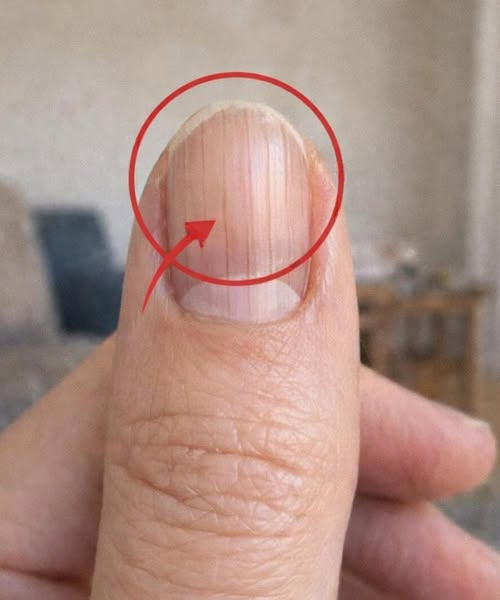
It sounds almost unbelievable at first: that something as ordinary as your fingernails might reveal deeper insights about your health—and even hint at how your body is aging. But according to researchers and experts in longevity science, there may be more truth to this idea than most people realize.
Still, before jumping to conclusions, it’s important to understand what this “telltale sign” actually is—and what it isn’t.
The Subtle Signal Hidden in Plain Sight
The conversation around fingernails and aging has been popularized in part by scientists like David Sinclair, who study how the body changes over time at a cellular level.
The key detail isn’t a dramatic mark or unusual color.
It’s something far more subtle: how fast your nails grow.
Your fingernails are constantly regenerating, growing from cells produced in the nail matrix. This process reflects your body’s ability to create new cells—something that naturally slows as we age.
Research dating back decades has shown that nail growth tends to gradually decline after around age 30. While the change is small, it’s consistent. Faster-growing nails may indicate more active cellular turnover, while slower growth can reflect the normal aging process.
This ties into a broader concept known as biological age—how old your body appears based on function, rather than the number of years you’ve lived.
Does This Predict Life Expectancy?
Not exactly.
It’s easy to see how this idea gets exaggerated online, but nail growth alone cannot predict how long you’ll live. It’s simply one small indicator of how your body is functioning at a cellular level.
Think of it like a dashboard light—not a diagnosis, not a forecast, but a signal worth noticing in context.
When Your Nails Say More Than You Think
While growth rate is subtle, visible changes in your nails can sometimes offer clearer clues about your health.
Here are some signs doctors actually pay attention to:
- Dark vertical streaks
These should always be checked, as they can—rarely—be linked to serious conditions like melanoma. - Pitting (tiny dents in the nail surface)
Often associated with psoriasis. - Yellowing nails
Commonly caused by fungal infections, but occasionally tied to broader health issues. - Clubbing (rounded, enlarged fingertips)
Can be connected to long-term heart or lung conditions. - Pale or white nails
Sometimes linked to anemia or liver problems. - Bluish nails
May indicate reduced oxygen levels in the blood.
These signs don’t automatically mean something serious is wrong—but they are worth paying attention to, especially if they persist.
The Everyday Factors We Often Forget
Not every nail change is a warning sign.
In fact, many are caused by simple, everyday factors:
- Frequent handwashing or harsh soaps
- Exposure to cleaning chemicals
- Minor injuries
- Nutritional gaps
- Dry air or dehydration
Brittle, peeling nails are often the result of dryness—not disease.
That’s why context matters. A single change rarely tells the whole story.
What You Should Actually Do
If you notice something unusual, the best approach is calm observation—not panic.
- Watch for patterns
Is the change persistent or getting worse? - Consider recent changes
New diet, stress levels, medications, or products can all affect your nails. - Seek medical advice when needed
Especially for discoloration, shape changes, or symptoms that don’t resolve.
The Bigger Picture
Your fingernails won’t predict your future—but they can reflect your present.
They’re part of your body’s built-in communication system, offering small clues about what’s happening beneath the surface.
The real takeaway isn’t fear—it’s awareness.
Because sometimes, the smallest details—like how your nails grow or change—can quietly remind you to check in with your health before bigger problems ever appear.