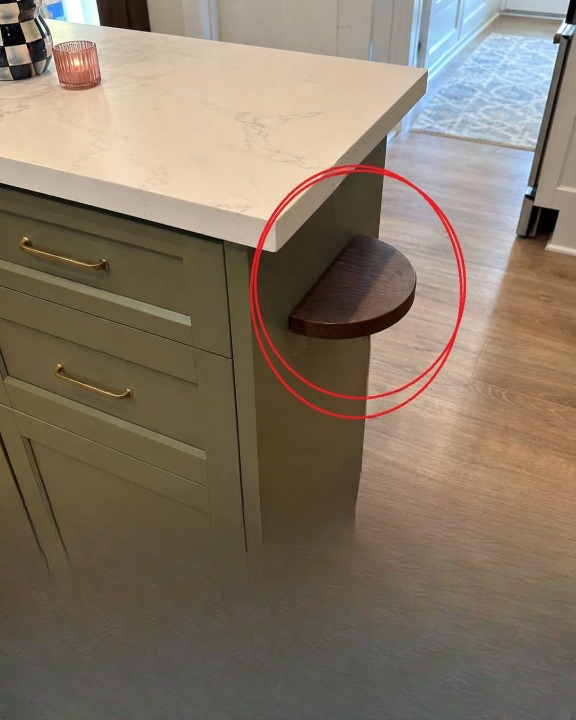
If you’ve ever noticed a small shelf or rounded ledge attached to the side of a kitchen island, you may have wondered what its purpose is. It’s too small to function as extra countertop space, too high to serve as a step, and certainly not designed for seating. Even so, this subtle feature can add both style and practicality to a kitchen.
A kitchen island shelf is typically designed as a convenient landing spot for lightweight everyday items or as a decorative element that enhances the appearance of the island. While it may not be an essential feature, it can make the kitchen more functional when used thoughtfully.
Let’s take a closer look at what this small shelf is for, how it can be used, and what it’s best to avoid placing on it.
What Is a Kitchen Island Shelf?
A kitchen island shelf is a compact extension built onto the side or end of a kitchen island. Unlike the main countertop, it isn’t intended for food preparation or heavy storage. Instead, it serves as a small, easily accessible surface that complements the overall design of the kitchen.
Depending on the island’s style, the shelf may be made from the same material as the countertop, such as granite, quartz, marble, or wood. Some designs feature rounded edges for a softer appearance, while others have clean, straight lines that match a modern aesthetic.
Although every kitchen is different, these shelves are usually intended for light everyday use rather than major household tasks.
Everyday Uses for a Kitchen Island Shelf
One of the biggest advantages of a small side shelf is convenience. It provides a temporary place to set down items that you need close at hand without cluttering the main work surface.
Some practical uses include:
- Holding a cup of coffee or tea while chatting in the kitchen.
- Setting down a smartphone or tablet while following a recipe.
- Placing keys, sunglasses, or a wallet after arriving home.
- Displaying a small decorative plant or fresh flowers.
- Holding a candle or decorative bowl.
- Providing a place for a drink while entertaining guests.
- Resting a small serving plate during family gatherings.
Because the shelf is separate from the main countertop, it can help keep cooking and food preparation areas more organized.
A Decorative Design Feature
In many kitchens, the side of an island would otherwise be a plain cabinet panel. Designers often use that space to add architectural interest through decorative trim, open shelving, wine storage, or towel racks.
A small stone or wood shelf offers another attractive option.
The shelf can soften the appearance of the island, especially if it has curved edges or matches the countertop material. It helps create a custom-built look while adding a subtle visual detail that makes the kitchen feel more refined.
Even if it isn’t used every day, it contributes to the overall design of the room.
Useful for Entertaining
Kitchen islands naturally become gathering places when family members or guests visit.
A small side shelf can provide extra convenience during casual entertaining by giving people a place to set down:
- Drinks
- Small appetizer plates
- Napkins
- Coffee cups
- Dessert dishes
While the shelf isn’t large enough to replace the main countertop, it can reduce congestion by providing a dedicated spot for a few lightweight items.
If your kitchen is often the center of social gatherings, this feature can become surprisingly useful.
Can It Be Used for Storage?
Yes—but only for light, temporary storage.
Because the shelf is open and usually fairly narrow, it’s not designed to hold large kitchen equipment or permanent storage items.
Suitable items include:
- A small fruit bowl
- A cookbook you’re currently using
- A decorative tray
- Salt and pepper shakers
- A small herb plant
- A tissue box
- Seasonal decorations
Keeping the shelf simple helps maintain a clean and organized appearance.
Overloading it with miscellaneous objects can make even a well-designed kitchen feel cluttered.
A Convenient “Landing Zone”
Many homeowners describe this type of shelf as a convenient landing zone.
Throughout the day, there are always small items that need a temporary place:
- Grocery lists
- Car keys
- Reading glasses
- Water bottles
- Phones
Instead of placing these items directly on the main countertop where meals are prepared, the side shelf offers a separate location that keeps them within easy reach.
This simple organizational benefit is one reason many people appreciate having the feature.
Things You Should Avoid Placing on the Shelf
Although these shelves are often made from durable materials like stone or hardwood, they are generally intended for lightweight items.
It’s best to avoid using the shelf for:
- Heavy countertop appliances
- Large serving platters
- Hot cookware directly from the oven
- Boxes or bulky storage containers
- Breakable glass objects near busy walkways
- Anything that extends into the walking path
Just because the shelf appears sturdy doesn’t necessarily mean it was designed to support significant weight.
If you’re unsure about its load capacity, consult the kitchen installer or manufacturer.
Is It Safe to Sit or Stand on It?
No.
A kitchen island shelf is not designed to function as a seat, footrest, or climbing surface.
Even if it’s constructed from solid stone, the strength of the shelf depends largely on how it is attached to the cabinet.
To help prevent damage or injury, avoid:
- Sitting on the shelf
- Standing on it to reach high cabinets
- Allowing children to climb on it
- Leaning your full body weight against it
Using the shelf only for its intended purpose helps preserve both its appearance and structural integrity.
Consider the Kitchen Layout
Before deciding how to use the shelf, consider its location.
If it’s positioned near a major walkway, leaving large objects on it could reduce walking space or increase the chance of bumping into items.
To keep the kitchen comfortable and functional:
- Choose compact decorative pieces.
- Avoid sharp-edged objects.
- Keep frequently used pathways clear.
- Store only one or two items at a time.
This approach allows the shelf to remain attractive without interfering with daily movement through the kitchen.
Decorating Ideas
If you enjoy decorating your home, a kitchen island shelf offers a great opportunity to add personality without overwhelming the space.
Popular decorating ideas include:
- A small ceramic vase with fresh flowers.
- A decorative bowl.
- A scented candle.
- A miniature succulent or herb plant.
- A framed family photo.
- A wooden tray with seasonal decorations.
- A stylish cookbook stand.
Rotating decorations throughout the year can help keep the kitchen feeling fresh and inviting.
Keeping It Organized
Like any convenient surface, a small shelf can easily become a place where miscellaneous items accumulate.
To prevent clutter:
- Limit decorations to one or two pieces.
- Remove unnecessary items regularly.
- Return misplaced objects to their proper storage locations.
- Wipe the shelf clean during routine kitchen cleaning.
A tidy shelf enhances the overall appearance of the kitchen and preserves its intended purpose.
Is a Kitchen Island Shelf Worth Having?
While it isn’t an essential feature, many homeowners appreciate the extra flexibility it provides.
The shelf offers:
- Additional convenience
- Decorative appeal
- A place for temporary everyday items
- Extra functionality during entertaining
- A more customized kitchen design
For homeowners who value both style and practicality, it’s a thoughtful addition that can improve the overall usability of the kitchen.
Final Thoughts
A kitchen island shelf may seem like a minor detail, but it serves several useful purposes. Whether used as a convenient spot for a morning coffee, a place to set down your phone, or a display area for decorative accents, it adds both function and character to the kitchen.
The key is to use it as intended: a light-duty surface for everyday convenience rather than heavy storage or seating. Keeping the shelf neat and uncluttered allows it to complement the kitchen’s design while providing a practical place for the small items you use throughout the day.
Although not every kitchen island includes this feature, those that do can benefit from a little extra versatility. With thoughtful use, a kitchen island shelf becomes more than just a decorative detail—it becomes a functional part of the kitchen that contributes to an organized, welcoming, and well-designed living space.