Gardening can be one of the most rewarding hobbies, but maintaining healthy plants also means paying attention to insects that may affect trees, shrubs, and vines. One insect that has received increasing attention in recent years is the spotted lanternfly, an invasive species that has spread across several regions and can impact both residential landscapes and commercial agriculture.
Although the spotted lanternfly may appear colorful and unusual, it can become a concern when large populations gather on trees and other plants. Learning how to identify this insect, understand its behavior, and take appropriate action can help reduce its impact while supporting local efforts to protect the environment.
What Is the Spotted Lanternfly?
The spotted lanternfly (Lycorma delicatula) is an invasive planthopper originally native to parts of Asia. Since being introduced to North America, it has spread to multiple states, where it feeds on a wide variety of plants, including maple trees, fruit trees, grapevines, black walnut, willow, and many ornamental plants.
Unlike insects that chew leaves, spotted lanternflies feed by piercing plant tissues and extracting sap. While a single insect is unlikely to cause noticeable damage, large populations can place significant stress on plants over time.
For homeowners, gardeners, and farmers, understanding how this insect behaves is the first step toward effective management.
Why Is It Considered an Invasive Species?
Invasive species are organisms introduced into an area where they do not naturally occur and where they can spread rapidly.
The spotted lanternfly reproduces efficiently and has relatively few natural controls in many of the regions it has invaded. As a result, populations can increase quickly if left unmanaged.
Researchers and agricultural agencies continue to monitor its spread because it has the potential to affect vineyards, orchards, hardwood forests, and ornamental landscaping.
While healthy, mature trees can often tolerate some feeding, repeated infestations may weaken plants and make them more vulnerable to other environmental stresses.
Recognizing the Different Life Stages
One reason the spotted lanternfly can be overlooked is that it changes appearance as it develops.
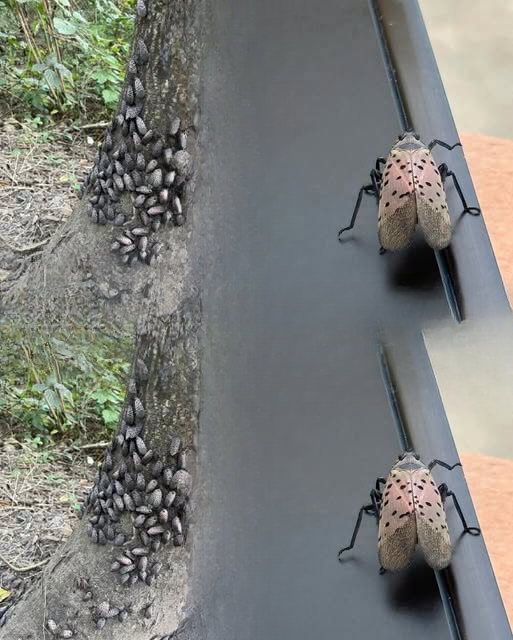
Young nymphs are small, black insects covered with bright white spots. As they mature, they become larger and develop distinctive red, black, and white coloring.
Adult lanternflies are approximately one inch (2.5 cm) long. When resting, their folded wings appear gray with black spots. When they open their wings, bright red hindwings become visible, making them easy to recognize.
Learning these different stages helps homeowners identify the insect earlier in the season.
What Is the Sticky Substance Under Trees?
One of the most noticeable signs of a lanternfly infestation is a sticky substance found beneath affected trees.
As lanternflies feed on plant sap, they produce a sugary liquid known as honeydew. This residue can collect on leaves, outdoor furniture, vehicles, decks, patios, and other nearby surfaces.
Honeydew may also encourage the growth of sooty mold, a dark-colored fungus that grows on the sugary coating rather than directly attacking the plant itself.
Although the mold usually doesn’t infect the tree, heavy coverage can reduce the amount of sunlight reaching the leaves, potentially affecting overall plant health if infestations become severe.
Plants Commonly Affected
The spotted lanternfly feeds on more than 70 different plant species.
Some of its preferred hosts include:
- Maple trees
- Grapevines
- Black walnut
- Willow
- Birch
- Fruit trees
- Various ornamental landscape plants
Not every tree will experience significant damage, but repeated feeding by large numbers of insects may weaken plants over time.
What Should You Do If You Find One?
If you discover spotted lanternflies on your property, the best response depends on where you live and the recommendations provided by your local agricultural authorities.
In many areas where the insect is established, homeowners are encouraged to reduce local populations when practical. This may include manually removing insects or following local management guidance.
If you live in an area where spotted lanternflies have not yet become widespread, reporting sightings to your state’s Department of Agriculture or equivalent agency may help officials monitor their spread.
Always check your local regulations before taking action, as recommendations may differ from one region to another.
Watch for Egg Masses
One of the easiest opportunities to reduce future populations occurs during the fall and winter.
Adult lanternflies lay egg masses on many different surfaces, including:
- Tree trunks
- Fence posts
- Deck railings
- Outdoor furniture
- Firewood
- Landscaping stones
- Recreational vehicles and trailers
These egg masses often resemble small patches of dried mud.
Many agricultural agencies recommend carefully scraping egg masses into a container filled with rubbing alcohol or hand sanitizer to help destroy the eggs.
Removing egg masses before spring can significantly reduce the number of insects that hatch the following season.
The Importance of the Tree of Heaven
Another plant commonly associated with spotted lanternflies is the Tree of Heaven (Ailanthus altissima).
This fast-growing invasive tree is one of the insect’s preferred hosts and is frequently found along roadsides, vacant lots, and forest edges.
If you suspect you have a Tree of Heaven on your property, consult your local extension office or a certified arborist before removing it. Proper identification is important because several native trees have a similar appearance.
In some management programs, selected trees are intentionally retained and treated by licensed professionals to help reduce lanternfly populations.
Using Traps Responsibly
Some homeowners use sticky bands around tree trunks to capture young lanternflies as they climb.
However, these traps can accidentally capture birds, squirrels, butterflies, and other beneficial wildlife if used improperly.
If sticky bands are recommended in your area, wildlife experts advise covering them with protective mesh or wire guards that reduce the risk to non-target animals while still allowing lanternflies to be captured.
Always follow manufacturer instructions and local recommendations when using any pest management product or device.
Preventing the Spread
One reason spotted lanternflies have expanded into new areas is that they often travel unintentionally with people.
Egg masses may be attached to:
- Cars
- Campers
- Boats
- Firewood
- Outdoor equipment
- Shipping materials
- Landscaping supplies
Before traveling from an area with known infestations, inspect vehicles and outdoor equipment for insects or egg masses.
These simple inspections can help slow the spread of the species into new communities.
Working Together to Protect Local Ecosystems
Managing invasive species is most effective when homeowners, gardeners, businesses, and public agencies work together.
Local agriculture departments, universities, and cooperative extension services continue researching environmentally responsible ways to reduce spotted lanternfly populations while protecting beneficial insects and wildlife.
If you notice unusual insect activity on your property, learning how to identify the species and following guidance from local experts can make a meaningful contribution to regional management efforts.
A Practical Approach to Garden Care
Finding spotted lanternflies in your yard can be concerning, but understanding the insect’s life cycle and knowing how to respond can make the situation much more manageable. Regularly inspecting your trees, checking for egg masses, and following recommendations from local agricultural authorities are practical steps that can help protect your landscape.
Healthy gardens thrive with consistent care and early attention to potential problems. By staying informed and taking appropriate action when needed, homeowners can help protect not only their own property but also nearby farms, forests, and natural ecosystems. Small efforts, combined across many communities, can make a significant difference in managing invasive species and preserving healthy landscapes for years to come.