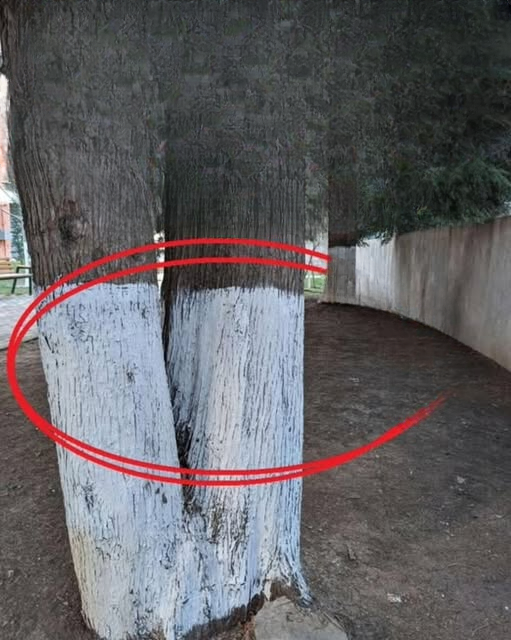
If you’ve ever taken a quiet walk through a neighborhood, orchard, park, or countryside road, you may have noticed something unusual: the lower trunks of certain trees painted bright white. At first glance, it might look decorative or even artistic. Some people assume it’s for identification. Others think it may signal construction, landscaping, or pest treatment.
In reality, painting trees white is neither random nor decorative. It is a long-standing horticultural practice designed to protect trees from environmental stress — especially during winter.
This comprehensive guide explains:
-
Why trees are painted white
-
What sunscald is and how it damages trees
-
Which trees benefit most
-
The science behind temperature fluctuations
-
How to apply protective coatings properly
-
Alternatives to paint
-
Environmental considerations
-
Common myths and misconceptions
-
Best overall winter tree care practices
By the end, you’ll understand exactly why this simple white coating can make a significant difference in tree health and longevity.
The Main Reason Trees Are Painted White: Protection from Sunscald
The primary reason for painting tree trunks white is to protect them from a condition called winter sunscald.
Sunscald occurs when sunlight warms the bark during the day and freezing temperatures rapidly cool it at night. This dramatic temperature swing creates internal stress in the bark, which can lead to:
-
Cracks
-
Splits
-
Bark peeling
-
Tissue damage
-
Increased vulnerability to pests and disease
White paint helps reflect sunlight, reducing how much heat the bark absorbs during the day. This minimizes temperature fluctuations and lowers the risk of damage.
Think of it as sunscreen — but for trees.
Understanding Winter Sunscald: The Science Behind the Damage
To truly appreciate why white paint works, it helps to understand what’s happening inside the tree during winter.
1. Daytime Heating
Even in winter, the sun can be surprisingly strong. When sunlight hits a tree’s dark bark — especially on the south or southwest side — the bark absorbs heat and warms up.
As temperatures rise:
-
Cells inside the bark expand
-
Sap may begin to move
-
Dormant tissue becomes temporarily active
This warming can trick the tree into partially “waking up” from dormancy.
2. Rapid Nighttime Cooling
When the sun sets, temperatures can drop quickly — sometimes plunging below freezing within hours.
This causes:
-
Rapid contraction of bark tissue
-
Freezing of expanded cells
-
Cellular rupture
-
Physical splitting of bark
The result is visible cracking or vertical splits along the trunk.
Why Winter Makes Trees More Vulnerable
Trees in winter are dormant. They are conserving energy, not actively growing or repairing tissue. This dormancy means:
-
Healing processes are slower
-
Damaged tissue remains exposed longer
-
Protective responses are reduced
When bark splits occur, they create entry points for:
-
Fungi
-
Harmful microorganisms
-
Insects
-
Wood-boring pests
Over time, this damage can weaken the tree structurally and biologically.
How White Paint Prevents Damage
White paint works because of a simple physical principle: light colors reflect sunlight, while dark colors absorb it.
When a tree trunk is painted white:
-
Less solar radiation is absorbed
-
Bark stays cooler during the day
-
Temperature differences between day and night are reduced
-
Expansion and contraction cycles become less extreme
This stabilization significantly lowers the risk of bark cracking.
The paint does not “heat” the tree. It moderates temperature swings by preventing overheating in the first place.
Which Trees Are Most Commonly Painted?
Not all trees require white paint. The practice is most common with:
Young Trees
Young trees are particularly vulnerable because:
-
Their bark is thinner
-
Protective outer layers are underdeveloped
-
They lack thick, insulating bark
Newly planted trees are especially at risk.
Fruit Trees
Orchards frequently use trunk painting for species such as:
-
Apple
-
Pear
-
Peach
-
Plum
-
Cherry
Fruit trees are often more delicate and represent a financial investment, so growers take preventative measures seriously.
Thin-Barked Species
Some tree species naturally have thinner bark, making them more susceptible to sunscald.
Common Locations Where You’ll See Painted Trees
Tree trunk painting is especially common in:
-
Residential neighborhoods
-
Orchards and farms
-
Landscaped commercial properties
-
Areas with cold winters and sunny days
-
Regions with large temperature swings
In agricultural settings, rows of white-painted trunks are a common sight during fall and winter.
The Correct Type of Paint to Use
If done improperly, painting can harm trees. The correct materials are essential.
Recommended: Water-Based Latex Paint
Experts recommend:
-
Interior, water-based latex paint
-
White color only
-
Diluted with water
Why water-based?
-
It allows the bark to breathe
-
It doesn’t seal pores
-
It minimizes chemical stress
-
It reduces environmental impact
Avoid: Oil-Based Paint
Oil-based paints can:
-
Block gas exchange
-
Trap moisture
-
Damage bark tissue
-
Interfere with natural processes
Using improper paint can create more harm than benefit.
Proper Mixing Ratio
The commonly recommended dilution ratio is:
1 part white latex paint : 1 part water
This ensures:
-
A thin, breathable coating
-
Even application
-
Adequate sunlight reflection
-
No excessive buildup
The goal is not to create a thick layer — just a reflective one.
Step-by-Step Guide to Painting Tree Trunks
If you’re protecting trees on your property, follow these guidelines:
1. Choose the Right Time
Apply in:
-
Late fall
-
Early winter
-
Before extreme cold sets in
2. Clean the Trunk
Remove:
-
Loose bark
-
Dirt
-
Debris
Do not aggressively scrape.
3. Apply Evenly
Use:
-
A soft paintbrush
-
A garden sprayer (fine mist setting)
Cover:
-
Entire circumference
-
From soil line up to first branches
-
Especially south and southwest sides
4. Apply a Thin Coat
A thin, even coat works best. Thick layers are unnecessary.
How Often Should Trees Be Repainted?
Typically:
-
Once per year is sufficient
-
Reapply before each winter season
However, repaint if you notice:
-
Peeling
-
Fading
-
Heavy weather erosion
-
Exposed bark areas
In milder climates, annual repainting may not be necessary.
Environmental Considerations
When protecting trees, it’s important to consider environmental responsibility.
Choose Low-VOC Paint
Low-VOC (volatile organic compound) paint:
-
Reduces chemical emissions
-
Is safer for soil and surrounding plants
-
Is better for air quality
Avoid Harmful Additives
Do not use paints containing:
-
Heavy metals
-
Industrial solvents
-
Unapproved chemical additives
The objective is protection — not pollution.
Is Painting Trees Harmful?
When done correctly with proper materials:
No — it is not harmful.
However, problems arise when:
-
Thick coatings are applied
-
Oil-based products are used
-
Paint is applied in hot weather
-
Damaged bark is aggressively scraped
Moderation and proper technique are key.
Alternatives to White Paint
If you prefer not to use paint, consider:
Tree Wraps
Commercial tree wrap materials:
-
Reflect sunlight
-
Insulate bark
-
Can be removed in spring
However, wraps must be removed seasonally to prevent moisture buildup.
Shade Barriers
Temporary shading boards on the south side of young trees can reduce sun exposure.
Strategic Planting
Planting trees where they receive balanced light exposure can reduce sunscald risk naturally.
Other Winter Tree Protection Practices
Painting trunks is just one part of winter care.
Mulching
Apply 2–4 inches of mulch around the base (not touching the trunk):
-
Insulates roots
-
Conserves moisture
-
Stabilizes soil temperature
Proper Watering
Even in winter:
-
Water during dry periods
-
Water before ground freezes
-
Avoid overwatering
Roots still require hydration.
Pruning
Winter is ideal for removing:
-
Dead branches
-
Damaged limbs
-
Diseased wood
Avoid heavy pruning, which may stress the tree.
Wind Protection
Young trees may benefit from:
-
Windbreaks
-
Stakes (temporary)
-
Protective barriers
Common Myths About White-Painted Trees
Myth 1: It’s Decorative
While it may look neat, the purpose is protective, not aesthetic.
Myth 2: It Kills Pests Directly
White paint does not function as an insecticide. It prevents temperature stress.
Myth 3: It’s Only for Farms
Homeowners can benefit too, especially with young trees.
Myth 4: All Trees Need It
Only vulnerable or thin-barked trees in certain climates truly benefit.
When You Don’t Need to Paint Trees
You may not need trunk painting if:
-
Winters are mild
-
Temperature swings are minimal
-
Trees are mature with thick bark
-
The tree species is naturally resistant
Assess your local climate before deciding.
Long-Term Benefits of Protecting Tree Trunks
Preventing sunscald:
-
Reduces structural damage
-
Decreases disease risk
-
Extends tree lifespan
-
Improves fruit production (in fruit trees)
-
Preserves landscape value
Healthy trees also:
-
Improve air quality
-
Provide shade
-
Increase property value
-
Support wildlife
A Global Practice
Tree trunk painting is practiced in:
-
North America
-
Europe
-
Parts of Asia
-
Agricultural regions worldwide
It is especially common in commercial orchards, where protecting bark health directly impacts productivity.
Final Thoughts: Why White Paint Matters
The next time you see a tree with a white-painted trunk, you’ll understand that it’s not random, decorative, or symbolic. It’s a practical and preventative measure designed to protect trees from the damaging effects of winter sun exposure and rapid temperature changes.
This simple, affordable technique:
-
Stabilizes bark temperature
-
Prevents cracking
-
Reduces disease risk
-
Supports long-term health
In regions with harsh winters and sunny days, it can mean the difference between a thriving tree and one that struggles year after year.
Tree care doesn’t always require expensive tools or complex systems. Sometimes, protection comes down to a brush, diluted white paint, and an understanding of how nature works.
And now, when you pass by those white trunks in winter, you’ll know exactly what they represent: thoughtful care and smart protection for the trees that quietly support our environment every day.