It usually starts the same way.
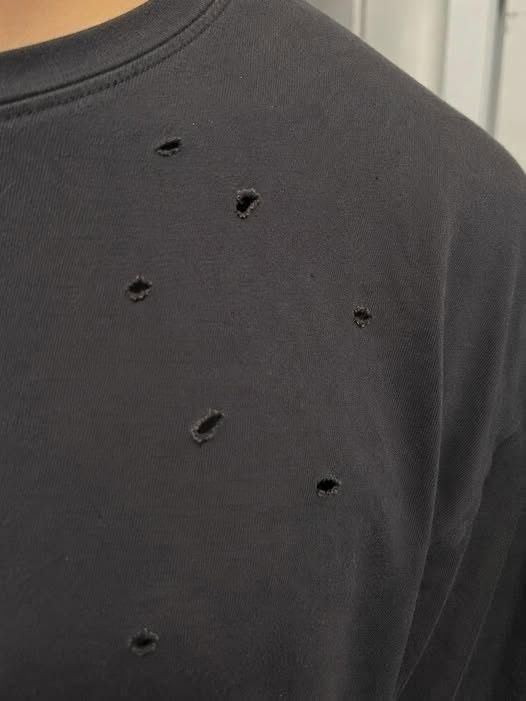
You pull out a favorite T-shirt, one you’ve worn countless times, and notice it: a tiny hole near the hem. Then another in the sleeve. Nothing dramatic enough to ruin the garment immediately, but enough to make you wonder where they came from.
You didn’t snag it on anything. You didn’t notice a tear. And yet, over time, more of your clothes start showing the same problem.
It feels random—but it isn’t.
Those small holes are almost always the result of everyday laundry habits quietly damaging fabric over time.
The Real Reason Tiny Holes Keep Appearing
Most people assume holes come from accidental snags outside the home—rough surfaces, sharp corners, or wear and tear from movement. While that can happen, the most common culprit is actually inside your laundry routine.
Washing machines and dryers create a harsh environment for clothing, especially delicate fabrics like cotton, modal, and lightweight blends.
Inside a typical wash cycle, clothes are constantly being pulled, twisted, and rubbed against each other. In top-loading machines, the central agitator can stretch and stress fabric as it moves garments around aggressively. In front-loading machines, the tumbling motion causes clothes to repeatedly press and grind against one another.
Over time, this friction weakens fibers until small holes eventually appear.
The Hidden Damage Caused by Hardware and Fasteners
One of the most overlooked causes of fabric damage comes from the clothes themselves.
Zippers, buttons, bra hooks, and metal clasps act like tiny abrasive tools inside the drum. As the machine spins, these elements catch, scrape, and pull at softer fabrics nearby.
A lightweight T-shirt rubbing against a metal zipper for 30 minutes doesn’t tear immediately—but repeated cycles slowly thin the material until it finally gives way.
This is why holes often appear in similar locations on multiple garments, especially around the stomach area where clothing layers tend to overlap.
Overloading the Machine Makes Everything Worse
It might feel efficient to wash as many clothes as possible in one load, but overloading the machine is one of the fastest ways to damage your wardrobe.
When the drum is packed too tightly, clothes can’t move freely. Instead of flowing through water and detergent, they become compressed into a dense mass.
This forces fabrics to rub against each other with increased pressure, creating constant stress points. Heavier items like jeans and towels amplify the damage by pressing against lighter fabrics, which are far more vulnerable.
The result is gradual weakening of fibers—and eventually, those frustrating pin-sized holes.
Dryers Add the Final Blow
Even if clothes survive the wash cycle, the dryer can finish the job.
High heat weakens fabric fibers, especially natural materials like cotton. When clothing has already been stressed from washing, the added heat accelerates breakdown.
Overdrying also contributes to brittleness, making fibers more likely to snap during future wears and washes.
That’s why garments that seemed perfectly fine at first can suddenly develop holes after just a few more laundry cycles.
The Small Habits That Make a Big Difference
The good news is that preventing these tiny holes doesn’t require expensive products or major lifestyle changes. It comes down to a few simple adjustments in how you do laundry.
Turning clothes inside out is one of the easiest ways to protect outer fabric surfaces from friction. It helps reduce abrasion on visible areas and slows overall wear.
Closing zippers and fastening hooks prevents sharp edges from catching on other garments. This alone can significantly reduce accidental snags.
Using mesh laundry bags for delicate items adds an extra layer of protection, keeping them separated from heavier clothing.
Separating heavy fabrics like jeans and towels from lighter items like T-shirts reduces impact inside the drum and prevents unnecessary pressure on thin materials.
Avoiding overloading the machine allows clothes to move freely, which reduces constant friction and helps detergent distribute more evenly.
Finally, lowering dryer temperatures or using air-dry settings can preserve fiber strength and extend the lifespan of your clothing.
Why It Happens So Slowly
One of the most frustrating aspects of this issue is how gradual it feels. Clothes don’t tear in a single wash. Instead, they weaken little by little over many cycles.
This slow damage makes it easy to overlook laundry as the cause. By the time holes appear, the weakening process has already been happening for weeks or even months.
That’s why it often feels like clothing is “mysteriously” developing damage out of nowhere.
How to Extend the Life of Your Wardrobe
Protecting your clothes is ultimately about reducing stress on fabric at every stage of the laundry process.
Gentle washing cycles, mindful sorting, and lower heat settings all work together to preserve fibers. Even small changes—like not overstuffing the washer or taking an extra minute to zip up clothing—can significantly extend the life of your wardrobe.
Over time, these habits don’t just prevent holes. They help clothes retain their shape, softness, and color far longer than they would under rougher care.
A Simple Shift With Lasting Results
Most people never think twice about how they do laundry until something goes wrong. But clothing is more fragile than it appears, especially under constant mechanical stress.
Those tiny holes aren’t random. They’re signals that fabric is being pushed beyond its limits.
Once you understand what’s causing them, the solution becomes surprisingly simple: gentler cycles, better sorting, and a little more attention to detail.
And in return, your favorite clothes last longer, look better, and stay out of the donation pile far sooner than expected.