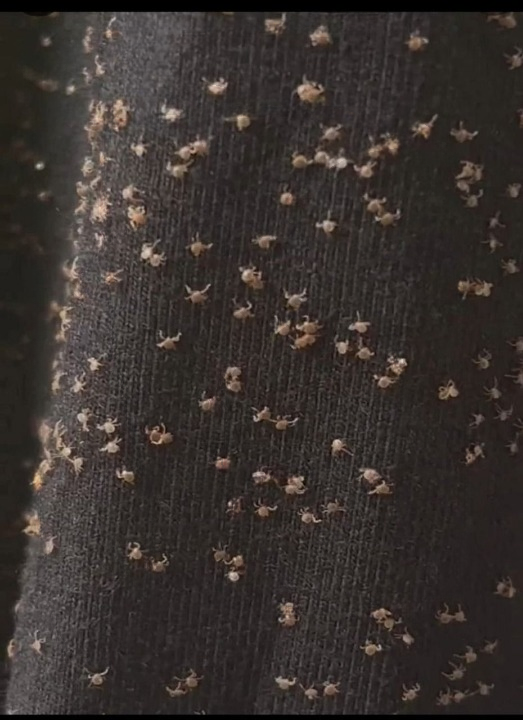
It’s a familiar moment for many people who enjoy walking outdoors. You head out for a peaceful stroll—maybe through a park, along a quiet trail, or across an open field—feeling relaxed and disconnected from daily stress. The walk feels ordinary, even refreshing. But later, when you glance down at your clothing, you notice something unexpected: small, stubborn bits clinging to your pant legs as if they appeared from nowhere.
At first, it can be confusing. They might look like dust clusters, tiny insects, or some kind of debris picked up along the way. Some people even assume they are caused by dirt in the environment or something unusual on the ground. However, the explanation is far more natural—and actually quite fascinating once you understand it.
In most cases, those tiny particles are not random at all. They are plant seeds, often referred to as burrs or stickseeds, and they are part of a clever survival strategy used by certain plants. While they may seem like an inconvenience to us, they play an important role in nature’s way of spreading life across different environments.
How Plants Use You as a “Transport System”
Plants cannot move on their own, so they rely on different methods to spread their seeds. Some use wind, others depend on water, and many rely on animals. In the case of burr-producing plants, they have developed a particularly effective method: attaching themselves to anything that passes by.
When you walk through areas where these plants grow, your clothing brushes against them. The seeds then latch onto fabric fibers and cling tightly, allowing them to travel with you without you even realizing it. This process is completely accidental from your perspective, but highly intentional from nature’s perspective.
By attaching to animals, humans, or even pets, these seeds are transported far away from their original location. Eventually, they fall off in a different place, giving the plant a chance to grow in new soil and expand its reach.
Why These Seeds Stick So Easily
The reason these tiny seeds are so difficult to remove lies in their structure. Over time, plants that rely on this method of spreading have evolved specialized shapes designed specifically for attachment.
Many of these seeds contain microscopic hooks or barbed surfaces that act almost like miniature grappling tools. When they come into contact with fabric, fur, or even socks, they hook in tightly and resist being brushed off easily. Others have fine, bristly hairs that behave similarly, weaving themselves into the fibers of clothing.
Some species even produce slightly sticky or adhesive surfaces that help them stay attached during movement. This combination of physical design and natural engineering makes them surprisingly efficient at what they do. In many ways, their structure is similar to Velcro—except created entirely through natural evolution.
Common Plants That Cause This Effect
These clingy seeds come from a variety of plants, many of which grow in common outdoor environments where people often walk or spend time. You are most likely to encounter them along hiking trails, grassy fields, forest edges, or overgrown pathways.
Some well-known examples include burdock, which produces round, spiky burrs that attach aggressively to fabric. Beggar’s lice is another common source, known for its small, sticky seeds that cling in clusters. Goosegrass, sometimes called cleavers, has thin, hooked structures that easily latch onto clothing. Sandbur, often found in warmer climates, produces sharp, sand-like seed clusters that can stick to both fabric and skin.
Because these plants thrive in natural, open areas, encounters with their seeds are extremely common during outdoor activities. The more time spent walking through vegetation, the more likely you are to collect a few of them along the way.
Why You Notice Them Later, Not Immediately
One interesting part of this experience is that most people do not notice the seeds right away. During a walk, attention is usually focused on surroundings, conversations, or simply enjoying the environment. The seeds are small enough to go unnoticed at first.
It is often only after returning home or sitting down that they become visible. At that point, lighting, movement, or a change in posture reveals what was previously hidden. This delay in awareness is what makes the experience feel surprising, even though the seeds were attached the entire time.
How to Remove Them Effectively
Although they are harmless, burrs and stickseeds can be annoying to remove once they attach themselves to clothing. Fortunately, there are simple ways to handle them without much effort.
A lint roller is one of the most effective tools, quickly lifting seeds from fabric surfaces. Adhesive tape can also work well, especially for smaller clusters. For thicker fabrics, a fine-tooth comb or brush can help loosen stubborn seeds that are embedded deeper in fibers.
It is usually best to remove them outdoors before entering your home. This prevents seeds from falling onto furniture, carpets, or other surfaces where they might spread further. After removal, washing clothing can help eliminate any remaining fragments that are not immediately visible.
If pets join you on outdoor walks, it is also a good idea to check their fur, especially around legs and tails. Animals often collect even more seeds than humans due to their lower height and closer contact with vegetation.
A Small Reminder of Nature’s Design
Although they can feel like a nuisance, these tiny seeds are actually a remarkable example of how nature solves problems creatively. Plants have no ability to move, so they depend entirely on external forces to reproduce and spread. By developing seeds that attach themselves to passing creatures, they ensure their survival in a highly efficient way.
What feels like a minor inconvenience to us is, in reality, part of a much larger ecological process. Every seed stuck to clothing represents a small journey—a potential new plant beginning far from where it started.
Final Thoughts
Finding burrs or stickseeds on your pant legs after a walk is not a sign of dirt, damage, or anything unusual. It is simply nature doing what it has evolved to do over thousands of years. These tiny hitchhikers are harmless, but they are also incredibly effective at what they were designed for.
So the next time you notice them clinging to your clothes after time outdoors, it might be worth seeing them not just as an inconvenience, but as a quiet reminder of how closely connected we are to the natural world—even when we don’t realize it.