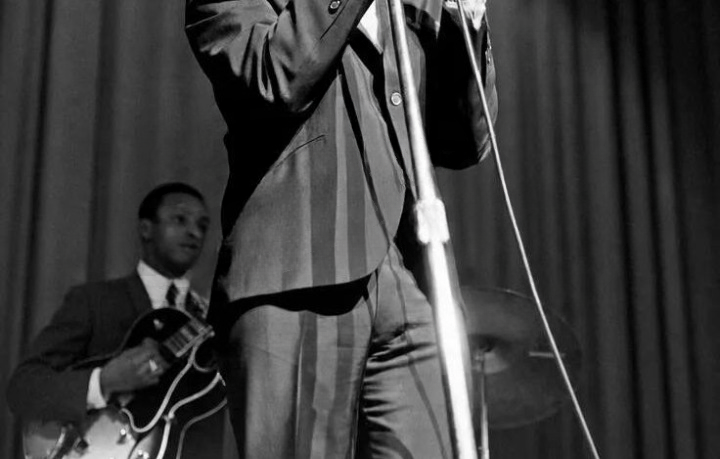
When Stand by Me was released by Ben E. King in 1961, few could have predicted that it would become one of the most emotionally enduring songs in modern music history. More than six decades later, the song still resonates with listeners around the world, offering the same quiet reassurance it delivered the very first time it played over a radio speaker.
What makes the song remarkable is not complexity or grand production. In fact, its power comes from the opposite. “Stand By Me” succeeds because it speaks to one of the most basic human needs: the desire to know that someone will remain beside us when life becomes uncertain.
From its opening bassline, the song creates an atmosphere that feels instantly familiar. The rhythm is steady and comforting, almost heartbeat-like in its simplicity. Then King’s voice enters — calm, warm, and sincere. He doesn’t oversing or overwhelm the listener. Instead, he sounds like someone speaking directly to another person during a difficult moment, offering reassurance without drama.
That emotional honesty is a major reason the song has survived across generations.
At a time when many popular songs centered primarily on romance, heartbreak, or youthful excitement, “Stand By Me” carried a broader emotional meaning. Its lyrics spoke about loyalty, trust, and emotional presence. The song acknowledged fear and uncertainty, but it refused to surrender to them. Instead, it offered companionship as the answer to hardship.
The famous lines about “the sky we look upon” tumbling and mountains crumbling into the sea paint a picture of chaos and instability. Yet the emotional core of the song remains steady. Even if the world falls apart, everything feels survivable as long as someone stands beside you.
That message transcends time periods, cultures, and personal experiences.
Part of the song’s emotional depth comes from its roots in gospel and spiritual music. The melody and lyrical structure carry echoes of traditional hymns that focused on faith, endurance, and comfort during struggle. Those influences give the song a sense of timelessness. Even listeners who know nothing about its musical origins can feel the sincerity embedded in its structure.
Over the years, “Stand By Me” became far more than a hit single. It evolved into a cultural touchstone attached to deeply personal moments in people’s lives. The song appears at weddings because it represents devotion. It appears at funerals because it offers comfort. It appears in films because it immediately creates emotional connection and vulnerability.
One of the most significant moments in the song’s continued popularity came with the release of the 1986 film Stand by Me, directed by Rob Reiner. The movie introduced the song to an entirely new generation, reinforcing its themes of friendship, loyalty, and emotional support. Following the film’s success, the song returned to the charts decades after its original release — something very few recordings ever accomplish.
Another reason the song remains so powerful is its universality. “Stand By Me” does not describe one specific situation. It never limits itself to romantic love alone. Depending on the listener, the song can feel like it is about friendship, family, marriage, grief, or even personal resilience. That flexibility allows people to attach their own experiences to it.
For some listeners, it reminds them of childhood. For others, it recalls someone they lost. For many, it simply provides calm during difficult moments.
The song has also become one of the most covered recordings in music history. Artists from nearly every genre — soul, rock, country, reggae, and pop — have created their own interpretations. Yet despite the countless versions, Ben E. King’s original recording continues to hold a special emotional authority. There is something irreplaceable about the quiet sincerity in his voice that newer versions rarely replicate completely.
Importantly, the song never tries too hard to be inspirational. It does not rely on huge vocal climaxes or dramatic emotional manipulation. Its comfort comes from restraint. The message is simple: you do not have to face fear alone.
That simplicity is exactly why the song continues to endure.
In an increasingly fast and noisy world, “Stand By Me” still feels human. It reminds listeners that emotional support does not always require perfect words or grand gestures. Sometimes the greatest comfort comes from simple presence — from knowing someone is willing to stay when life becomes difficult.
More than sixty years after its release, the song still carries the same quiet strength it always did.
And perhaps that is why it never truly ages.
Because people never stop needing reassurance, connection, and the feeling that someone will remain beside them when everything else feels uncertain.