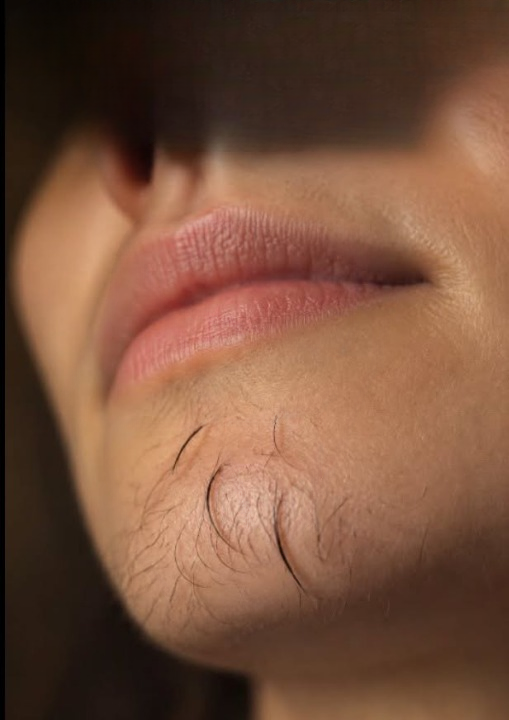
Finding a few coarse hairs on the chin can be surprising for many women, especially when it seems to appear suddenly or increase with age. In reality, this is a very common experience and usually reflects natural changes in hormones and genetics rather than anything dangerous. Although it can feel unsettling, chin hair is often just another example of how the human body shifts over time in subtle and individual ways. Understanding why it happens can help reduce worry and replace confusion with context.
Hair growth on the face is influenced primarily by hormones called androgens. These hormones, including testosterone, are present in both men and women, although women typically have them at much lower levels. Androgens are responsible for many functions in the body, including regulating hair growth. Even small fluctuations in hormone levels, or an increased sensitivity of hair follicles to these hormones, can lead to noticeable changes such as a few darker or thicker hairs appearing on the chin, jawline, or upper lip.
Genetics also play a significant role. If close female relatives such as mothers or grandmothers have experienced similar hair growth patterns, it is more likely that others in the family will as well. In these cases, chin hair is simply a hereditary trait rather than a sign of an underlying health problem. Just as some people naturally have thicker eyebrows or faster-growing nails, others may naturally develop more visible facial hair.
Age is another important factor. Hormonal balance is not fixed throughout life; it changes gradually across different stages. During puberty, hormone levels rise and settle into a pattern that continues through adulthood. In many women, midlife brings additional shifts, particularly during perimenopause and menopause. As estrogen levels begin to decline, the relative effect of androgens can become more noticeable. This change in balance can make fine facial hairs appear darker or more prominent than they were earlier in life.
In some cases, increased chin hair can be linked to conditions that affect hormone regulation. One of the most common is polycystic ovary syndrome, often known as PCOS. This condition can lead to higher levels of androgens and may be associated with other symptoms such as irregular menstrual cycles, acne, or changes in weight. However, it is important to note that not every woman with chin hair has PCOS, and not every case of PCOS includes significant facial hair. The condition exists on a spectrum and varies widely from person to person.
Certain medications can also influence hair growth patterns. Drugs that affect hormone levels or interact with endocrine function may occasionally lead to changes in facial or body hair. In other cases, ongoing stress or significant changes in overall health may play a small role in altering the body’s hormonal balance. While these factors are less common causes, they can contribute when combined with individual sensitivity or genetic predisposition.
Although chin hair is usually harmless, there are situations where it may be worth paying closer attention. A sudden increase in facial hair, especially when combined with other noticeable changes in the body, may indicate that hormone levels are shifting more rapidly than expected. In these cases, consulting a healthcare professional can help identify whether there is an underlying cause that needs attention. Medical evaluation is not always necessary, but it can provide reassurance and clarity when changes feel abrupt or unusual.
For most women, however, chin hair is simply a normal part of aging and biology. It does not reflect poor health or anything that is “wrong” with the body. Instead, it highlights how uniquely each person’s hormones and genetics interact over time. Some women may only ever notice a few fine strands, while others may experience more visible growth, and both experiences fall within the range of normal human variation.
From a practical perspective, many women choose to manage chin hair in simple and non-invasive ways. Common methods include tweezing, threading, waxing, or using gentle hair removal creams. Others prefer to leave it untouched, especially when growth is minimal or not bothersome. The choice is personal and often shaped by comfort, culture, and individual preference rather than necessity.
What is often overlooked in conversations about facial hair is the emotional aspect. Even though it is common, discovering chin hair can affect confidence or create self-consciousness. Social beauty standards sometimes make women feel that facial hair is unusual or undesirable, even when it is a natural biological occurrence. Recognizing that many women experience this change can help normalize it and reduce unnecessary concern or embarrassment.
Ultimately, chin hair is a small but meaningful reminder of how dynamic the human body is. Hormones shift, genetics express themselves in different ways, and aging brings subtle transformations that vary from person to person. While it is always valid to seek medical advice if something feels unusual, in most cases, a few chin hairs are simply part of the body’s natural story. Understanding this can help turn what feels like a concern into a normal and accepted aspect of life’s ongoing changes.