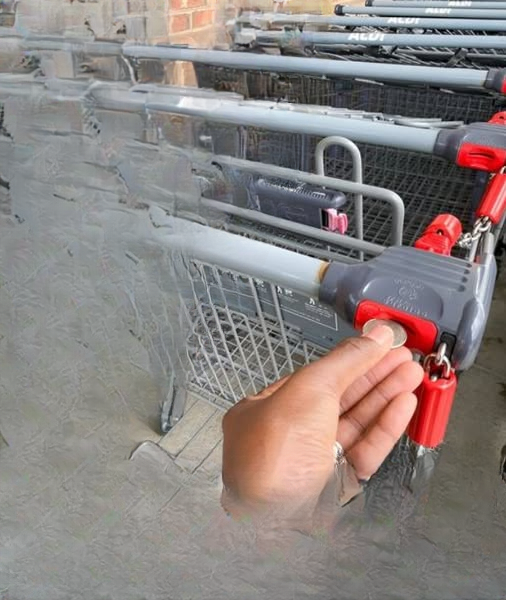
If you’ve ever visited a store like Aldi, you may have noticed something that feels a bit unusual at first: the shopping carts are connected together, and you need to insert a small coin or token to unlock one.
For first-time shoppers, this can be surprising. After all, most grocery stores allow customers to use carts freely without any kind of deposit. So why does this system exist?
Is it about making extra money? Is it just a quirky rule? Or is there a deeper purpose behind it?
The truth is much more practical—and, in many ways, quite clever.
This article explores the reasoning behind this policy in detail, breaking down how it works, why it benefits both the store and customers, and how it reflects a broader approach to efficiency, cost savings, and environmental awareness.
By the end, you may find that what once seemed inconvenient actually makes a lot of sense.
Understanding the Cart Deposit System
Before diving into the reasons, it’s helpful to understand how the system works.
At stores like Aldi, shopping carts are typically linked together in a row. To release one, you insert a small coin—often the equivalent of a refundable deposit.
Once you’re finished shopping, you return the cart to the designated area and reconnect it to the chain. When you do, your coin is released back to you.
In simple terms:
-
You temporarily deposit a small amount
-
You get it back when you return the cart
This means the system is not a fee in the traditional sense—it’s more like a refundable incentive.
Encouraging Responsibility in a Simple Way
One of the main reasons behind this system is to encourage customers to return their carts.
In many traditional parking lots, you’ll often see carts left scattered across spaces, sidewalks, or even far from the store entrance. This can create inconvenience, clutter, and even safety concerns.
By requiring a small deposit, stores create a simple motivation:
Return the cart → get your coin back.
It’s a straightforward exchange that encourages responsible behavior without the need for strict enforcement.
Over time, this leads to:
-
Cleaner parking areas
-
Fewer abandoned carts
-
A more organized shopping environment
Keeping Costs Low for Customers
Another key reason relates to pricing.
Aldi is known for its focus on affordability. Its business model is designed to reduce unnecessary expenses wherever possible.
Maintaining a fleet of shopping carts comes with costs, including:
-
Replacing lost or stolen carts
-
Repairing damaged carts
-
Hiring staff to collect carts from parking lots
By encouraging customers to return carts themselves, the store reduces these expenses.
Those savings don’t just disappear—they help support lower prices on everyday items.
In this way, the cart system is part of a larger strategy aimed at making groceries more affordable.
A More Efficient Way to Operate
Efficiency is a core principle of how this type of store operates.
Unlike many larger supermarkets, stores like Aldi often run with smaller teams.
Instead of assigning employees to constantly gather carts from outside, the system allows customers to take on that role in a simple, self-managed way.
This approach:
-
Reduces labor costs
-
Allows staff to focus on stocking shelves and assisting customers
-
Keeps operations streamlined
The result is a faster, more efficient shopping experience overall.
Reducing Clutter and Improving Safety
Loose shopping carts can create real problems in parking areas.
They can:
-
Block parking spaces
-
Roll into vehicles
-
Create obstacles for pedestrians
By encouraging customers to return carts to a central location, the deposit system helps prevent these issues.
This contributes to:
-
A safer environment
-
Less risk of property damage
-
A more pleasant overall experience
Supporting Environmentally Friendly Habits
The cart system is often paired with another policy: encouraging customers to bring their own bags.
At stores like Aldi, bags are usually not provided for free.
Instead, shoppers are encouraged to:
-
Bring reusable bags from home
-
Purchase durable bags for repeated use
This approach helps reduce reliance on single-use plastics.
Combined with the cart system, it reflects a broader effort to promote mindful consumption and reduce waste.
A Small Action with a Big Psychological Effect
Interestingly, the effectiveness of the cart deposit system is not just practical—it’s also psychological.
Even though the deposit is small, it creates a sense of ownership.
When people place a coin into the cart, they feel more responsible for returning it.
This is a well-known concept in behavioral psychology:
People are more likely to complete an action when there is a small personal stake involved.
In this case, that stake is minimal—but effective.
Not a Profit-Making Strategy
It’s important to clarify a common misconception.
The cart deposit system is not designed to generate profit.
Because the deposit is fully refundable, the store does not keep the money when customers follow the process.
The goal is not to charge customers—it’s to encourage behavior that benefits everyone.
A Culture of Shared Responsibility
Over time, this system helps create a different kind of shopping culture.
Customers become active participants in maintaining the store environment.
Instead of relying entirely on staff, everyone contributes in a small way.
This can lead to:
-
A stronger sense of community
-
More respectful use of shared spaces
-
Greater awareness of personal actions
Why It Might Feel Unusual at First
For shoppers who are used to traditional grocery stores, the system can feel unfamiliar.
Common initial reactions include:
-
Confusion about needing a coin
-
Concern about being “charged”
-
Uncertainty about how it works
However, once people understand that the deposit is returned, the system usually becomes easy to accept—and even appreciate.
Adapting to the System
If you’re planning to shop at a store that uses this system, here are a few simple tips:
-
Keep a small coin or token handy
-
Bring reusable bags
-
Return your cart after use
After a few visits, these steps become second nature.
A Reflection of a Different Business Model
The cart deposit system is just one example of a broader philosophy.
Stores like Aldi focus on:
-
Simplicity
-
Efficiency
-
Cost savings
-
Customer participation
Other examples of this approach include:
-
Limited product selection
-
Fast checkout processes
-
Minimal store decoration
Each decision is designed to reduce costs and improve efficiency.
Comparing with Traditional Stores
In traditional supermarkets:
-
Carts are free to use
-
Staff often collect carts
-
Bags are frequently provided
While convenient, these services come with costs.
Those costs are often built into product prices.
In contrast, the cart deposit system shifts a small amount of responsibility to customers, helping keep prices lower.
The Bigger Picture
When viewed as part of a larger system, the cart deposit policy makes more sense.
It’s not just about carts—it’s about:
-
Reducing waste
-
Encouraging responsibility
-
Lowering operational costs
-
Creating a more efficient shopping experience
A Lesson in Simplicity
One of the most interesting aspects of this system is how simple it is.
There’s no complex technology involved.
No apps, no tracking systems, no extra staff.
Just a small coin and a straightforward process.
Yet it works remarkably well.
Customer Reactions Over Time
Many customers who initially find the system unusual eventually come to appreciate it.
Common positive feedback includes:
-
Cleaner parking areas
-
Faster shopping trips
-
Lower prices
What starts as a minor inconvenience often becomes a preferred way of shopping.
Why It Continues to Work
The success of the cart deposit system comes down to a few key factors:
-
Simplicity – Easy to understand and use
-
Fairness – You get your money back
-
Effectiveness – Encourages the desired behavior
-
Consistency – Applied across locations
These elements combine to create a system that is both practical and sustainable.
Conclusion
At first glance, the idea of placing a small deposit to use a shopping cart might seem unusual.
But when you look closer, it reveals a thoughtful and efficient approach to everyday shopping.
By implementing this system, stores like Aldi are able to:
-
Keep prices lower
-
Maintain cleaner environments
-
Reduce operational costs
-
Encourage responsible behavior
What may feel like a small inconvenience at the start is actually part of a larger strategy designed to benefit both the store and its customers.
In the end, it’s a simple reminder that sometimes the most effective solutions are also the simplest ones.
And once you understand the reasoning behind it, that small coin in your pocket starts to make a lot more sense.