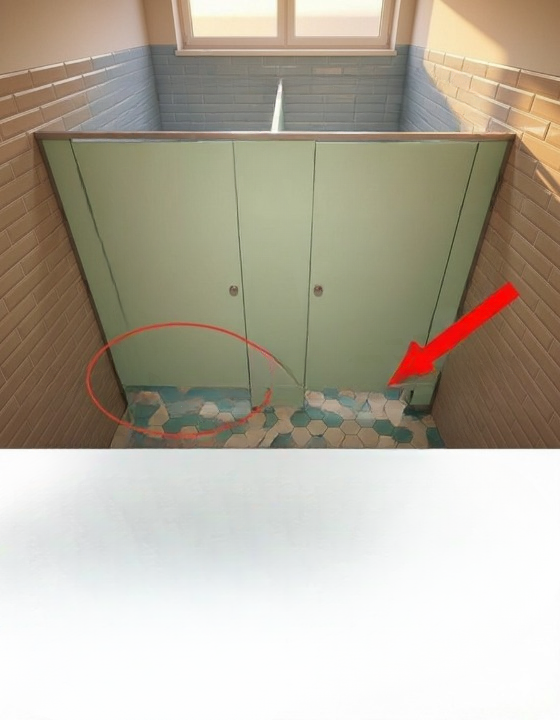
If you’ve ever stepped into a public restroom, chances are you’ve noticed a detail that feels a bit unusual—the space between the bottom of the stall door and the floor. For many people, it’s one of those small design features that raises questions. At first glance, it may seem unnecessary or even slightly uncomfortable from a privacy standpoint. However, this gap is not the result of poor construction or oversight. In reality, it is a deliberate and carefully considered part of restroom design.
Public spaces, especially those used by large numbers of people every day, require a balance between privacy, safety, hygiene, and maintenance. Designers and architects must consider how to create environments that function efficiently while also remaining safe and easy to manage. The gap beneath restroom stall doors plays an important role in achieving that balance, even if it is not always immediately obvious.
One of the primary reasons for this design choice is safety. Public restrooms are used by people of all ages and conditions, and unexpected situations can occur. Someone might feel unwell, experience dizziness, or need assistance for any number of reasons. In such cases, quick access can make a significant difference.
The open space at the bottom of the stall allows others to recognize when something may be wrong. For example, if someone collapses or remains motionless for an unusual amount of time, it becomes easier for staff or other individuals to notice that assistance may be needed. This visual access can help reduce response time in emergencies, allowing help to arrive more quickly.
Additionally, the gap can make it easier for responders to communicate with someone inside a stall if the door is locked. Instead of forcing the door open immediately, which could cause damage or distress, they can first attempt to speak with the person or assess the situation. In some cases, small items—such as water, paper, or other necessities—can also be passed underneath if needed. While these scenarios may not happen frequently, the design ensures that when they do, there is a practical way to respond.
Another important factor behind this feature is airflow and ventilation. Public restrooms are high-traffic environments where maintaining fresh air can be a challenge. Without proper airflow, odors can build up quickly, and moisture from sinks, toilets, and cleaning processes can linger in the space.
The gap beneath stall doors helps improve air circulation throughout the restroom. It allows air to move more freely between stalls and the larger room, supporting the overall ventilation system. This circulation helps reduce humidity and prevents the buildup of unpleasant odors. In turn, the restroom remains more comfortable for users and easier to maintain over time.
Good airflow is not only about comfort—it also contributes to hygiene. Moist environments can encourage the growth of bacteria or mold, especially in spaces that are frequently used and cleaned. By allowing air to flow more effectively, the open design helps keep surfaces drier and conditions more manageable.
Maintenance and cleaning are also major considerations in public restroom design. Facilities that are used by many people throughout the day require frequent cleaning to remain sanitary. The gap under stall doors makes this process more efficient for cleaning staff.
Instead of having to open every single stall door while mopping or sanitizing the floor, staff can clean large areas quickly by working across the entire space. This saves time and reduces the physical effort required to maintain the restroom. It also allows cleaning to be done more frequently, which improves overall hygiene.
In addition, this design reduces wear and tear on stall doors and hardware. Constantly opening and closing doors during cleaning can lead to damage over time, requiring repairs or replacements. By minimizing the need for unnecessary handling, the gap helps extend the lifespan of these fixtures, making the facility more cost-effective to maintain.
There is also a practical aspect related to usage efficiency. In busy locations such as airports, shopping centers, schools, or offices, restrooms often experience high demand. The open space at the bottom of stall doors allows people to quickly see whether a stall is occupied without needing to knock or try the handle.
This may seem like a small convenience, but in crowded environments, it can make a noticeable difference. It helps reduce confusion, prevents unnecessary interruptions, and allows people to move through the space more smoothly. In this way, the design contributes to a more efficient and user-friendly experience overall.
While some people may feel that the gap reduces privacy, it is important to note that restroom design aims to provide a reasonable level of privacy while still meeting other essential needs. The height and positioning of stall doors are carefully planned to ensure that users remain largely shielded from view while seated or standing inside. The gap is typically small enough that it does not compromise personal privacy in a significant way, especially when compared to the benefits it provides.
Different countries and regions may approach restroom design in slightly different ways. In some places, stalls extend closer to the floor, while in others, the gap is more noticeable. These variations often reflect local building codes, cultural expectations, and maintenance practices. However, in many parts of the world, the open-bottom design has become a standard because of its practicality.
It is also worth considering that public restrooms must serve a wide range of users with different needs. Designers must think not only about individual comfort but also about safety, accessibility, and long-term usability. Features like the gap under stall doors may not be immediately appreciated, but they are part of a broader system designed to keep facilities functional and reliable.
Over time, many people become so accustomed to this design that they no longer think about it. It simply becomes part of the environment. Yet when you take a moment to examine it more closely, it becomes clear that this small detail reflects careful planning and thoughtful problem-solving.
In everyday life, it is easy to overlook the reasoning behind common design choices. However, features like this remind us that even simple elements often have multiple purposes. The gap beneath restroom stall doors is not random—it is a solution that addresses safety concerns, supports hygiene, improves efficiency, and simplifies maintenance.
Ultimately, what might seem like a minor or even awkward detail is actually an example of practical design at work. By balancing different needs within a shared public space, it helps ensure that restrooms remain safe, clean, and accessible for everyone who uses them.