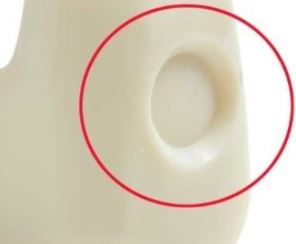
At first glance, the small circular indentation on the side of a plastic milk jug may not seem important. Many people assume it is simply a design quirk or a leftover from the manufacturing process. Because it does not immediately stand out, it is easy to overlook entirely.
However, this subtle feature is not accidental. It is the result of deliberate engineering decisions aimed at improving the jug’s performance in several ways. From handling pressure changes to supporting transportation and reducing material usage, this small detail plays a meaningful role in how the container functions.
In this article, we’ll explore the purpose behind the circular dent, how it works, and why it reflects a broader approach to efficient and practical product design.
A Functional Detail Hidden in Plain Sight
Plastic milk jugs are designed to meet several practical requirements. They must be lightweight, durable, cost-effective, and capable of safely storing liquid over a period of time. In addition, they need to withstand transportation, stacking, and everyday handling without leaking or breaking.
To meet these demands, designers rely not only on the material itself but also on the shape of the container. The circular indentation is one example of how a small structural feature can contribute to overall performance.
Rather than being decorative, this indentation serves multiple purposes that help balance strength, flexibility, and efficiency.
Managing Internal Pressure
One of the key challenges in designing liquid containers is handling internal pressure. When a jug is filled with milk or another liquid, the contents push outward against the walls of the container.
This pressure can vary due to several factors:
- Changes in temperature
- Movement during transportation
- Shifting during storage or stacking
If the container were completely rigid, these forces could cause stress points that might lead to deformation or damage over time.
The circular dent acts as a flexible zone that can respond to these changes. Instead of forcing the entire surface of the jug to absorb pressure evenly, the indentation allows for slight, controlled movement in a specific area.
In simple terms, it provides a built-in point of flexibility. This helps the jug adjust to pressure changes without compromising its structure.
Improving Durability During Transport
Before reaching store shelves, milk jugs go through a complex journey. They are often packed tightly, transported over long distances, and handled multiple times along the way.
During this process, containers may experience:
- Vibrations from moving vehicles
- Minor impacts during loading and unloading
- Compression when stacked with other items
The circular indentation helps the jug handle these stresses more effectively. By allowing a small degree of flexibility, it can absorb minor impacts and distribute force more evenly across the surface.
This reduces the likelihood of cracks forming at weak points. While it does not make the jug indestructible, it does contribute to better durability under typical conditions.
Reducing Material While Maintaining Strength
Another important aspect of modern packaging design is material efficiency. Manufacturers aim to use as little plastic as possible while still ensuring that the container performs reliably.
The circular dent contributes to this goal by reinforcing the structure without adding extra material. Instead of increasing the thickness of the entire jug, designers use shape to provide strength where it is needed.
This approach offers several advantages:
- Less plastic is required for production
- The overall weight of the container is reduced
- Transportation becomes more efficient due to lighter loads
- Resource use is minimized
This is an example of how thoughtful design can replace excess material with smarter engineering solutions.
Supporting Recycling Processes
Recycling systems are designed to handle large volumes of plastic efficiently. One challenge in this process is managing the shape of containers, which can take up significant space if left intact.
The circular indentation can make it easier for jugs to collapse when pressure is applied. This helps in several ways:
- Containers can be flattened more easily in recycling bins
- More material can be transported in a single load
- Sorting and processing become more efficient
While this feature alone does not determine whether a jug will be recycled, it can contribute to making the process smoother and more practical on a larger scale.
A Secondary Role in Branding and Identification
In some cases, manufacturers use the indented area as part of the jug’s visual design. It can serve as a subtle space for:
- Embossed logos
- Product markings
- Identification details
This does not interfere with the structural function of the indentation. Instead, it allows companies to combine practical engineering with branding in a simple and unobtrusive way.
A Multi-Purpose Design Solution
One of the most interesting aspects of the circular dent is that it serves several functions at once. Rather than adding multiple separate features, designers have created a single element that contributes to:
- Structural flexibility
- Impact resistance
- Material efficiency
- Recycling convenience
This reflects a common principle in engineering: solving multiple challenges with one well-designed feature.
Such solutions are often more efficient, both in terms of production and performance.
Why It Often Goes Unnoticed
Despite being present on many plastic milk jugs, the circular indentation is rarely given much attention. There are a few reasons for this:
- It blends naturally into the overall shape of the container
- It does not move or change visibly during use
- Most people focus on the contents rather than the packaging
Because of this, it is easy to assume that it has no real function. However, understanding its purpose reveals the level of thought that goes into even the simplest everyday items.
Everyday Examples of Hidden Design Features
The circular dent is not unique. Many common household items include subtle design elements that improve performance without drawing attention.
For example:
- Ridges on plastic bottles help improve grip and structural strength
- Grooves on containers allow for easier stacking
- Reinforced edges in packaging help prevent damage during shipping
These features are often overlooked, but they play an important role in usability and safety.
Balancing Practical Needs and Environmental Considerations
Modern packaging design must balance several priorities at once:
- Durability to protect the contents
- Lightweight construction to reduce costs
- Efficient use of materials
- Compatibility with recycling systems
The circular indentation contributes to each of these goals in a small but meaningful way. It helps maintain the jug’s performance while supporting efforts to reduce material use and improve efficiency.
This highlights how even minor design choices can have broader implications.
A Practical Perspective
While it may be interesting to understand the engineering behind the circular dent, it is also helpful to keep its role in perspective. It is one of many small features that work together to make everyday packaging functional and reliable.
You don’t need to interact with it directly or think about it during normal use. However, recognizing its purpose can offer a better appreciation of how design and engineering influence daily life.
Final Thoughts
The circular indentation on a plastic milk jug may appear to be a minor detail, but it serves several practical purposes. It helps the container manage internal pressure, improves durability during transport, reduces the amount of plastic needed, and supports aspects of the recycling process.
Rather than being a random or decorative feature, it reflects a thoughtful approach to product design—one that prioritizes efficiency, functionality, and balance.
Next time you pick up a milk jug, it may be worth taking a closer look. That small, often overlooked indentation is a reminder that even the simplest objects around us are carefully designed to meet everyday needs in smart and efficient ways.