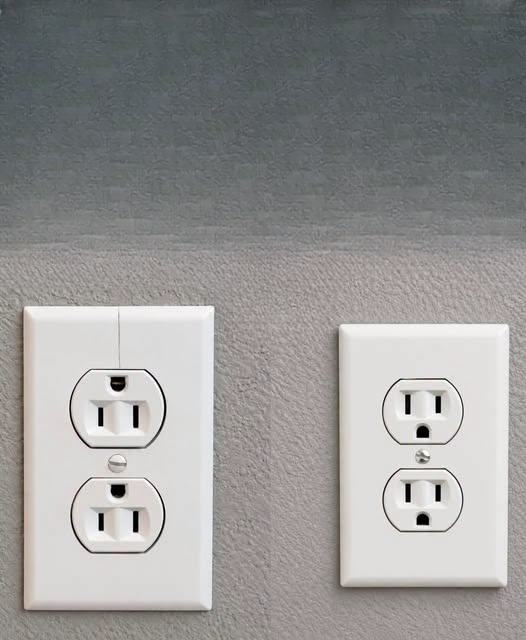
If you’ve ever noticed that one electrical outlet in your home looks different from the others, you’re not alone. In many houses, you may find an outlet installed with the grounding hole on top instead of the bottom. At first glance, it can seem like a simple installation mistake, but in many cases, there is a practical reason behind this design choice.
Although many homeowners assume every outlet should face the same direction, electricians sometimes install certain outlets differently to serve a specific purpose. Understanding why this happens can help you better understand your home’s electrical system and avoid unnecessary confusion.
A Visual Indicator for Switched Outlets
One of the most common reasons an outlet is installed upside down is to indicate that it is connected to a wall switch.
In many homes—especially those built without ceiling-mounted light fixtures in certain rooms—a switched electrical outlet provides an easy way to control a table or floor lamp. Instead of turning the lamp on manually every time, you simply leave the lamp’s switch in the “on” position and use the wall switch to control the power.
To make these special outlets easier to identify, some electricians install them with the grounding slot facing upward. This creates a visual reminder that the outlet may function differently from the others in the room.
It’s a small detail, but one that can make everyday use more convenient.
Split Receptacles Explained
Another interesting feature found in many homes is the split receptacle.
A split receptacle is a standard-looking outlet where the two plug-in spaces operate independently. One half may be connected to a wall switch, while the other half remains continuously powered.
This arrangement allows homeowners to plug a lamp into the switched half while keeping another device—such as a clock, phone charger, or internet router—powered at all times.
From the outside, the outlet appears completely normal, making it difficult to know how it works unless you test it.
Is It Required by Electrical Code?
Many people believe that upside-down outlets are required by building codes for switched outlets, but that’s a common misconception.
There is no nationwide electrical code that requires standard residential outlets to be installed with the grounding hole facing up. In fact, most electrical codes allow outlets to be installed in either direction as long as they are wired correctly and meet safety requirements.
Because of this flexibility, installation practices often depend on the electrician, the builder, local standards, or even homeowner preference.
Other Reasons an Outlet May Be Upside Down
While switched outlets are the most common explanation, there are several other reasons you might find an upside-down outlet in your home.
Some electricians prefer this orientation because they believe it offers a small safety advantage. If a metal object were to fall between a partially inserted plug and the outlet, the grounding connection would typically make contact first, which may reduce certain risks.
Others simply install all outlets consistently according to their own professional preference or company standards.
In some homes, a previous renovation or repair may have resulted in outlets being installed differently from the originals.
The orientation alone doesn’t necessarily indicate anything unusual.
How Can You Tell If an Outlet Is Switched?
The easiest way to find out is through a simple test.
Plug a lamp into the outlet and turn the lamp’s own power switch on. Then operate the nearby wall switches one at a time.
If the lamp turns on and off with one of the switches, you’ve identified a switched outlet.
If nothing changes, the outlet is likely powered continuously, regardless of its orientation.
This quick test can save time if you’re trying to determine why a particular outlet doesn’t always appear to have power.
Common Places You’ll Find Switched Outlets
Switched outlets are especially common in:
- Living rooms
- Family rooms
- Bedrooms
- Older homes without ceiling light fixtures
- Finished basements
- Bonus rooms and dens
In these spaces, builders often expected homeowners to use floor lamps or table lamps instead of overhead lighting.
Should You Change the Orientation?
Some homeowners wonder whether they should rotate an upside-down outlet so it matches the others.
Unless you’re already replacing the outlet or performing electrical work safely and according to local regulations, there’s usually no practical reason to change its orientation.
If the outlet is functioning properly, its direction has little effect on everyday use.
If you suspect an outlet is damaged, loose, or not working correctly, it’s best to have it inspected rather than assuming its orientation is the cause.
A Small Detail with a Practical Purpose
An upside-down electrical outlet may seem unusual, but in many homes it’s simply a helpful way to distinguish a switched receptacle from a standard one. While not every upside-down outlet serves this purpose, the installation often reflects practical planning rather than a mistake.
The next time you notice one in your home, you’ll know there’s a good chance it was installed intentionally. A quick test with a lamp and the nearby wall switches can reveal whether it controls a light or simply follows a particular installation preference.
Sometimes, the smallest details in a home have the most interesting stories behind them—and an upside-down outlet is a perfect example.