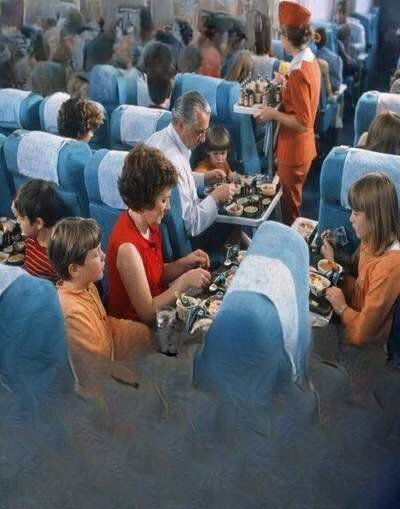
From the late 1940s through the 1970s, commercial air travel went through a period often described as the “Golden Age of Aviation.” It was a time when flying was not just a way to get from one place to another, but an event in itself—something associated with elegance, excitement, and a sense of occasion.
Unlike today’s highly efficient and widely accessible air travel, flying during this era carried a feeling of exclusivity and prestige.
A Time When Flying Was Less Common
In the years following World War II, commercial aviation was still developing. Aircraft were smaller, routes were more limited, and ticket prices were relatively high compared to average incomes.
Because of this, air travel was often reserved for business professionals, diplomats, or those undertaking special long-distance journeys. For many people, flying was something rare and memorable rather than routine.
A Focus on Comfort and Service
Airlines during this period placed a strong emphasis on passenger experience. Competing carriers worked to make their services stand out by offering comfort and hospitality that resembled high-end hotels more than modern transportation.
Cabins often featured:
- Wider and more spacious seating
- Greater legroom
- Fewer passengers per flight
- More attentive in-flight service
Flight attendants were trained not only for safety but also for hospitality, and their role was closely associated with service and presentation.
Dining in the Sky
One of the most notable aspects of mid-century air travel was the in-flight dining experience.
Passengers were often served full meals that included multiple courses, along with drinks and desserts. Food was commonly presented on real plates with metal cutlery, adding to the sense of refinement.
Rather than pre-packaged snacks or simplified meal options, airlines aimed to create a dining experience that felt closer to a restaurant than a transportation service.
Dressing for the Occasion
Travel during the Golden Age also carried social expectations. Many passengers dressed formally when boarding a flight, treating air travel as an important event.
Men often wore suits, while women dressed in elegant attire. This reflected the broader cultural idea that flying was something special, not an everyday activity.
Over time, as air travel became more common and practical, these expectations gradually faded.
Airports and Security in a Different Era
Airports during this period were far less crowded than today. Check-in processes were simpler, and security procedures were minimal compared to modern standards.
Passengers could often arrive closer to departure times and move through terminals with fewer delays and restrictions.
While this created a more relaxed experience, it also reflected a time before modern aviation security measures became necessary.
Competition Among Airlines
Airlines competed heavily to attract passengers, often highlighting luxury, comfort, and service quality in their advertising.
This competition helped shape the identity of air travel as something refined and aspirational. Each airline sought to create a memorable experience that would set it apart from its competitors.
The Shift to Modern Air Travel
Over time, advances in aviation technology, increased demand, and the rise of budget airlines made air travel more accessible to the general public.
Flights became faster, cheaper, and more frequent, allowing millions of people to travel by air who previously would not have had the opportunity.
However, this shift also changed the overall experience. Efficiency and capacity became priorities, while luxury and exclusivity became less central to most flights.
A Nostalgic Legacy
Today, the Golden Age of aviation is often remembered with nostalgia. Images of spacious cabins, stylish passengers, and elegant dining services continue to capture public imagination.
While modern air travel offers convenience and global accessibility that was once unimaginable, the earlier era remains a symbol of a different philosophy of travel—one where the journey itself was part of the experience.
Looking Back
The Golden Age of aviation reflects a unique moment in history when flying represented innovation, sophistication, and adventure. It reminds us that transportation can be shaped not only by technology and efficiency, but also by how people experience the journey.
Even though air travel has changed dramatically, the fascination with this era continues, highlighting a lasting appreciation for comfort, style, and the romance of early flight.