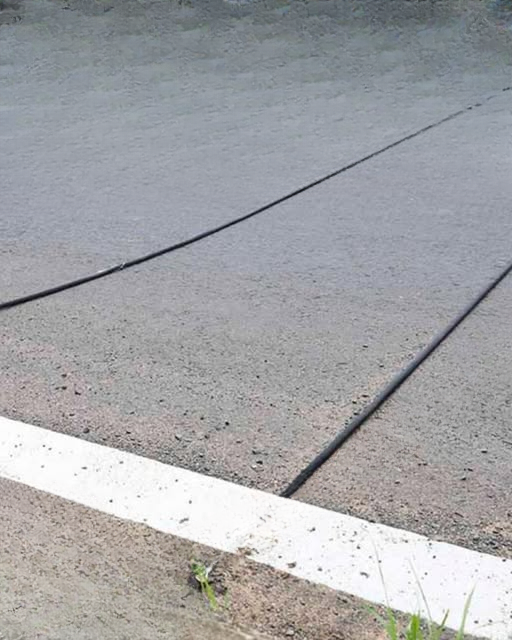
Have you ever been driving down a city street or rural highway and noticed two thin black cables stretched across the road? When your tires roll over them, you feel a quick “thump-thump” beneath your vehicle. There are usually no flashing lights, no warning signs, and no obvious construction nearby. Just two simple rubber tubes lying across the pavement.
Most drivers encounter these cables without giving them much thought. They appear ordinary, temporary, and somewhat mysterious. However, those unassuming black lines serve a very important purpose in transportation planning and road safety.
If you’ve ever wondered what they are—and more importantly, what you should do when you see them—this guide explains everything in detail. From how they work to why they are installed, and how they influence traffic decisions in your community, the answers may surprise you.
First Things First: What Are Those Black Cables?
Those black cables are called pneumatic road tubes, often simply referred to as traffic counting tubes.
They are temporary traffic monitoring devices used by transportation departments, municipalities, and traffic engineers to collect vehicle data. Though they look simple, they play a major role in how cities and towns manage roads, traffic signals, speed limits, and infrastructure improvements.
The next time you see them, you can feel confident knowing they are not random objects left behind by a construction crew. They are carefully placed tools designed to gather important information.
How Pneumatic Traffic Tubes Work
The concept behind these tubes is surprisingly straightforward.
Each tube is made of durable rubber and is stretched across the road surface, secured at both ends. One end connects to a small roadside data collection device, usually positioned safely off the roadway.
Here’s how the process works:
-
A vehicle drives over the tube.
-
The weight of the tires compresses the tube.
-
That compression pushes a small burst of air through the tube.
-
The air pulse reaches a sensor inside the connected counter.
-
The device records the event as one vehicle pass.
It happens in a fraction of a second.
Each pulse is logged digitally. Over hours or days, these logs accumulate into detailed traffic data sets.
Why Are There Sometimes Two Tubes Instead of One?
If you’ve noticed that some roads have a single tube while others have two spaced a short distance apart, there is a reason for that.
Single Tube Setup
A single tube is primarily used to measure:
-
Traffic volume (how many vehicles pass)
-
Time of travel
-
Peak traffic periods
This setup provides basic counting information.
Double Tube Setup
When two tubes are installed a few feet apart, the system becomes more sophisticated. With two tubes, engineers can measure:
-
Vehicle speed
-
Direction of travel
-
Vehicle classification (in some cases)
By calculating the time between the first and second air pulse, the system can determine how fast the vehicle was moving. Different axle patterns can also help distinguish between passenger cars, motorcycles, and larger vehicles like delivery trucks.
It is impressive that such detailed information can be gathered using something as simple as air pressure in a rubber tube.
What Should You Do When You See Them?
The good news is that you do not need to do anything special when you see black cables on the road. However, there are a few recommended best practices:
1. Drive Normally and Safely
Maintain your normal lane position and speed, following posted speed limits. There is no need to slow down abruptly or swerve.
2. Avoid Sudden Braking
Braking suddenly before or on top of the tubes can disrupt traffic flow and create unnecessary hazards.
3. Stay in Your Lane
Do not attempt to avoid the tubes by changing lanes abruptly. They are designed to withstand regular vehicle traffic.
4. Continue Observing Traffic Laws
These tubes are not enforcement tools. They are data collection devices. Continue driving responsibly.
In short, treat them like any other part of the roadway.
What the Data Is Used For
The data collected from pneumatic tubes is extremely valuable. Transportation engineers analyze it to make informed decisions that affect entire communities.
Here are some of the key ways the information is used:
1. Traffic Volume Analysis
By counting vehicles over several days, engineers can determine:
-
Average daily traffic
-
Rush hour peaks
-
Weekend vs. weekday patterns
-
Seasonal fluctuations
This helps cities understand how heavily a road is used.
2. Speed Monitoring
If a road has concerns about speeding, double-tube setups can reveal:
-
Average vehicle speed
-
Percentage of drivers exceeding speed limits
-
Speed trends at different times of day
This data may influence decisions such as:
-
Installing traffic calming measures
-
Adjusting speed limits
-
Adding warning signs
3. Signal Timing Adjustments
Traffic lights are often timed based on collected traffic data. If a particular direction experiences heavier traffic, signal timing may be adjusted to reduce congestion.
Without accurate counts, traffic signals might operate inefficiently, causing unnecessary delays.
4. Road Design Improvements
Data from traffic tubes can influence decisions such as:
-
Adding turn lanes
-
Widening roads
-
Installing roundabouts
-
Creating dedicated bus lanes
Rather than relying on anecdotal complaints, engineers rely on measurable data.
5. Public Transportation Planning
Traffic volume data helps transit planners understand congestion patterns. This can affect:
-
Bus scheduling
-
Route adjustments
-
Express lane planning
Reliable data improves service efficiency.
6. Safety Assessments
If an area experiences frequent accidents, traffic data helps identify contributing factors such as:
-
High speeds
-
Traffic density
-
Directional imbalances
From there, safety improvements can be evaluated.
7. Seasonal and Weather Planning
Traffic patterns often change with seasons. For example:
-
Tourist destinations may experience summer spikes
-
School zones have different patterns during holidays
-
Winter driving volumes may decrease in some regions
Municipalities can adjust snow removal priorities or maintenance schedules accordingly.
Are They Recording Personal Information?
A common concern among drivers is privacy.
Pneumatic road tubes do not record:
-
License plate numbers
-
Driver identities
-
Vehicle ownership information
They simply count vehicles and measure movement patterns.
They are not cameras and are not connected to enforcement systems. Their purpose is strictly traffic data collection.
How Long Do They Stay on the Road?
Traffic tubes are usually temporary installations.
Typical monitoring periods include:
-
24 hours
-
48 hours
-
One week
After enough data is collected, crews remove the tubes. Sometimes they appear before a known project, such as road construction or intersection redesign.
Other times, they are part of routine monitoring programs.
Why They Matter More Than You Think
It may seem like two rubber tubes are insignificant compared to complex traffic cameras or digital sensors, but pneumatic tubes remain one of the most reliable and cost-effective tools in traffic engineering.
They are:
-
Portable
-
Easy to install
-
Accurate
-
Affordable
-
Non-invasive
Because they are temporary, they allow engineers to collect targeted data without permanently altering infrastructure.
The Invisible Backbone of Urban Planning
Modern cities rely on data-driven decision-making.
When residents ask questions like:
-
Why was a stop sign added here?
-
Why was a lane removed?
-
Why did speed limits change?
The answer often involves traffic studies. Pneumatic tubes are frequently the first step in gathering that evidence.
Without measurable data, transportation planning would rely heavily on assumptions. These simple devices provide objective insight.
Why You Might See Them Near Schools or Shopping Areas
High-traffic areas such as:
-
School zones
-
Shopping centers
-
Residential neighborhoods
-
Construction zones
are common monitoring locations.
School zones, in particular, are frequently studied to ensure:
-
Safe crossing times
-
Appropriate speed enforcement
-
Adequate signage
Shopping centers may require traffic analysis before expansions or parking redesigns.
How Accurate Are They?
Pneumatic tube systems are highly accurate when properly installed. Studies have shown they provide reliable vehicle counts for short-term monitoring.
However, they are typically used for temporary studies rather than permanent monitoring.
For long-term data, cities may install:
-
Inductive loop sensors
-
Radar-based traffic counters
-
Video detection systems
Still, pneumatic tubes remain a trusted tool.
The Technology Behind the Simplicity
Although the visible portion is just a rubber tube, the connected data logger is a sophisticated device.
Modern systems can:
-
Store thousands of vehicle records
-
Timestamp each pass
-
Differentiate axle spacing
-
Export data to digital analysis software
Transportation engineers analyze this data using statistical modeling tools to identify trends and make evidence-based decisions.
What Happens After Data Collection?
Once the monitoring period ends:
-
Crews remove the tubes.
-
Data is downloaded from the logger.
-
Engineers analyze traffic patterns.
-
Reports are generated.
-
Recommendations are made.
Sometimes changes happen quickly. Other times, the data becomes part of a larger planning initiative.
The Role of Community Feedback
While data is essential, public input also plays a role in traffic planning.
For example:
-
Residents may request traffic calming.
-
Parents may express concerns about speeding near schools.
-
Businesses may request improved access.
Traffic tube studies often follow community concerns to gather objective evidence.
Why They Don’t Require Warning Signs
You may wonder why there are often no warning signs near the tubes.
The reason is simple: they are designed to be safe for normal vehicle passage. They do not damage tires and are engineered to withstand repeated compression.
Drivers are not required to change behavior when crossing them.
Environmental Considerations
Pneumatic tubes are reusable. After removal, they are often relocated to another site.
Because they are temporary and do not require digging into pavement, they have minimal environmental impact compared to permanent sensors.
Final Thoughts: A Small Tool With a Big Impact
The next time you drive over two black cables stretched across the road, you’ll know exactly what they are—and why they matter.
They are not random debris.
They are not enforcement traps.
They are not surveillance devices.
They are simple, effective tools that help cities understand traffic patterns and improve road safety.
What should you do when you see them?
Drive normally.
Follow traffic laws.
Continue safely on your way.
Behind those small rubber tubes is a larger system of data-driven planning working quietly to make roads more efficient and safer for everyone.
Sometimes the most important infrastructure tools are the ones we barely notice at all.