Introduction
Human vision is often treated as a direct and objective window into reality. We assume that what we see is simply “there,” unchanged and universally perceived by everyone in the same way. However, modern psychology and neuroscience show that perception is far more complex.
What we see is not just determined by the eyes, but by how the brain processes, organizes, and interprets visual information. This means that two people looking at the same image may notice different elements first, depending on attention, experience, expectation, and cognitive patterns.
This is the foundation behind many popular optical illusions and “what you see first” style images that circulate online. These visuals are designed to explore how perception works rather than to provide literal or scientific personality classification.
While they are often presented in an entertaining “personality test” format, they are better understood as tools that highlight how attention and interpretation can vary from person to person.
How the Brain Processes Visual Information
The human brain processes an enormous amount of visual data every second. To manage this, it relies on shortcuts known as cognitive filters. These filters help prioritize certain elements of an image while ignoring others.
When you look at a complex illustration, your brain does not analyze every detail equally. Instead, it:
- Identifies familiar shapes first
- Focuses on high-contrast or prominent features
- Uses past experience to interpret meaning quickly
- Filters out less obvious details
This process happens almost instantly, usually within fractions of a second. Because of this speed, the first thing a person notices in an image may reveal more about attention patterns than about personality traits.
Why People See Different Things First
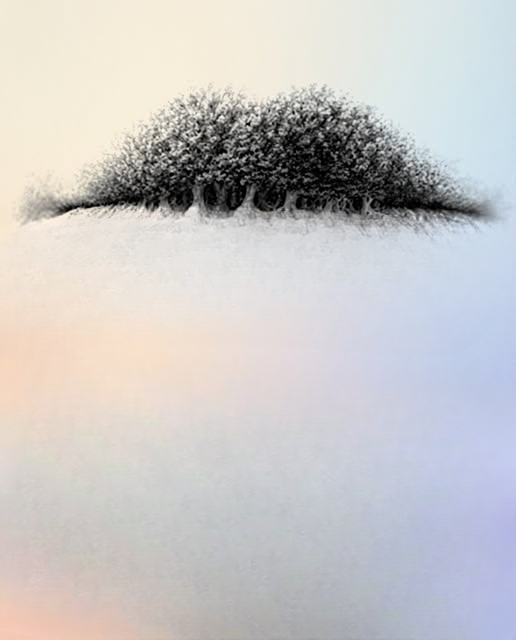
In optical illusion images, multiple interpretations are intentionally embedded within a single visual structure. For example, one viewer may immediately notice a face, while another focuses on trees, roots, or abstract shapes within the same design.
These differences occur due to several factors:
1. Attention focus
Some individuals naturally focus on large, central shapes, while others notice details or background elements first.
2. Familiarity and memory
The brain tends to recognize patterns that resemble things it has seen before. Prior experiences influence what feels “important” in an image.
3. Visual hierarchy
Certain elements are designed to stand out due to contrast, positioning, or shading, guiding the viewer’s attention.
4. Cognitive style
Some people process information globally (seeing the “big picture”), while others focus more on details and structure.
These differences explain why the same image can feel like it “reveals” different meanings to different viewers.
Interpreting Common Elements in Optical Illusion Images
Many viral “what you see first” images contain symbolic elements such as faces, natural scenes, or abstract shapes. These interpretations are often described in personality-related terms online, but it is important to understand them as symbolic rather than scientific.
Below are some common interpretations used in these types of visuals.
1. Interpreting Face-Like Shapes
When viewers notice a face or facial outline first, it is often described in online content as a sign of social awareness or emotional sensitivity.
From a psychological perspective, this tendency is linked to a natural human ability called pareidolia—the brain’s inclination to recognize faces in random patterns. This is a survival-based mechanism that helps humans quickly identify other people.
People who notice faces first may simply be more sensitive to human-oriented patterns or more socially attentive in their environment. However, this does not define personality traits in a strict or measurable way.
2. Interpreting Tree-Like or Natural Forms
Some viewers first see tree shapes, branches, or natural structures within the same image.
This interpretation is often associated in online explanations with growth, stability, or outward focus. From a cognitive perspective, it may reflect a tendency to recognize structured patterns or larger visual forms before noticing finer details.
People who focus on these elements first may simply be more inclined toward global visual processing, meaning they perceive the overall structure before individual components.
3. Interpreting Root-Like or Hidden Structures
In some optical illusions, hidden layers or abstract base structures are designed to resemble roots or underlying systems.
Viewers who notice these elements first are often described in online content as analytical or detail-oriented. From a perception standpoint, this reflects a tendency to focus on foundational patterns or less obvious visual cues.
In cognitive science, this aligns with detail-focused processing, where individuals naturally examine underlying structures rather than surface-level impressions.
Again, this is not a personality classification but rather a reflection of visual attention style.
Why These Images Feel Personally Meaningful
One of the reasons optical illusions and “personality images” become viral is that they feel personally relevant. People often recognize themselves in the descriptions, even when those descriptions are broad or general.
This happens due to a psychological effect known as the Barnum effect, where individuals tend to interpret vague statements as highly accurate about themselves.
Additionally, people enjoy self-reflection, and these images provide an easy way to think about how they perceive the world.
The combination of visual ambiguity and interpretive language makes the experience feel personal, even though the underlying mechanisms are universal.
The Science Behind First Impressions
First impressions in visual perception are shaped by rapid cognitive processing. Studies in neuroscience suggest that the brain forms initial interpretations of images in less than a second.
These initial impressions are influenced by:
- Contrast and brightness
- Shape recognition
- Emotional memory associations
- Pattern familiarity
- Attention direction
Because of this, what a person notices first in an image is often more related to visual design than to psychological identity.
Beyond Personality Labels: Understanding Perception Styles
Rather than viewing these images as personality tests, they can be better understood as demonstrations of perception styles.
Some people naturally:
- Focus on overall structure (global perception)
- Notice fine details first (analytical perception)
- Shift between both depending on context
These differences are normal and reflect how flexible and adaptive human vision is.
They also show that perception is not fixed—it changes based on context, mood, and attention.
The Value of Visual Illusions
Even though these images are often shared in entertainment formats, they serve an educational purpose as well. They help illustrate:
- How perception is constructed by the brain
- How easily attention can be guided
- How different people interpret the same stimulus differently
- How assumptions influence what we believe we see
They encourage curiosity about how the mind works and how interpretation is shaped by internal processes rather than objective reality alone.
Encouraging Awareness of Perception
One of the most interesting takeaways from optical illusions is the realization that perception is not fixed. It is flexible, influenced by both external design and internal cognitive patterns.
Being aware of this can be useful in everyday life. It can help people:
- Question first impressions
- Consider alternative perspectives
- Understand that others may see the same situation differently
- Recognize the role of bias in interpretation
This awareness is valuable not only when viewing images but also when making decisions or interpreting real-world situations.
Conclusion
“What you see first” optical illusions are not scientific personality tests, but they are powerful demonstrations of how the human brain processes visual information.
They reveal that perception is shaped by attention, experience, and cognitive style rather than fixed personality categories. Different people may notice different elements first, not because they are fundamentally different types of individuals, but because the brain naturally prioritizes information in unique ways.