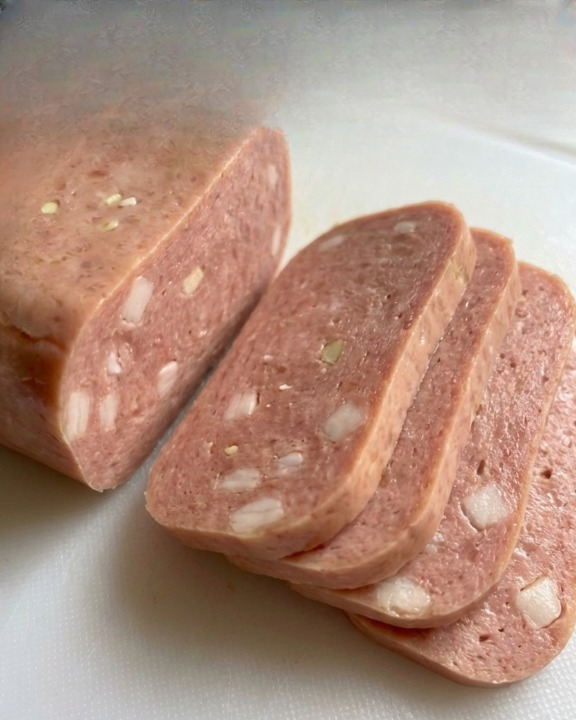
I remember the first time I sliced into a can of Spam and noticed small white specks scattered throughout the meat. For a split second, I froze. They looked unusual—almost like tiny patches of something that didn’t belong there. My mind immediately jumped to the worst-case scenario: Was this mold? Had the product gone bad?
If you’ve ever opened a can of Spam and spotted white bits inside, you’re not alone. It can be surprising, especially if you’re not familiar with how processed canned meats are made. The good news is that in most cases, those white pieces are completely normal. Understanding what they are—and what they aren’t—can save you from unnecessary worry and wasted food.
Let’s take a closer look at what’s inside Spam, what those white bits actually represent, how to tell the difference between harmless fat and spoilage, and when you should genuinely discard a can.
What Is Spam Made Of?
Spam is a pre-cooked canned meat product that has been around since 1937. It was introduced by Hormel Foods and has remained a popular pantry staple in many parts of the world ever since.
Despite rumors and jokes over the years, Spam’s ingredient list is surprisingly straightforward. The traditional version contains:
-
Pork with ham
-
Salt
-
Water
-
Modified potato starch
-
Sugar
-
Sodium nitrite (a preservative)
That’s it.
There are no mysterious fillers, artificial chunks, or hidden additives designed to create strange textures. What you see inside the can is simply processed pork and ham blended with seasoning and stabilizers.
So where do the white bits come from?
Understanding the Role of Fat in Canned Meat
To understand the white specks, you need to understand fat.
Pork naturally contains fat throughout the muscle tissue. When meat is processed—especially in products like Spam—the lean portions and fatty portions are ground and mixed together. The fat is not added as an afterthought; it’s an integral part of the product’s structure.
Fat serves several important purposes:
-
Texture: It keeps the meat cohesive and sliceable.
-
Moisture: It prevents the product from becoming dry or crumbly.
-
Flavor: Fat carries flavor compounds and enhances taste.
-
Mouthfeel: It provides richness and smoothness when eaten.
Without fat, Spam would be dry, dense, and far less enjoyable.
When the meat mixture is packed into cans, the cans are sealed and heat-processed. This cooking process sterilizes the contents and makes the product shelf-stable. Once cooled, the fat inside solidifies again.
That solidified fat is what often appears as white or off-white bits.
What Those White Bits Actually Are
In most cases, the white specks in Spam are simply solidified pork fat.
When pork fat is cold, it becomes firm and opaque. Its natural color is white or slightly creamy. Because Spam is often stored at room temperature or in the refrigerator after opening, the fat remains solid until heated.
Sometimes, you may also see tiny pieces of connective tissue mixed in with the fat. This is normal in processed meat products and not a sign of contamination.
Here’s what typically happens:
-
Pork fat is blended into the meat mixture.
-
The mixture is cooked in a sealed can.
-
The fat melts during processing.
-
As the product cools, the fat solidifies again.
The result? Small white pieces distributed evenly throughout the loaf.
One important detail: these bits are usually uniform in appearance and integrated into the structure of the meat. That uniformity is a good sign.
Why It’s Unlikely to Be Mold
It’s natural to worry about spoilage when something looks unusual. But mold behaves very differently from solidified fat.
Fat Characteristics:
-
Smooth and firm
-
White or creamy in color
-
Evenly distributed
-
Blends seamlessly with the meat
-
No unusual odor
Mold Characteristics:
-
Fuzzy or powdery texture
-
Green, blue, black, or gray coloring
-
Grows on the surface
-
Irregular and patchy
-
Often accompanied by sour or unpleasant smell
Because Spam is sealed and heat-processed during manufacturing, mold growth inside an unopened can is extremely rare. The sterilization process eliminates microorganisms, and the airtight seal prevents new contamination.
If mold were present, it would typically grow on the surface after opening—not evenly dispersed throughout the product.
In other words, if the white bits are embedded inside and look like part of the meat itself, they are almost certainly fat.
The Importance of the Can’s Condition
When it comes to canned foods, the condition of the container matters more than the appearance of solidified fat.
Before opening any can, check for these warning signs:
-
A bulging or swollen lid
-
Leaking liquid
-
Severe rust along seams
-
Deep dents at the edges
-
A broken seal
A compromised seal can allow bacteria to grow. In such cases, the product should not be consumed.
After opening, pay attention to:
-
A strong sour or unpleasant odor
-
Excessive sliminess
-
Unusual discoloration (green, black, or gray patches)
-
Foam or bubbling
If any of those signs are present, discard the product.
But if the can is intact, the seal was secure, and the product smells normal, white bits alone are not a reason to throw it away.
What Happens When You Cook Spam
One of the most reassuring moments comes when you heat it.
When you fry Spam in a pan, the white chunks begin to melt. That’s because fat changes state when exposed to heat.
-
Cold fat = solid and white
-
Heated fat = liquid and translucent
As it melts, the fat absorbs into the surrounding meat, contributing to:
-
Crisp edges
-
Juicier interior
-
Enhanced flavor
If the white pieces disappear during cooking and leave behind a glossy surface, that confirms they were simply fat.
Mold would not melt into the meat in this way.
Why Fat Distribution Can Vary
Not every can of Spam looks identical.
Because it is made from ground pork and ham, slight variations in fat distribution are normal. Some slices may appear leaner. Others may show more visible white bits.
Factors that influence appearance include:
-
Natural variation in meat cuts
-
Storage temperature
-
How long the product has cooled
-
Whether it was refrigerated after opening
Refrigeration makes fat firmer and more visible. That’s why white bits may stand out more when the product is cold.
The Science Behind Canned Meat Safety
Spam and similar canned meats undergo a process called thermal sterilization.
Here’s how it works:
-
The meat mixture is sealed in airtight cans.
-
The sealed cans are heated to high temperatures.
-
The heat destroys bacteria and microorganisms.
-
The sealed environment prevents new contamination.
This process allows the product to remain shelf-stable for years when unopened.
Because of this sealed cooking method, internal mold growth without a damaged can is extremely unlikely.
When You Should Discard It
Although white fat is harmless, there are situations where you should not take risks.
Discard the product if:
-
The can is bulging or leaking.
-
There is a foul odor upon opening.
-
The texture is excessively slimy.
-
There are green, blue, or black patches.
-
The taste is sour or off.
Food safety always comes first.
But remember: appearance alone—especially white fat—is not a reliable indicator of spoilage.
Why Fat Is Often Misunderstood
Over the years, fat has developed an undeserved reputation as something negative or suspicious in food. But in many traditional products, fat is essential.
In cured and processed meats, fat contributes to:
-
Stability
-
Structure
-
Flavor retention
-
Cooking performance
Removing fat entirely would drastically change the product.
In fact, the appealing golden crust you get when frying Spam comes from rendered fat interacting with heat.
A Personal Perspective
After learning more about how Spam is made, I stopped worrying when I saw white specks. Instead of viewing them as something questionable, I recognized them as part of the product’s natural composition.
Now, when I slice into a can and notice those bits, I check:
-
Is the can intact?
-
Does it smell normal?
-
Is the texture consistent?
If everything checks out, I cook it without hesitation.
And every time I watch those white pieces melt into the pan, I’m reminded how easily unfamiliar food textures can be misunderstood.
Why Education Reduces Food Waste
Misinterpreting harmless features as spoilage can lead to unnecessary food waste.
Millions of pounds of food are discarded each year because consumers mistake normal variations for contamination.
Understanding:
-
What fat looks like
-
How canned foods are processed
-
What real spoilage signs are
can help reduce waste while maintaining safety.
Knowledge builds confidence.
Final Thoughts
If you open a can of Spam and see white bits inside, there’s no immediate reason to panic.
In the vast majority of cases, those white pieces are simply solidified pork fat—an essential part of the product’s texture and flavor.
Here’s a quick recap:
-
White, firm, evenly distributed bits = likely fat.
-
Fuzzy, colorful, surface growth with odor = possible spoilage.
-
Damaged can = discard immediately.
-
Normal smell and intact packaging = generally safe.
Cooking will quickly confirm your suspicions: if the white pieces melt smoothly, they were just fat doing what fat does.
Understanding what’s in your food removes unnecessary worry and allows you to enjoy it with confidence.
So the next time you see those white specks, you’ll know exactly what you’re looking at—not mold, not contamination, just a natural component of the product that helps give it its familiar taste and texture.