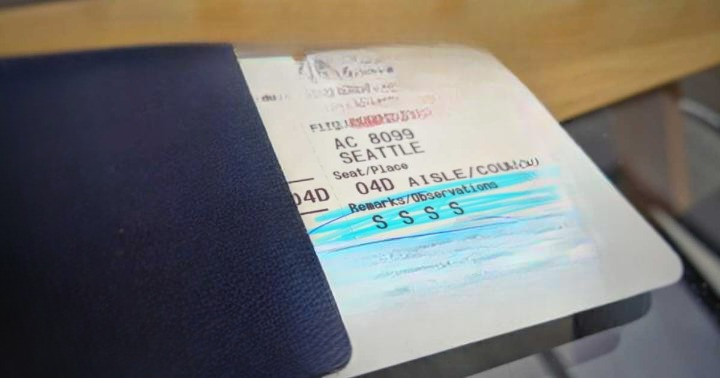
Air travel today is faster and more accessible than ever before, yet it still comes with moments that can raise questions or even cause anxiety. Between booking tickets, navigating airport terminals, keeping track of identification documents, and monitoring departure times, most travelers already have plenty on their minds. So when an unfamiliar code appears on a boarding pass, it can feel unsettling.
One code in particular tends to spark curiosity: SSSS.
If you’ve ever noticed these four letters printed on your boarding pass, you may have paused and wondered what they mean. Does it signal a serious issue? Is it random? Will it delay your trip? And perhaps most importantly — should you be concerned?
The short answer is: not necessarily.
In this in-depth guide, we’ll explain what SSSS stands for, why it appears, how it connects to airport security programs in the United States, and what you can expect if you’re selected for additional screening. We’ll also address common myths, share practical tips to make the process smoother, and provide helpful context about how modern aviation security systems work.
By the end, you’ll understand exactly what SSSS means — and why it’s usually nothing to panic about.
Understanding the Basics: What Does “SSSS” Stand For?
The four letters SSSS stand for Secondary Security Screening Selection.
If this code appears on your boarding pass, it means you’ve been selected for additional security screening before boarding your flight. This designation is part of a broader risk-based aviation security framework managed by the Transportation Security Administration (TSA) in the United States.
The SSSS designation is associated with the TSA’s Secure Flight program — a system designed to pre-screen passengers before they arrive at the airport.
While the term “secondary screening” may sound intimidating, it typically involves extra security checks such as:
-
A more thorough inspection of your carry-on items
-
Additional screening of electronics
-
Possible swabbing for explosive trace detection
-
Extra verification of travel documents
-
Occasionally, a pat-down conducted by trained officers
For most travelers, this process is straightforward and adds only a modest amount of time to the security experience.
The Role of the Secure Flight Program
To understand why SSSS appears, it helps to understand the Secure Flight program itself.
The Secure Flight program was developed by the TSA following major aviation security reforms in the early 2000s. Its purpose is to enhance airline passenger screening by identifying potential security risks before passengers reach airport checkpoints.
Instead of airlines conducting their own passenger vetting, the Secure Flight program centralizes this process at the federal level. When you book a ticket, airlines transmit specific passenger information to the TSA, including:
-
Full legal name
-
Date of birth
-
Gender (if provided)
-
Known Traveler Number (if applicable)
This information is then checked against government security databases. Based on the results, a passenger may be:
-
Cleared for standard screening
-
Eligible for expedited screening (such as TSA PreCheck)
-
Selected for enhanced screening (SSSS)
-
Restricted from flying in rare cases
Importantly, the Secure Flight program is designed to use intelligence-based risk assessment rather than applying identical screening procedures to every traveler.
Why Would SSSS Appear on Your Boarding Pass?
There are several reasons why a traveler might receive the SSSS designation. Some are based on security protocols, while others are simply random.
Let’s explore the most common possibilities.
1. Random Selection
Not all SSSS designations are triggered by specific risk factors. Part of the system includes random selection to ensure that security procedures remain unpredictable and comprehensive.
Randomized screening is a longstanding security strategy in many industries. By incorporating an element of unpredictability, authorities can prevent bad actors from identifying patterns in screening procedures.
If you’ve been selected randomly, it does not reflect negatively on you or your travel history.
2. Name Similarity to a Watchlist Entry
One of the most common reasons for additional screening involves name matching.
If your name closely resembles that of someone listed in a government security database, the system may flag it for additional review. This does not mean you are on a watchlist. Rather, it indicates that further identity verification is needed to confirm you are not the person listed.
Common names are more likely to trigger such matches. For example, travelers with frequently occurring names may occasionally encounter additional verification steps.
3. Travel Patterns or Routing
In some cases, certain international travel routes may trigger additional screening. Flights involving higher-risk regions or complex international itineraries may result in extra checks.
This does not mean that travel to a particular country automatically results in SSSS — nor does it imply wrongdoing. It simply reflects how global security systems allocate resources based on evolving risk assessments.
4. One-Way International Tickets
Though not a universal rule, some travelers report being selected for additional screening when flying internationally on one-way tickets.
Security systems may occasionally flag unusual booking patterns for review. Again, this does not imply guilt or misconduct — it is part of broader verification procedures.
5. Incomplete or Inconsistent Passenger Information
Minor discrepancies in travel documents can sometimes trigger additional screening. For example:
-
A missing middle name
-
A mismatch between ticket and ID spelling
-
Incomplete passenger data
Ensuring that your airline reservation matches your government-issued identification exactly can help minimize unnecessary delays.
What Happens If You’re Selected for SSSS?
If you receive the SSSS designation, here’s what you can typically expect at the airport.
Step 1: Boarding Pass Notification
You’ll see “SSSS” printed on your boarding pass. In many cases, you may not be able to print your boarding pass at home or access a mobile boarding pass, requiring in-person check-in.
Step 2: Additional Screening at Security
When you reach the security checkpoint, officers will identify the SSSS code and direct you to a separate screening area.
Additional screening may include:
-
Manual inspection of carry-on items
-
Swabbing electronics for explosive residue
-
Examination of shoes and personal items
-
Verification of identification documents
-
A brief pat-down (if necessary)
Most travelers report that this process is professional and orderly.
Step 3: Boarding Gate Verification (Sometimes)
In some cases, additional screening may also occur at the departure gate before boarding.
Allowing extra time for these procedures is strongly recommended.
How Long Does Secondary Screening Take?
Screening times vary depending on:
-
Airport traffic
-
Staffing levels
-
Complexity of the screening
Typically, the process adds anywhere from 10 to 30 minutes to your security experience.
During peak travel periods, it may take longer.
For this reason, travelers who see SSSS on their boarding pass are advised to arrive at the airport earlier than usual — generally at least two to three hours before departure for domestic flights and three hours for international travel.
Can You Avoid Being Selected?
While no one can completely eliminate the possibility of secondary screening, there are ways to reduce the likelihood.
1. Enroll in TSA PreCheck
The TSA’s expedited screening program, known as TSA PreCheck, is designed for low-risk travelers who undergo background checks.
PreCheck members typically experience shorter lines and fewer screening requirements. Although enrollment does not guarantee you’ll never receive SSSS, it reduces the likelihood.
2. Consider Global Entry
For international travelers, enrolling in Global Entry can streamline re-entry into the United States and often includes TSA PreCheck eligibility.
3. Double-Check Your Booking Information
Ensure that your:
-
Name matches your ID exactly
-
Date of birth is correct
-
Passport information is accurate
Even minor inconsistencies can trigger system flags.
4. Apply for a Redress Number (If Necessary)
If you believe you are frequently selected due to mistaken identity, you may apply through the Department of Homeland Security’s Traveler Redress Inquiry Program (DHS TRIP).
This process allows individuals to resolve potential watchlist misidentification issues.
Common Myths About SSSS
There are many misconceptions surrounding the SSSS designation. Let’s clarify a few.
Myth 1: SSSS Means You’re on the No Fly List
False.
Being selected for secondary screening does not mean you are on the No Fly List.
The No Fly List is a separate and highly restricted database. SSSS typically indicates additional screening, not flight prohibition.
Myth 2: SSSS Means You’re Under Investigation
False.
Secondary screening is not a criminal investigation. It is a precautionary measure within aviation security protocols.
Myth 3: You’ll Always Get SSSS Once It Happens
Not necessarily.
Some travelers experience it once and never again. Others may encounter it periodically. The system is dynamic and updated regularly.
The History of Enhanced Aviation Security
Modern airport security systems were significantly strengthened following the events of September 11, 2001. In response, the United States established the Transportation Security Administration to centralize and strengthen aviation security measures.
Over time, the approach evolved from uniform screening procedures to intelligence-based, risk-focused systems.
Rather than treating all passengers identically, authorities now allocate additional screening resources to selected individuals based on data analysis, while allowing low-risk travelers streamlined processing.
This strategy is intended to maintain safety while improving overall efficiency.
Is SSSS Used Outside the United States?
The SSSS designation specifically relates to U.S. security procedures.
However, other countries implement similar secondary screening processes using their own systems and terminology.
International aviation security is coordinated through various global frameworks, and many nations employ layered screening strategies comparable to Secure Flight.
What If You Feel You’re Being Unfairly Targeted?
If you consistently receive SSSS and believe it may be due to mistaken identity or data errors, you can:
-
Apply for a DHS TRIP redress number
-
Contact the TSA directly for clarification
-
Confirm that your booking information matches your ID
Maintaining calm and cooperation during screening is always advisable.
Security officers are following established procedures, and respectful communication helps ensure the process moves smoothly.
Practical Tips for a Smoother Experience
If SSSS appears on your boarding pass, consider these steps:
Arrive Early
Build in extra time to avoid stress.
Organize Your Carry-On
Keep electronics and liquids easily accessible.
Remain Calm
Screening is routine and procedural.
Stay Cooperative
Following instructions expedites the process.
Keep Documentation Handy
Have your ID and boarding pass ready.
The Bigger Picture: Safety and Shared Responsibility
Air travel remains one of the safest modes of transportation in the world. Security procedures — including secondary screening — play a role in maintaining that safety.
While SSSS can feel inconvenient, it is part of a layered approach designed to protect passengers and airline crews.
For most travelers, it is a minor delay rather than a major disruption.
Final Thoughts: Knowledge Reduces Anxiety
Seeing SSSS on your boarding pass can be surprising, especially if you’re unfamiliar with the code. However, understanding that it stands for Secondary Security Screening Selection — and knowing what that entails — can significantly reduce worry.
In most cases, it simply means you’ll undergo a few extra security checks before boarding.
By arriving early, staying organized, and remaining patient, you can navigate the process smoothly.
Air travel involves many moving parts, but knowledge is one of the best tools you can carry. Now that you know what SSSS means, you can approach your next trip with greater confidence — and perhaps a little less stress.
Safe travels.