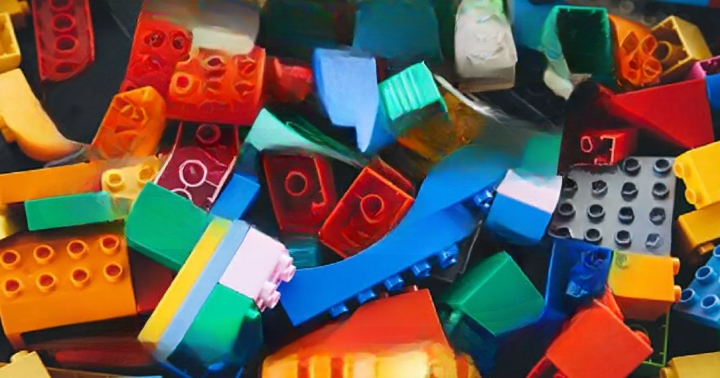
It’s one of those words that almost everyone recognizes instantly.
Four simple letters. Bright red packaging. Tiny plastic bricks that click together with a satisfying snap. A name spoken by children in living rooms, classrooms, and playgrounds around the world.
LEGO.
The word appears everywhere—from toy store shelves to blockbuster movies, from educational robotics labs to elaborate collector displays built by adults. For many people, it represents creativity, imagination, and childhood memories.
Yet despite its universal recognition, most people rarely stop to ask a simple question:
What does “LEGO” actually mean?
Is it an acronym?
A made-up brand name?
A clever marketing invention?
The real story behind the name is far more meaningful than most people expect. It traces back nearly a century to a small workshop in Denmark, where a determined carpenter believed deeply in the importance of play.
That philosophy would eventually transform a tiny local toy business into one of the most beloved brands in the world.
To understand the meaning behind LEGO, we have to travel back to the beginning—to a modest town, a hardworking craftsman, and an idea that would shape generations.
A Small Danish Town With a Big Idea
The LEGO story begins in the quiet town of Billund during the early 1930s.
At the time, Billund was far from famous. It was a small rural community with farms, modest homes, and workshops run by local tradespeople.
One of those tradespeople was a skilled carpenter named Ole Kirk Kristiansen.
Kristiansen built furniture, doors, and other wooden goods for families in the area. Like many craftsmen of his era, his work required patience, attention to detail, and a commitment to quality.
But the world was facing difficult times.
The global economy had been shaken by the Great Depression. Jobs were scarce, businesses struggled, and many families had little money to spend.
Despite these hardships, Kristiansen believed something important:
Children still deserved good toys.
Even during economic uncertainty, he felt that play was an essential part of childhood.
So he began crafting small wooden toys in his workshop.
The First Toys: Simple but Meaningful
The earliest toys produced by Kristiansen’s workshop were modest creations.
They included:
-
Wooden ducks that could be pulled across the floor
-
Small toy vehicles
-
Simple building blocks
-
Pull-along animals for toddlers
Each toy was handmade from wood and painted carefully.
But Kristiansen insisted on one rule above all else:
Quality must never be sacrificed.
According to company history, he adopted a motto that would later become famous within the organization:
“Only the best is good enough.”
This philosophy influenced every toy he produced.
Even when money was tight, he refused to cut corners. If a toy didn’t meet his standards, he would remake it rather than sell something he considered inferior.
This commitment to craftsmanship became one of the foundational values that would guide the company for generations.
Naming the Company: A Simple but Powerful Idea
By 1934, Kristiansen’s toy workshop had grown enough that he decided it needed a proper name.
He wanted something simple, memorable, and meaningful.
After considering different possibilities, he settled on a combination of two Danish words:
“Leg godt.”
In Danish:
-
Leg means “play.”
-
Godt means “well.”
When combined, the phrase translates to:
“Play well.”
From these two words, Kristiansen created a short, distinctive company name:
LEGO.
The name wasn’t chosen for marketing hype or branding strategy.
It was chosen because it reflected the company’s philosophy.
The goal was never just to manufacture toys.
The goal was to encourage good, meaningful play—the kind of play that inspires creativity, imagination, and learning.
An Unexpected Linguistic Coincidence
The story becomes even more interesting thanks to a linguistic coincidence.
Years after choosing the name, the company discovered something surprising.
In Latin, the word “lego” can mean:
-
“I put together.”
-
“I assemble.”
-
“I gather.”
This discovery was entirely accidental.
When Kristiansen named the company, he had not intended any Latin meaning.
Yet the coincidence turned out to be remarkably fitting.
A toy company devoted to helping children build, assemble, and connect pieces had unknowingly chosen a name that perfectly described its products.
Few brands could hope for such a fortunate alignment between name and purpose.
From Wood to Plastic: A Bold Transformation
During the early years, all LEGO toys were made from wood.
But the toy industry was about to change dramatically.
After World War II ended, new materials and manufacturing techniques began emerging.
One of those materials was plastic.
Plastic offered several advantages:
-
Consistency in manufacturing
-
Durability
-
Precision molding
-
Mass production possibilities
Kristiansen’s son, Godtfred Kirk Christiansen, believed plastic could shape the future of the company.
In 1947, the business made a bold and expensive decision: purchasing an injection-molding machine.
This was a significant risk.
Plastic toys were still relatively new, and many people questioned whether they would succeed.
But the company was willing to experiment.
Soon afterward, LEGO introduced early plastic bricks known as Automatic Binding Bricks.
These bricks were inspired by a British toy design, but the LEGO team began refining and improving them.
The result would eventually revolutionize play.
The Breakthrough Brick of 1958
The true breakthrough arrived in 1958.
That year, LEGO patented a redesigned brick featuring a critical innovation: internal tubes.
These tubes dramatically improved what engineers call clutch power—the ability of bricks to snap together firmly while still being easy to separate.
This design allowed bricks to:
-
Lock together securely
-
Support stable structures
-
Be reused countless times
-
Remain compatible across generations
Perhaps most remarkable of all, the 1958 brick design is still compatible with modern LEGO bricks today.
A piece made decades ago can connect perfectly with one manufactured this year.
Few consumer products maintain that level of continuity.
A System of Creative Play
One of the company’s most powerful ideas emerged during the 1950s.
Godtfred Christiansen introduced the concept of a “System of Play.”
Rather than producing isolated toys, the company would create products designed to work together.
Every set would be part of a larger system.
This meant that bricks from one set could combine with pieces from another to create entirely new designs.
The approach encouraged:
-
Creativity
-
Long-term play
-
Open-ended experimentation
Children were not limited to following instructions.
They could build whatever they imagined.
This philosophy perfectly matched the name LEGO—play well, play creatively, play freely.
The Growth of a Global Brand
From its modest beginnings in Billund, the company gradually expanded.
By the late 20th century, LEGO products were being sold in dozens of countries.
Today, the The LEGO Group operates in more than 130 countries worldwide.
Its headquarters remain in Billund, the same town where the story began.
The town itself has transformed into a global destination, home to attractions inspired by the brand.
One of the most famous is LEGOLAND Billund, a park filled with massive sculptures and interactive experiences built entirely from LEGO bricks.
Visitors from around the world travel there to experience the creativity that began in a small carpenter’s workshop.
Creativity That Spans Generations
Part of LEGO’s enduring success comes from its ability to connect generations.
Many adults who grew up building with LEGO bricks now share the experience with their own children.
Boxes of mixed pieces often pass down through families.
A single collection might contain bricks from several decades—yet they all still fit together perfectly.
This continuity creates a sense of tradition.
Building with LEGO becomes more than a pastime.
It becomes a shared family experience.
The Rise of Adult LEGO Builders
In recent decades, LEGO has developed a massive following among adults.
These enthusiasts—often called AFOLs (Adult Fans of LEGO)—create elaborate constructions that rival professional architectural models.
Some examples include:
-
Detailed city landscapes
-
Historic landmarks
-
Science-fiction spacecraft
-
Mechanical machines with moving parts
These builders often spend hundreds or even thousands of hours designing complex creations.
The phenomenon highlights something important:
LEGO is not just a children’s toy.
It’s a creative medium.
Education and Learning Through Play
Educators around the world have embraced LEGO as a learning tool.
Programs and classroom kits help students explore topics such as:
-
Engineering
-
Robotics
-
Programming
-
Architecture
-
Physics
Through hands-on building, students learn problem-solving skills and develop spatial reasoning.
The company’s original philosophy—that play can prepare children for life—has proven remarkably accurate.
Long before STEM education became widely discussed, LEGO bricks were already encouraging engineering-style thinking.
Overcoming Challenges and Reinvention
Despite its success, the company has faced difficult periods.
During the early 2000s, LEGO experienced significant financial struggles.
Rapid expansion into theme parks, media ventures, and specialized pieces created operational complexity.
Leadership eventually refocused the company’s strategy.
The solution involved returning to core principles:
-
Emphasizing the classic brick system
-
Simplifying product lines
-
Strengthening the brand identity
By reconnecting with the philosophy behind the name—play well—the company regained stability and growth.
Sustainability and the Future
As the company moves toward its 100-year anniversary in 2032, sustainability has become an important focus.
Researchers and engineers are exploring ways to produce bricks using plant-based materials and recycled plastics.
The challenge is significant.
LEGO bricks require extremely high precision and durability, meaning new materials must meet strict quality standards.
Yet the company continues investing in environmental innovation.
The goal is to ensure that future generations can continue building while reducing environmental impact.
Why the Name LEGO Works So Well
Brand experts often analyze what makes a name successful.
LEGO stands out for several reasons:
-
It contains only four letters.
-
It’s easy to pronounce in many languages.
-
It has a distinctive sound.
-
It’s easy to remember.
The simplicity of the name allows it to cross cultural and linguistic boundaries effortlessly.
But once people learn the meaning behind the word, the name becomes even more powerful.
It isn’t just a label.
It’s a philosophy.
The Legacy of a Simple Idea
When Ole Kirk Kristiansen chose the name LEGO in 1934, he probably never imagined that it would become one of the most recognizable brands on Earth.
Yet his core belief remains visible in every brick.
Play matters.
Creativity matters.
Quality matters.
Nearly a century later, children and adults around the world continue to snap together bricks in endless combinations—building towers, vehicles, robots, cities, and imaginary worlds.
Every creation reflects the same simple invitation embedded in the name.
So What Does LEGO Actually Mean?
At its heart, the meaning of LEGO is beautifully simple.
From Danish, it means:
Play well.
By coincidence, the Latin interpretation suggests:
I put together.
Together, those meanings capture the essence of the brand.
LEGO invites people to build, imagine, and create.
Four letters.
A small town in Denmark.
Nearly a century of innovation.
And a timeless message that continues to inspire builders everywhere:
Play well.