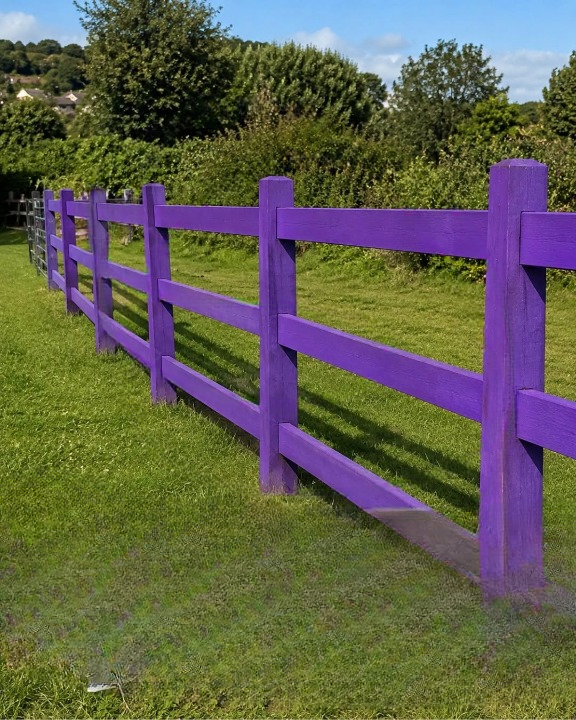
While hiking, driving through the countryside, or exploring rural areas, you may notice a fence post or tree marked with a bright purple stripe. At first glance, it might seem like a splash of paint left over from a project or a decorative choice.
In many places, however, that purple mark has a very specific purpose.
Depending on local laws, it can serve as a clear notice that the land beyond the marker is private property and that permission is required before entering.
Why Purple Paint Is Used
Many property owners traditionally relied on “No Trespassing” signs to identify private land. Over time, however, signs can become difficult to maintain.
They may fade in the sun, become damaged by weather, fall down, or even be removed.
Paint, on the other hand, tends to last much longer.
A simple stripe applied to fence posts or trees can remain visible through changing seasons with far less maintenance than posted signs.
Because of its visibility and durability, several jurisdictions have adopted laws recognizing specific purple paint markings as an official method of communicating property boundaries.
How the Markings Are Usually Applied
Although exact requirements vary by location, property owners who use this system generally follow guidelines established by local regulations.
The paint is often placed:
- At approximately eye level.
- As vertical stripes on trees or fence posts.
- At regular intervals along the property boundary.
- In locations that are clearly visible to approaching visitors.
These markings are intended to provide reasonable notice that the property is privately owned.
Does It Mean the Same Thing Everywhere?
No.
This is one of the most important things to understand.
Purple paint laws are not universal. Some states or regions recognize purple paint as an official no-trespassing notice, while others do not have such laws.
Because regulations differ, travelers, hikers, hunters, and outdoor enthusiasts should become familiar with local property laws before entering unfamiliar land.
If you are unsure what a purple marking means in a particular area, it is safest to assume the property is private until you can verify otherwise.
Why Property Owners Choose Paint
Many landowners appreciate paint markings because they offer several practical advantages.
Unlike paper or metal signs, paint:
- Resists rain, wind, and changing weather.
- Requires less frequent replacement.
- Is difficult to remove accidentally.
- Remains visible over long periods with minimal upkeep.
For owners of large rural properties, maintaining paint markings can also be more efficient than replacing numerous signs every season.
A Simple Way to Avoid Problems
Whether or not purple paint carries legal significance where you are, respecting clearly marked property boundaries is always a good practice.
If you encounter painted fence posts or trees while hiking or exploring:
- Stay on designated public trails whenever possible.
- Avoid crossing marked boundaries without permission.
- Follow local regulations regarding private property.
- When in doubt, ask the property owner or consult local authorities.
These simple precautions help protect both visitors and property owners.
Why Awareness Matters
Many people who encounter purple paint for the first time simply don’t know what it represents.
Learning about these markings helps prevent accidental misunderstandings and encourages responsible outdoor recreation.
Private property boundaries exist for many reasons, including farming, livestock, conservation, and personal privacy.
Recognizing boundary markers allows everyone to enjoy outdoor spaces while respecting the rights of landowners.
The Bottom Line
A purple painted fence post or tree isn’t always decorative.
In some areas, it serves as an official notice that the land beyond is private property and should not be entered without permission. Because laws differ from place to place, it’s important to understand local regulations before exploring unfamiliar areas.
When you come across clearly marked property boundaries, the safest and most respectful approach is simple: remain on public access areas unless you’ve received permission to enter.
A little awareness can help prevent misunderstandings and ensure that everyone can safely enjoy the outdoors while respecting the spaces that belong to others.