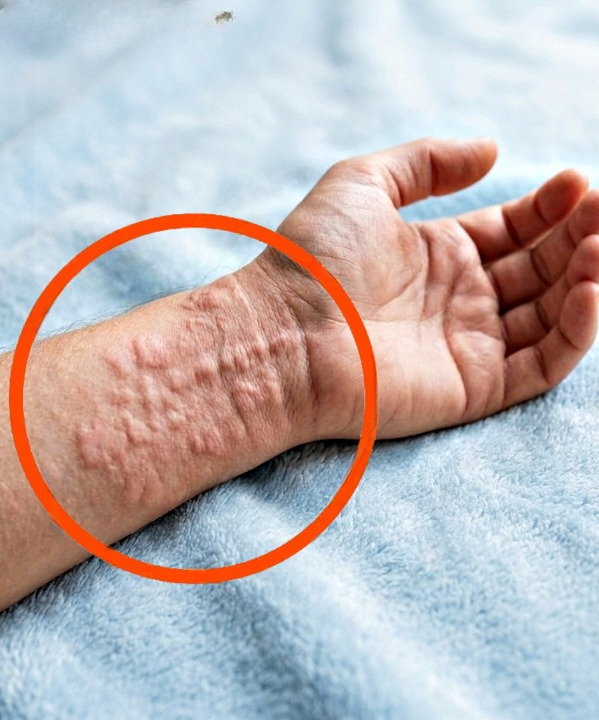
It often begins in a way that seems harmless enough to ignore.
A few red patches on the skin. Some itching that comes and goes. Mild discomfort that feels more annoying than alarming. Many people assume it is a temporary irritation—something caused by heat, food, detergent, or an insect bite—and go to sleep thinking it will disappear by morning.
But in some cases, what looks like a simple rash is actually the first warning sign of something far more serious happening inside the body.
When skin reactions are combined with breathing difficulties, the situation can escalate quickly into a medical emergency known as anaphylaxis—a severe, whole-body allergic reaction that can become life-threatening within minutes.
When a Rash Is More Than Just a Rash
The first visible sign is often hives. These appear as raised, itchy welts on the skin that may spread rapidly across the body. They can vary in size and may seem to move or change shape over time.
On their own, hives are common and not always dangerous. Many people experience them due to mild allergies, stress, temperature changes, or certain foods.
However, the danger begins when these skin symptoms are accompanied by other warning signs that suggest the immune system is reacting aggressively.
These include:
- Tightness in the chest
- Wheezing or difficulty breathing
- Swelling of the lips, tongue, throat, or face
- Dizziness or confusion
- A rapid or irregular heartbeat
- Sudden weakness or fatigue
When these symptoms appear together, it may indicate that the allergic reaction is no longer limited to the skin—it is affecting the entire body.
Understanding Anaphylaxis
Anaphylaxis is a severe allergic reaction that can develop very quickly after exposure to a trigger. It causes the immune system to release large amounts of chemicals that can affect multiple organs at the same time.
As the reaction spreads, it can lead to:
- Airway narrowing due to swelling
- Difficulty getting enough oxygen
- A sudden drop in blood pressure
- Reduced blood flow to vital organs
- Loss of consciousness
Without immediate treatment, this condition can become fatal.
What makes anaphylaxis especially dangerous is its speed. In some cases, symptoms can worsen within minutes, leaving very little time to respond.
Common Triggers That Can Cause Severe Reactions
Many different substances can trigger anaphylaxis, and in some cases, a person may not even know they are sensitive until a reaction occurs.
Common triggers include:
- Certain foods such as peanuts, tree nuts, shellfish, eggs, or milk
- Medications including antibiotics or pain relievers
- Insect stings from bees or wasps
- Latex products found in gloves or medical equipment
- Environmental allergens in rare cases
- Unknown causes, where no clear trigger is identified
Because reactions can vary greatly from person to person, even small or unexpected exposures can sometimes lead to severe responses.
Why Sleeping Through Symptoms Can Be Dangerous
One of the most concerning situations is when symptoms begin while a person is asleep or tries to ignore them, assuming they will pass.
During sleep, it becomes harder to notice early warning signs such as itching, swelling, or tightness in the chest. As a result, a reaction that starts mildly can progress without immediate intervention.
By the time breathing becomes difficult or dizziness sets in, the condition may already be advanced.
This is why medical professionals emphasize that any combination of skin symptoms and breathing problems should never be dismissed or delayed.
What to Do in an Emergency Situation
If someone shows signs of a severe allergic reaction, quick action is essential.
The recommended steps include:
- Call emergency services immediately
Do not wait to see if symptoms improve. Time is critical. - Use an epinephrine auto-injector if available
Devices like epinephrine pens are designed to rapidly reduce severe allergic symptoms and can be life-saving. - Keep the person calm and still
Movement can sometimes worsen symptoms or increase strain on the body. - Monitor breathing and consciousness
Stay with the person until professional help arrives. - Do not assume it will pass on its own
Even if symptoms temporarily improve, medical evaluation is still necessary.
Why Early Recognition Matters
The key to preventing serious outcomes is recognizing that not all allergic reactions are mild. While many skin reactions are harmless and short-lived, others are warning signs of a rapidly developing systemic response.
A rash combined with breathing difficulty is not a situation to observe—it is a situation that requires immediate action.
The difference between early treatment and delayed response can determine whether the reaction remains manageable or becomes life-threatening.
Final Thoughts
Allergic reactions can be unpredictable, and their severity can escalate faster than many people expect. What begins as itching or skin irritation can, in some cases, signal a serious internal reaction affecting breathing, circulation, and overall stability.
Understanding the warning signs of anaphylaxis is essential for safety. Swelling, hives, and respiratory symptoms should always be taken seriously, especially when they appear together.
The most important message is simple: when the body shows signs of a severe allergic reaction, there is no such thing as “wait and see.” Immediate response can save a life.