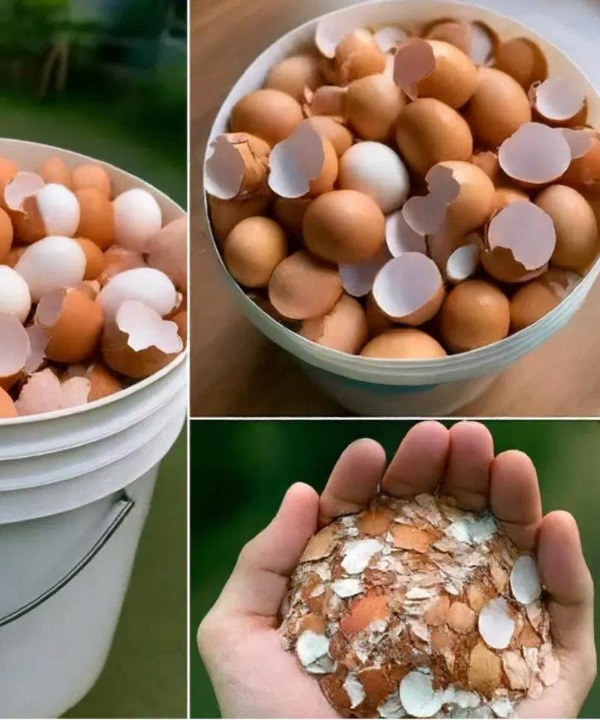
Boiling eggshells has been circulating online and in old home remedies for decades as a supposed cure-all—something that can “rebuild bones,” “detox the body,” or even “restore vitality.” But despite how confidently these claims are repeated, science paints a much simpler and far less magical picture.
Eggshells are not medicine. They are not a shortcut to health. And they are not a replacement for real nutrition or medical care.
What they are, however, is surprisingly useful in a few practical, grounded ways—if you understand what they actually contain and how to use them safely.
What eggshells actually are
At their core, eggshells are made up of about 90–95% calcium carbonate, the same compound found in limestone and chalk. This is what gives them their hard, protective structure.
They also contain small traces of magnesium, phosphorus, and other minerals, along with a thin protein layer on the inside of the shell.
Because of this composition, people have long assumed eggshells must be a “superfood in disguise.” But there’s an important distinction between containing nutrients and being usefully digestible.
Can boiling eggshells improve your health?
Not in the way viral posts often suggest.
Boiling eggshells may clean them and reduce surface bacteria, but it does not transform them into a powerful nutritional supplement. Even when processed, eggshell calcium is not automatically easy for the human body to absorb.
In fact, raw or poorly prepared eggshells can carry contamination risks, including bacteria such as Salmonella. That’s one reason food safety experts emphasize proper cleaning and heat treatment if eggshells are being reused at all.
But even when fully sanitized, the idea that drinking eggshell water or consuming boiled shells will significantly improve bone density or “fix calcium deficiency overnight” is not supported by strong clinical evidence.
Real calcium balance in the human body depends on many factors: vitamin D levels, kidney function, dietary intake, hormonal regulation, and long-term nutrition—not a single kitchen shortcut.
Where eggshells do have practical value
While eggshells are not a miracle health remedy, they are not useless either. When handled properly, they can serve a few grounded, environmentally friendly purposes.
One of the most common uses is as a soil amendment in gardening. Crushed eggshells can slowly release calcium into the soil, which may benefit plants that require stable calcium levels for healthy growth. They can also help improve soil structure over time when composted.
Another use is as a natural compost additive, where they contribute minerals back into organic waste systems instead of being discarded.
In some cases, eggshell powder is even used in controlled food processing or supplementation—but only after high-temperature sterilization and fine grinding in regulated conditions.
The key difference is control and preparation. Outside of those conditions, eggshells are better viewed as raw biological material—not a ready-made remedy.
Why the myth persists
So why do eggshell remedies keep resurfacing?
Part of the answer lies in simplicity. People are naturally drawn to solutions that feel ancient, natural, and accessible. If something comes from a kitchen rather than a pharmacy, it can feel safer or more “authentic,” even without scientific backing.
There’s also the appeal of transformation—the idea that something discarded and ordinary can be turned into something powerful and healing. That narrative is emotionally satisfying, even when it’s not medically accurate.
Social media has amplified this further, often stripping away context and turning partial truths into absolute claims.
What science actually supports
Nutrition science is clear on one point: calcium is essential. It supports bone structure, muscle function, nerve signaling, and heart health.
But the most reliable sources of calcium remain:
- Dairy products like milk and yogurt
- Leafy greens such as kale and bok choy
- Fortified foods
- Certain fish with edible bones (like sardines)
In some cases, doctors may recommend calcium supplements—but these are carefully formulated and dosed, not improvised from kitchen scraps.
Eggshell calcium, while chemically similar, does not automatically translate into an effective or balanced supplement in everyday use.
A more grounded way to think about eggshells
Stripped of myth, eggshells still have value—it just looks different from what online claims suggest.
They are a reminder of how much waste can be repurposed thoughtfully. They show how natural materials can re-enter ecosystems instead of being thrown away. And they highlight an important distinction between tradition and evidence.
Boiling eggshells does not unlock hidden health powers.
But it can encourage something arguably more important: awareness of how everyday habits connect to nutrition, waste, and sustainability.
Final takeaway
The truth about boiling eggshells is neither dramatic nor disappointing—it is simply realistic.
They will not transform your health. They will not replace medical treatment. And they will not act as a secret nutritional breakthrough.
But they can still serve a purpose when understood correctly: as a recyclable source of calcium for soil, a component in compost, or a reminder that value often comes not from mystery, but from mindful use.
Sometimes, the most useful truth is the one that strips away the magic—and leaves you with something practical, honest, and actually usable.