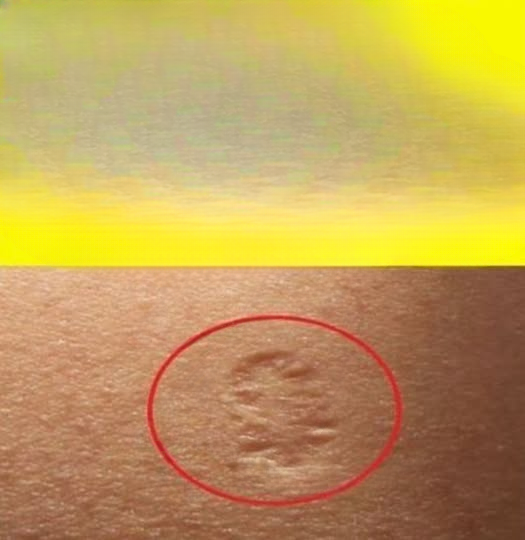
The small, circular mark found on the upper arm of many older adults is easy to overlook. At first glance, it may look like an ordinary scar from a childhood injury. But for millions of people around the world, this tiny indentation carries a much deeper meaning. It is the physical trace of the smallpox vaccine—one of the most important medical interventions in human history.
Long after smallpox was declared eradicated, the scar remains as a quiet reminder of a disease that once shaped civilizations, and of the global effort that eliminated it entirely. To understand this mark is to understand a story of science, survival, and one of humanity’s greatest public health victories.
Smallpox: A Disease That Defined Generations
Before vaccines existed, smallpox was among the most feared diseases on Earth. Caused by the variola virus, it spread easily from person to person and often moved rapidly through entire communities.
Symptoms began with fever and fatigue, followed by a painful rash that developed into fluid-filled lesions covering the body. The mortality rate was devastating—roughly 30% of infected individuals died. Those who survived were often left with permanent scarring, and in some cases, blindness or long-term complications.
Outbreaks occurred repeatedly across continents for centuries. Entire populations lived with the constant threat of infection. Smallpox didn’t just affect health—it influenced economies, wars, and social structures. It was a disease that shaped history itself.
Before modern medicine, people attempted early forms of protection such as variolation, which involved exposing individuals to material from smallpox sores in hopes of triggering immunity. While sometimes effective, it was also risky and could cause full-blown infection.
Everything changed at the end of the 18th century.
Edward Jenner and the Birth of Vaccination
In 1796, English physician Edward Jenner made a discovery that transformed medicine forever. He observed that milkmaids who had previously contracted cowpox—a mild disease—did not seem to catch smallpox.
From this insight, he developed the first smallpox vaccine using material from cowpox lesions. This method introduced the immune system to a safer version of the virus, allowing it to build protection without causing the severe illness of smallpox.
This breakthrough marked the beginning of immunology and the concept of vaccination as we know it today. Over time, Jenner’s idea spread across the world and became the foundation for modern disease prevention.
How the Smallpox Vaccine Was Administered
Unlike modern vaccines delivered through a single injection, the smallpox vaccine used a distinctive technique involving a bifurcated needle. This small, fork-shaped instrument carried a drop of live vaccinia virus.
The procedure involved repeatedly pricking the skin—usually on the upper arm—so the vaccine entered the outer layers of the skin rather than deep into muscle tissue.
This method created a controlled, localized infection. Within days, the vaccination site would develop a red bump, which later turned into a blister filled with fluid. This blister eventually scabbed over and healed.
The final result was a small, round, slightly indented scar.
This scar was not accidental—it was expected. In fact, it served as evidence that the vaccine had “taken” and that the immune system had responded properly.
Why the Scar Forms: The Science Behind It
The smallpox vaccine scar forms as part of the natural healing process following controlled skin injury and immune activation.
When the bifurcated needle introduced the vaccine into the skin, it caused minor damage to the dermal layer. The immune system responded strongly, triggering inflammation and tissue repair.
As the skin healed, the body produced collagen fibers to close the wound. However, scar tissue forms differently than normal skin. The fibers are arranged in a more uniform structure, rather than the flexible, multidirectional pattern of healthy skin. This creates the characteristic depressed or pitted appearance.
The size and visibility of the scar varied from person to person. Factors such as age, immune response, and skin type all played a role. Some people developed prominent marks, while others had faint or barely visible ones.
Regardless of appearance, the presence of the scar indicated successful vaccination.
A Visible Marker of Immunity
For much of the 20th century, the smallpox scar had a practical purpose beyond medical history. It functioned as proof of vaccination.
Public health workers often checked the upper arms of children and adults to confirm immunity, especially during outbreaks or school enrollment requirements. In many ways, the scar acted as an early form of visible vaccination record.
This practice reflected the seriousness of smallpox prevention efforts at the time. Because the disease was so dangerous, ensuring widespread immunity was a public priority.
Global Vaccination Campaigns That Changed the World
Throughout the 1900s, countries around the world launched large-scale vaccination campaigns. These efforts reached urban centers, remote villages, and everything in between.
Healthcare workers traveled long distances to administer vaccines, often under difficult conditions. Despite logistical challenges and occasional resistance, vaccination rates steadily increased.
The impact was profound. Smallpox cases declined dramatically over time, and transmission chains were gradually broken.
By 1980, after decades of coordinated global effort led by the World Health Organization, smallpox was officially declared eradicated. It was the first—and so far only—human disease to be completely eliminated.
This achievement remains one of the greatest successes in medical history.
Why the Scar Still Exists Today
Routine smallpox vaccination stopped in many countries in the early 1970s after the disease was no longer a public threat. However, millions of people who had already been vaccinated still carry the scar.
Today, the mark remains visible mostly in older generations. For many, it serves as a personal reminder of childhood vaccination programs and a time when smallpox was still a real concern.
It is also a symbol of collective protection—evidence of participation in a global effort that helped eliminate a deadly disease.
Variations in Appearance and Healing
Not all smallpox vaccine scars look the same. Some are deep and clearly visible, while others are small and subtle. A few may fade significantly over time.
These differences are normal and do not reflect the level of immunity provided. Even a faint scar indicates that the immune system successfully responded to the vaccine.
Modern understanding of immune response confirms that protection is not determined by scar appearance, but by the body’s internal defense mechanisms.
A Symbol Beyond Medicine
Over time, the smallpox vaccine scar has taken on broader cultural and educational meaning. It is often used in classrooms and public health discussions to illustrate the history of vaccination and the power of preventive medicine.
For historians and medical professionals, it represents a turning point in human health. For individuals, it can serve as a personal connection to family history and past public health experiences.
It also stands as a reminder of what global cooperation can achieve when science and public health work together.
Lessons From a Small Mark
The smallpox vaccine scar carries an important message: prevention saves lives.
It reflects the idea that protecting individuals also protects entire communities. The eradication of smallpox was not the result of a single breakthrough, but of sustained global collaboration over many decades.
Each scar represents a moment when someone was vaccinated, contributing—whether knowingly or not—to a worldwide effort that ended a deadly disease.
Conclusion: A Lasting Reminder of a Global Victory
The smallpox vaccine scar may be small in size, but its significance is enormous. It represents one of the most successful public health achievements in human history and serves as a permanent reminder of the power of vaccination.
Beyond its medical explanation, the scar tells a larger story—of fear overcome by science, of global cooperation, and of millions of lives saved.
Even though smallpox no longer exists, its legacy remains visible on the arms of those who were vaccinated. That small circular mark is more than just a scar. It is a symbol of protection, progress, and a time when humanity came together to defeat one of its greatest threats.