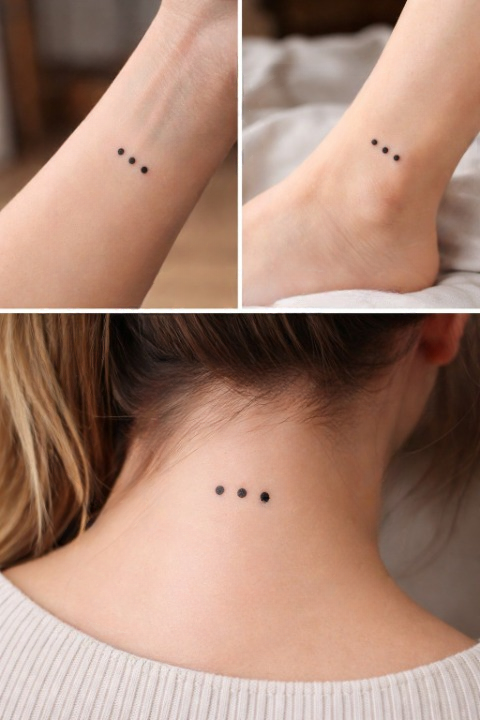
Tattoos have been used for centuries as a way for individuals to express identity, beliefs, and personal experiences. Among the many designs that exist, one of the simplest yet most intriguing is the three-dot tattoo. At first glance, it may appear minimal and purely decorative. However, this small design carries a wide range of meanings shaped by history, culture, and personal interpretation.
Understanding the significance of the three-dot tattoo requires looking beyond its appearance. Its meaning can vary depending on where it is used, who wears it, and the cultural context surrounding it. In some cases, it represents deeply personal values, while in others, it reflects broader social or historical influences.
This article explores the origins, interpretations, and evolving meaning of the three-dot tattoo, while also highlighting the importance of cultural awareness when choosing symbolic body art.
The Origins of the Three-Dot Tattoo
The exact beginnings of the three-dot tattoo are difficult to pinpoint. Similar designs have appeared in different parts of the world over time, often independently of one another. However, one of the most widely recognized associations comes from institutional environments, particularly within certain prison systems in Eastern Europe.
In these settings, small symbolic tattoos often functioned as a form of communication. Because verbal expression could be limited or risky, individuals used simple visual symbols to convey meaning. The three-dot tattoo became one such symbol—subtle, easy to recognize, and rich in implication.
Its small size made it easy to place in discreet locations, such as the hand or fingers. This allowed it to serve as a quiet identifier among those familiar with its meaning, without drawing unnecessary attention from outsiders.
Symbolism in Institutional Contexts
Within these environments, the three-dot tattoo has often been linked to a principle commonly interpreted as “see no evil, hear no evil, speak no evil.” This phrase reflects values such as discretion, silence, and awareness.
Rather than encouraging harmful behavior, the symbolism is generally understood as a code of conduct—emphasizing caution, observation, and restraint in communication.
In such contexts, the tattoo may also represent:
- Loyalty to a group or community
- Personal discipline and self-control
- Shared understanding among individuals with similar experiences
It is important to approach this aspect of the tattoo’s history with care. While it is part of its background, it does not define all modern interpretations.
Cultural Interpretations Around the World
Over time, the meaning of the three-dot tattoo has expanded beyond its early associations. Today, it is found in many different cultural and personal contexts, each with its own interpretation.
Latin American Influence
In some Latin American communities, the three-dot tattoo is commonly associated with the phrase “mi vida loca,” which translates to “my life journey” or “my unique path.” In this interpretation, the tattoo reflects life experiences, personal challenges, and resilience.
Rather than focusing on a specific lifestyle, it often represents:
- The ups and downs of life
- Personal growth through adversity
- A commitment to living authentically
This meaning has become one of the more widely recognized interpretations in modern culture.
Western and Contemporary Usage
In contemporary settings, particularly in Western countries, the three-dot tattoo is sometimes chosen for its minimalist aesthetic. Many people are drawn to its simplicity and symmetry, using it as a subtle form of self-expression.
In these cases, the tattoo may symbolize:
- Balance and harmony
- Simplicity in life
- Personal philosophies or values
However, even when chosen for aesthetic reasons, it is important to understand that the design carries historical and cultural significance.
Personal Interpretations
One of the most meaningful aspects of the three-dot tattoo is its flexibility. Because the design is simple, it can be adapted to represent deeply personal ideas.
Some individuals use the three dots to symbolize:
- Family members or loved ones
- Past, present, and future
- Mind, body, and spirit
- Important life milestones
This adaptability allows each tattoo to carry a unique story, shaped by the wearer’s experiences and beliefs.
Placement and Its Significance
The placement of a tattoo can influence how it is perceived and interpreted. The three-dot tattoo is no exception.
Common Placement Areas
- Between the thumb and forefinger: Traditionally associated with more historical meanings, though interpretations vary today
- On the knuckles or fingers: Often chosen for visibility and symbolic emphasis
- On the wrist or forearm: May reflect a more personal or aesthetic intention
- Behind the ear or on the ankle: Frequently selected for subtlety
Placement can affect how the tattoo is perceived in different social or professional settings. Visible tattoos may draw more attention, while discreet placements allow for privacy.
Design Variations
While the classic three-dot tattoo is arranged in a triangular pattern, there are several variations that add new layers of meaning.
Triangle Formation
This is the most traditional layout, often associated with balance and stability.
Straight Line
Three dots in a row may symbolize a timeline, such as past, present, and future.
Combined Designs
Some people incorporate additional elements, such as:
- Lines or geometric shapes
- Letters or numbers
- Small symbols alongside the dots
These variations allow individuals to personalize the tattoo while maintaining its minimalist nature.
Social Perception and Considerations
Because the three-dot tattoo has multiple interpretations, it can sometimes be misunderstood. In certain environments, it may carry assumptions based on its historical associations.
This can lead to:
- Misinterpretation in professional settings
- Unintended social judgments
- Curiosity or questions from others
For this reason, it is important for individuals to consider how the tattoo may be perceived in different contexts.
The Importance of Cultural Awareness
Before choosing any symbolic tattoo, it is essential to understand its background. The three-dot tattoo is a good example of how a simple design can carry complex meanings.
Being informed helps ensure that:
- The tattoo reflects your intended message
- You avoid unintended associations
- You respect the cultural and historical context of the design
Cultural awareness is not about limiting self-expression—it is about making thoughtful and informed choices.
Tattoos as a Form of Storytelling
Tattoos often serve as visual representations of personal stories. Even the smallest designs can hold deep meaning.
The three-dot tattoo, in particular, demonstrates how simplicity can convey powerful ideas. For many people, it represents:
- Personal growth
- Life experiences
- Values and beliefs
- Emotional resilience
Each tattoo becomes a chapter in a larger story, visible yet open to interpretation.
The Evolution of Meaning Over Time
Like many symbols, the meaning of the three-dot tattoo has evolved. What once had a specific association in certain environments has expanded into a broader range of interpretations.
Today, it exists at the intersection of:
- Historical symbolism
- Cultural identity
- Personal expression
This evolution reflects how symbols can change over time, adapting to new contexts and perspectives.
Making an Informed Decision
If you are considering a three-dot tattoo, taking time to reflect on its meaning can help ensure it aligns with your intentions.
Questions to consider include:
- What does this symbol represent to me?
- Am I aware of its historical and cultural meanings?
- How might it be perceived by others?
- Where should it be placed for comfort and privacy?
Answering these questions can help you make a decision that feels both meaningful and appropriate.
Respecting Individual Interpretation
While understanding the broader context is important, it is equally important to recognize that tattoos are deeply personal.
Two people may have the same design but completely different meanings behind it. This diversity of interpretation is part of what makes tattoo culture so rich and meaningful.
Respecting this individuality allows for greater appreciation of the stories behind each design.
Final Thoughts
The three-dot tattoo is a powerful example of how a simple design can carry complex and layered meaning. From its historical roots to its modern interpretations, it continues to be a symbol that resonates with many people around the world.
Whether it represents personal growth, life experiences, or philosophical values, its significance is shaped by both context and intention.
At the same time, understanding its background and potential interpretations is essential. This ensures that the tattoo reflects your message clearly while avoiding unintended misunderstandings.
Ultimately, the three-dot tattoo is more than just a visual element—it is a form of expression, a reflection of identity, and a reminder that even the smallest symbols can tell meaningful stories.