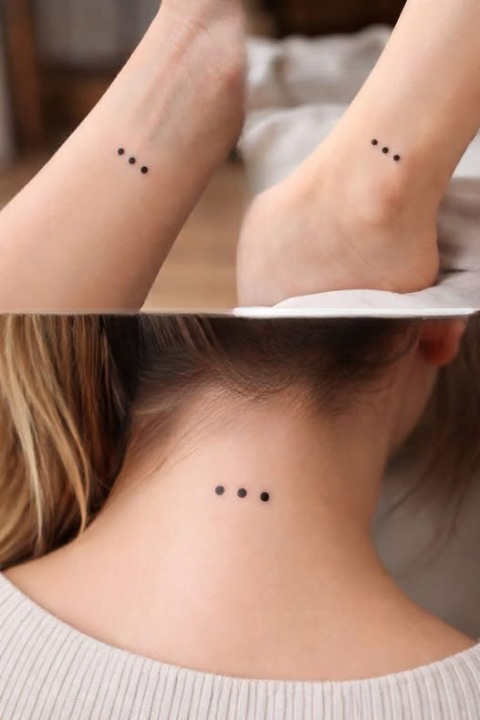
A small tattoo of three dots may look simple at first glance, but throughout history it has carried a variety of meanings depending on culture, location, and personal experience. Often placed between the thumb and forefinger or near the eye, the design is one of the most widely recognized minimalist tattoos in the world.
Despite its small size, the symbol has developed a reputation tied to prison culture, street life, rebellion, and survival. At the same time, many people today wear the tattoo for entirely personal or symbolic reasons unrelated to crime or gangs.
Understanding the meaning of the three-dot tattoo requires looking beyond stereotypes and recognizing that symbols can change dramatically depending on context.
The Origins of the Three-Dot Tattoo
One of the most commonly associated meanings of the three-dot tattoo comes from the phrase:
“Mi Vida Loca” — Spanish for “My Crazy Life.”
In some Latin American and gang-related subcultures, the dots came to symbolize a life lived outside conventional rules. Importantly, the tattoo historically represented a lifestyle or mindset more than membership in a specific gang.
The three dots are usually arranged in a triangular pattern and can represent themes such as:
- Struggle
- Survival
- Loyalty
- Life on the margins of society
Because of its association with prison and street culture, the tattoo became widely recognized by law enforcement and prison officials over time.
However, its meaning has never been universal.
Prison Culture and the “Code of Silence”
In some prison environments, the tattoo has also been linked to a philosophy similar to the “Three Wise Monkeys” idea:
- See no evil
- Hear no evil
- Speak no evil
Inside prison culture, this interpretation sometimes evolved into a symbol of silence and non-cooperation with authorities—a code that values loyalty to fellow inmates above outside systems.
For some individuals, the tattoo became a visible reminder of incarceration, survival, or affiliation with certain social circles formed while imprisoned.
In rare cases, people also used the dots to mark periods of incarceration or personal hardship, turning the tattoo into a permanent reminder of a difficult chapter in life.
Not Always Gang-Related
One of the biggest misconceptions about the three-dot tattoo is that it automatically indicates gang membership or criminal activity.
That assumption is often inaccurate.
Today, many people choose minimalist tattoos for deeply personal reasons unrelated to crime or prison culture. Some use the three dots to symbolize:
- Past, present, and future
- Mind, body, and spirit
- Faith, hope, and love
- Family connections
- Personal growth
- Mental health recovery
Tattoo meanings evolve over time, especially as symbols move from underground culture into mainstream art and fashion.
As a result, it is impossible to determine someone’s background or intentions based solely on a small tattoo.
The Lasting Impact of Visible Symbols
For individuals who did receive the tattoo during difficult periods of their lives, the symbol can carry emotional complexity long afterward.
Some people later regret tattoos connected to past lifestyles but continue living with the social assumptions attached to them. Others keep the tattoo as a reminder of survival, change, or personal transformation.
Visible tattoos can affect how people are perceived, fairly or unfairly. A small symbol may trigger assumptions from employers, strangers, or authorities who associate it with criminal stereotypes, even when the person’s life has completely changed.
That reality highlights an important truth about symbols: they often outlive the circumstances that created them.
Cultural Context Matters
Tattoo meanings are heavily shaped by geography, culture, and personal intention.
The same symbol can represent entirely different things depending on where it appears and who wears it. A design connected to prison culture in one country may be viewed as purely artistic or spiritual somewhere else.
Because of this, interpreting tattoos without context can easily lead to misunderstanding.
Body art has always been tied to storytelling. Some tattoos represent rebellion, while others represent healing. Some reflect painful chapters of life, while others celebrate survival and growth.
The three-dot tattoo is no exception.
Looking Beyond Assumptions
The enduring fascination with symbols like the three-dot tattoo comes from the mystery they seem to carry. People naturally search for meaning in markings, clothing, gestures, and appearance.
But human lives are rarely simple enough to be explained by a single symbol.
For some, the tattoo may indeed reflect a difficult past tied to prison or street culture. For others, it may simply be minimalist art chosen for personal reasons entirely unrelated to crime.
That complexity is important to remember.
Awareness of cultural symbols can be useful, but quick judgments often overlook the deeper reality of individual experience. A tattoo may hint at where someone has been, but it does not automatically define who they are now.
And sometimes, the most important part of a person’s story is not the mark they carry—but how far they’ve traveled since receiving it.