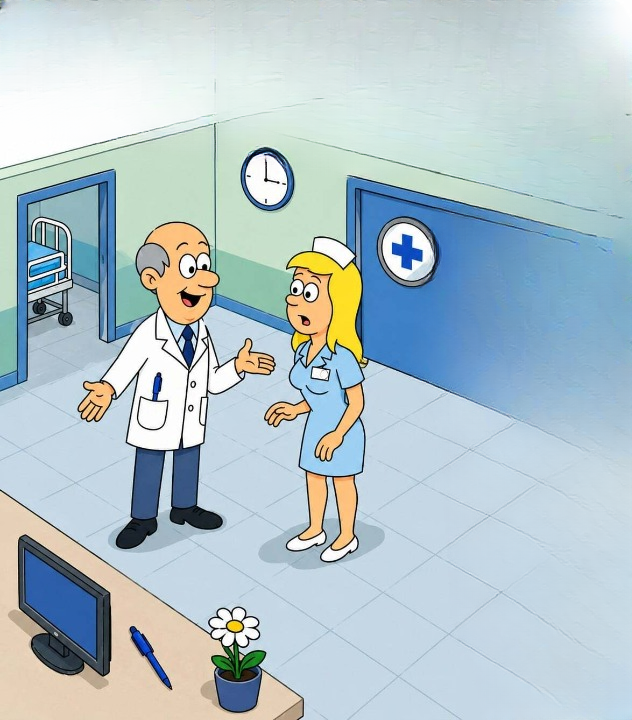
Introduction: More Than Just a Place of Medicine
Hospitals are often imagined as sterile, intimidating environments filled with bright lights, constant movement, and the sound of medical machines. For many people, they represent moments of stress, uncertainty, and emotional vulnerability.
Visitors remember waiting rooms filled with quiet anxiety, long hours of anticipation, and conversations delivered in careful, measured tones. Patients often associate hospitals with fear of the unknown, recovery, or difficult news.
But beyond the clinical structure and medical procedures, hospitals contain another layer of reality that is far less visible.
It is a human reality—built on small, quiet moments of care that rarely appear in official records or medical reports.
The Invisible Emotional Life of Hospitals
While hospitals are designed for treatment and efficiency, they are sustained emotionally by countless small acts of kindness that occur every day.
These moments are often subtle:
- A nurse quietly offering comfort after a difficult procedure
- A doctor pausing longer than necessary to reassure a nervous patient
- A staff member offering a kind word during a long night shift
- Colleagues sharing brief moments of humor to ease emotional pressure
Individually, these gestures may seem small. But together, they create an environment that helps both patients and healthcare workers cope with emotional intensity.
Hospitals are not only places of physical healing—they are also spaces of emotional endurance.
Understanding the Role of Healthcare Professionals
Within any hospital environment, different roles contribute to both medical care and emotional stability.
The Doctor: Focus, Responsibility, and Reassurance
Doctors are often seen as the central authority in medical care. They are responsible for diagnosing conditions, explaining treatment plans, and making critical decisions.
But beyond technical expertise, effective doctors also rely on communication and empathy. Their ability to listen carefully, explain clearly, and offer reassurance can significantly influence how patients experience care.
A calm voice or attentive presence can sometimes reduce fear as much as medical treatment reduces symptoms.
The Nurse: Consistency and Emotional Support
Nurses often form the continuous presence in a patient’s care experience. While doctors may visit at specific moments, nurses remain closely involved throughout the day and night.
They monitor conditions, assist with recovery, and respond to immediate needs. Just as importantly, they often provide emotional support during long, uncertain hours.
Their role requires not only clinical skill but also emotional awareness, patience, and resilience. In many cases, nurses become the most familiar and reassuring presence for patients navigating difficult situations.
The Subtle Design of Comfort in Clinical Spaces
Even hospital environments themselves are often designed with subtle attention to emotional balance.
While hospitals must remain clean, organized, and medically efficient, many spaces also include small elements intended to reduce stress, such as:
- Softer colors or visual accents
- Organized, uncluttered layouts
- Friendly or calming visual details
- Simple decorations that create warmth
These design choices help counterbalance the natural tension of medical environments, creating spaces that feel less overwhelming for patients and families.
Emotional Resilience Behind the Scenes
One of the least visible aspects of hospital life is the emotional resilience required from staff.
Healthcare workers frequently operate under high pressure, long shifts, and emotionally demanding conditions. They may move directly from one intense situation to another, requiring rapid emotional adjustment.
Because of this, support among colleagues becomes extremely important.
Small interactions such as:
- A brief conversation in a hallway
- A shared moment of humor during a break
- A silent understanding after a difficult case
- A supportive glance during stressful moments
can help maintain emotional balance in environments that are otherwise intense and demanding.
This internal support system often remains invisible to patients, yet it plays a crucial role in sustaining compassionate care.
The Balance Between Clinical Precision and Human Compassion
Hospitals constantly operate at the intersection of two essential needs:
- Medical accuracy and efficiency
- Emotional understanding and compassion
Both are necessary for effective healthcare.
While medical procedures rely on precision, patient experience depends heavily on human connection. Fear, anxiety, and uncertainty are part of nearly every medical journey, and addressing these emotions can be just as important as treating physical conditions.
Healthcare professionals therefore work not only with medical knowledge, but also with emotional awareness.
What Patients Often Remember Most
Interestingly, patients often remember emotional details more vividly than technical ones.
Long after medical terminology is forgotten, people tend to recall:
- How they were spoken to
- Whether they felt listened to
- The tone of reassurance they received
- Moments of kindness during difficult times
These memories shape how individuals perceive their entire healthcare experience.
This highlights an important truth: healing is not only physical—it is also emotional.
Humanity in Routine Moments
Not every hospital moment is dramatic or life-changing. In fact, much of hospital life consists of routine care and quiet continuity.
Yet it is within these ordinary moments that humanity often becomes most visible:
- A calm explanation given to a worried family
- A gentle adjustment of a patient’s blanket
- A quiet reassurance before a procedure
- A shared moment of relief after progress is made
These small actions may seem simple, but they contribute significantly to emotional stability for patients and families.
Conclusion: The Quiet Strength of Compassion in Healthcare
Hospitals will always be places associated with medical urgency, recovery, and sometimes loss. But they are also places where human connection quietly persists, even in the most difficult circumstances.
Behind every diagnosis, treatment plan, and procedure are individuals who are not only skilled professionals, but also people navigating emotional complexity every day.
What often defines the hospital experience is not just medicine, but the presence of compassion within it.
In the end, the most enduring aspect of healthcare is not only the science that saves lives, but the humanity that supports them.
Even in environments shaped by pressure and uncertainty, kindness continues to exist—quietly, consistently, and often without recognition.
And sometimes, that unseen kindness is what makes healing possible in the first place.