The honey locust is one of those trees many people pass by without a second thought. It’s often appreciated for its light, filtered shade and its ability to survive in a wide range of environments, especially in urban parks and roadside plantings. Yet behind its ordinary appearance lies a long history of usefulness that stretches back centuries.
Native to North America, particularly the fertile regions of the Mississippi Valley, the honey locust has quietly played a role in human survival, early trade, and everyday rural life. Long before industrial manufacturing and global supply chains, people depended on local ecosystems for nearly everything they needed. In that world, a tree like the honey locust was not just part of the scenery—it was a resource, a tool, and sometimes even a source of food.
A Tree With Naturally Sweet Rewards
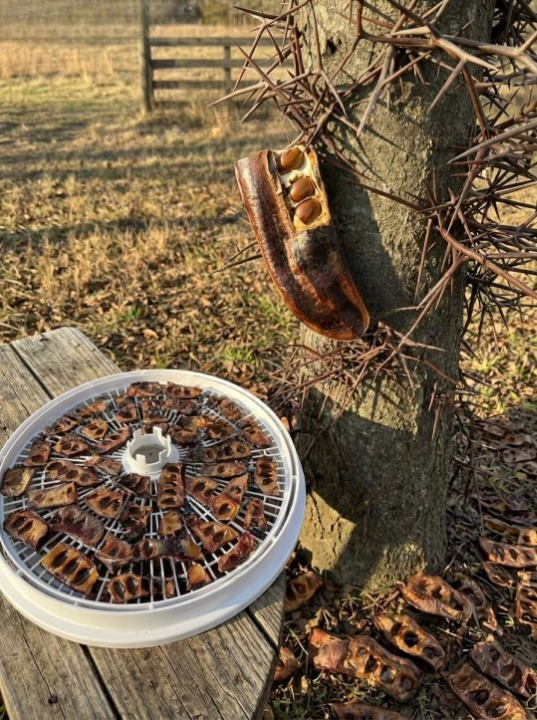
One of the most distinctive features of the honey locust is its long, twisting seed pods. At first glance, they may look like simple plant debris scattered beneath the branches. But inside these pods is a naturally sweet, sticky pulp that early communities quickly learned to use.
This sweet pulp is where the tree gets its name. For generations, Indigenous peoples across North America made use of it in different ways. It could be eaten directly as a small treat or mixed with water to create simple syrups and fermented drinks. In times when sugar was not widely available, natural sweetness from trees like this was especially valuable.
Even the seeds inside the pods were not wasted. They were sometimes roasted and used as a warm drink or ground into a basic meal for cooking. While these uses may seem unusual today, they reflect a time when food creativity depended on understanding the natural world closely and using every available resource.
The honey locust became one of those rare trees that offered both nourishment and versatility in a single package.
Strong Wood Built for Hard Work
Beyond its edible qualities, the honey locust is also known for something equally important: incredibly durable wood.
Its timber is dense, strong, and naturally resistant to decay. That made it especially valuable in early American settlements, where materials had to withstand harsh weather conditions and heavy use. Unlike softer woods that rotted quickly in the ground, honey locust wood could last for years—even decades—without significant deterioration.
Because of this strength, it was commonly used for fence posts, wagon parts, tool handles, and structural supports. In rural farming communities, where replacing materials was expensive and time-consuming, a long-lasting wood like this was essential.
It wasn’t just useful—it was dependable. And in an era when reliability could determine whether a farm thrived or struggled, that mattered greatly.
A Natural Cleaning Solution
The usefulness of the honey locust didn’t stop with food and construction. Parts of the tree, especially its pods and bark, contain natural compounds that create a mild soap-like foam when mixed with water.
Before commercial soaps became widely available, people sometimes used these natural properties for basic cleaning tasks. While it wasn’t a replacement for modern soap in every situation, it was a practical solution when supplies were limited.
This ability to serve multiple everyday needs—food, tools, and cleaning—helped the honey locust become a quiet but important part of early domestic life.
A Living Part of the Ecosystem
Today, honey locust trees are often planted in cities and parks not for survival needs, but for environmental and aesthetic reasons. Their open canopy allows sunlight to pass through, creating a unique dappled shade that supports plant growth beneath them. Unlike dense-canopy trees that block most light, the honey locust allows grass and smaller vegetation to thrive.
This structure also benefits wildlife. Deer may feed on fallen pods, while birds and small animals use the tree for shelter. The flowers, though small and not especially showy, provide nectar for bees and other pollinators, making the honey locust a quiet contributor to local biodiversity.
Over time, horticulturists have even developed thornless varieties for safer use in residential areas, parks, and walkways. The original wild species can produce large, sharp thorns along its trunk and branches—an adaptation that once helped protect it from grazing animals. Modern landscaping varieties keep the tree’s beauty and resilience while making it more suitable for public spaces.
A Reminder of Nature’s Hidden Practicality
What makes the honey locust especially interesting is not just its individual uses, but the way those uses connect. Few trees offer edible material, strong timber, cleaning properties, and ecological benefits all at once. It is a reminder that nature often hides remarkable value in plain sight.
In the past, people depended on that value out of necessity. Today, we often overlook it because modern systems provide what we need in packaged, processed forms. Yet the honey locust stands as a living example of how deeply human life was once tied to the natural world—and how much knowledge came from observing and working with it.
Even now, it continues to serve quietly in landscapes across the country, offering shade, supporting wildlife, and adding resilience to green spaces.
Looking Closer at the Ordinary
The honey locust teaches a simple but important lesson: what appears ordinary at first glance may hold unexpected depth when examined more closely. A tree that many people walk past without noticing once played a vital role in food, farming, and daily survival.
Its legacy is not loud or dramatic. Instead, it is woven into everyday history—into fences that held fields together, tools that shaped work, and natural resources that helped communities endure.
Sometimes, the most valuable things are not the rare or exotic ones, but the familiar ones we’ve simply stopped paying attention to.