Posted on June 1, 2026 By admin No Comments on The Forgotten Iron Cages on Old Graves: The Surprising Historical Reason Some Cemeteries Were Once Protected With Mortsafes
Walking through older cemeteries in parts of Europe, you may occasionally come across something that feels unexpectedly out of place.
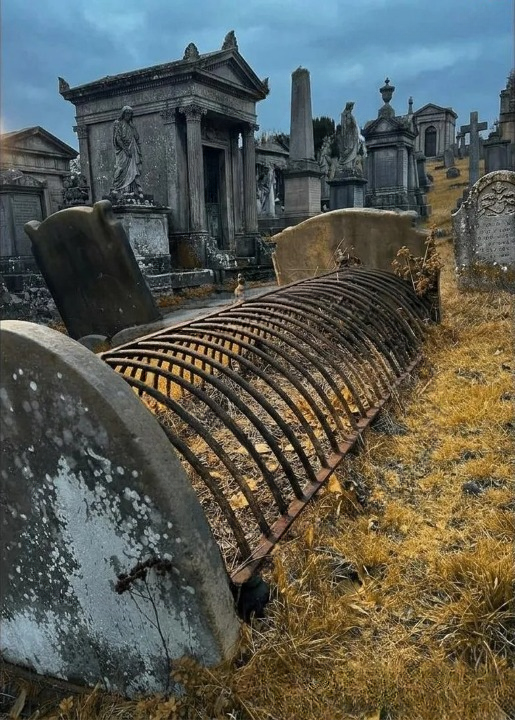
Among weathered headstones and moss-covered stone markers, there are graves enclosed in heavy iron frameworks—structures that look almost like cages resting over the earth.
At first glance, they can feel unsettling. Even mysterious. As if they were built to contain something rather than protect it.
But these iron frames, known as mortsafe, were never intended to be frightening.
They were a response to a very real concern—one rooted in history, medicine, and fear.
A Time When Graves Were Not Always Safe
Centuries ago, particularly during the 18th and 19th centuries, cemeteries were not always the peaceful, protected spaces we imagine today.
Burial grounds were meant to be places of rest, remembrance, and closure. But beneath that intention existed a troubling reality: graves were sometimes disturbed after burial.
This practice, known as grave robbing, was not driven purely by crime or superstition. It was tied to something far more complicated—medical progress.
As universities expanded their study of human anatomy, demand for cadavers increased. However, legal access to bodies was extremely limited. This gap between need and supply created an underground trade in which recently buried bodies were sometimes stolen and sold to medical institutions.
For families, the fear was deeply personal. A grave was supposed to represent finality. The idea that even death might not guarantee peace was profoundly unsettling.
The Rise of the Mortsafe
In response to this fear, communities began developing ways to protect graves.
One of the most striking solutions was the mortsafe.
These were heavy iron structures placed over graves shortly after burial. Built from thick bars, reinforced frames, and locked mechanisms, they were designed to make disturbing a grave extremely difficult—if not impossible.
Unlike permanent monuments, mortsafe structures were often temporary. Families or local groups would install them during the early weeks after burial, when the risk of grave robbing was considered highest.
After enough time had passed, and decomposition reduced the likelihood of disturbance, the iron protection was sometimes removed and reused elsewhere.
In this way, mortsafe systems were not just personal precautions—they were part of a shared community effort to protect the dead.
A Community Response to Fear
In some regions, protecting cemeteries became a collective responsibility.
Night watches were organized. Neighbors took turns guarding burial grounds. In certain towns, cemetery watchmen were employed specifically to deter grave robbers.
Fear shaped behavior, but so did care. These actions reflected a strong desire to preserve dignity after death, even when legal protections were still catching up with reality.
The mortsafe became both a physical barrier and a symbolic one—a statement that families were willing to take extraordinary steps to protect their loved ones.
What These Iron Structures Actually Represent
Seen through a modern lens, mortsafe structures can appear harsh or even eerie. Their weight and design may suggest imprisonment rather than protection.
But their meaning is more human than it first appears.
They were not built to confine the dead.
They were built to protect them.
And in doing so, they reveal something important about the societies that created them: a willingness to adapt, improvise, and respond to uncertainty with whatever tools were available.
Why the Practice Eventually Disappeared
Over time, the need for mortsafe protection began to decline.
Medical laws evolved. Governments introduced stricter regulations around anatomical study and human remains. One of the most significant changes came with the introduction of legal frameworks that allowed for donated bodies to be used in medical education.
As legitimate sources of cadavers increased, the illegal trade in grave robbing diminished.
With that shift, the fear that had once shaped burial practices began to fade.
Mortsafes, no longer necessary, gradually fell out of use.
What Remains Today
Most mortsafe structures were eventually removed, dismantled, or left to rust quietly in forgotten corners of old cemeteries.
But a few still remain.
When visitors encounter them today, they often pause in confusion. The iron frames look out of place among peaceful graves, prompting questions about their purpose.
Once the history is explained, however, their meaning changes entirely.
They become less like strange relics and more like historical witnesses—objects that quietly reflect a time when science, law, and social fear were still struggling to find balance.
A Window Into a Different Kind of Concern
The existence of mortsafe systems reveals something deeper than just burial practices.
It highlights how societies respond when old systems no longer fully protect what people value most.
In this case, it was the dignity of the dead.
Communities created solutions that may seem unusual today, but were deeply practical at the time. They adapted to fear with structure, and to uncertainty with action.
Looking Back With Perspective
Standing in front of a mortsafe today is not just an encounter with iron and stone.
It is an encounter with history itself.
It reflects a period when medical science was advancing rapidly, but ethical and legal systems had not yet fully caught up. It shows how people, even in difficult circumstances, found ways to protect what mattered to them most.
And ultimately, it reminds us that even the most unusual objects in old cemeteries are not random.
They are stories.
Frozen in metal.
Resting quietly over time.