Imagine stepping into your backyard on a peaceful afternoon and noticing that one of your evergreen trees doesn’t look quite right.
The branches seem thinner than usual. Patches of foliage appear dull or sparse. From a distance, it might look like seasonal stress, drought, or simply natural aging.
Then you spot something unusual hanging from a branch.
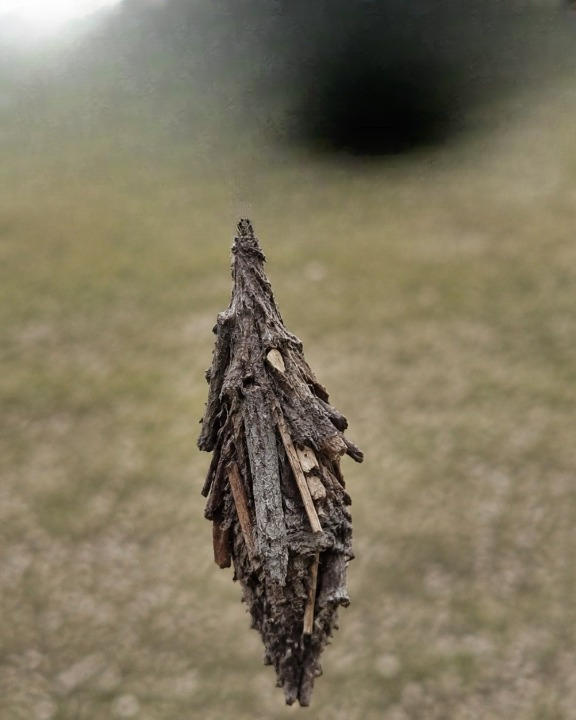
It’s small, brown, and oddly shaped—somewhere between a pine cone and a dried leaf cluster. At first glance, it appears harmless. In fact, many people assume it’s part of the tree itself.
But what you’re actually looking at could be one of the most destructive pests affecting evergreen landscapes: the evergreen bagworm.
Small, well-camouflaged, and surprisingly destructive, bagworms are responsible for damaging thousands of trees each year, often before homeowners realize there’s a problem.
What Is an Evergreen Bagworm?
The evergreen bagworm is the larval stage of a moth that feeds primarily on evergreen trees and shrubs.
What makes this insect unique is the protective case, or “bag,” it creates around itself. Using silk and pieces of the host plant, the larva constructs a portable shelter that blends almost perfectly with surrounding foliage.
These bags are remarkably effective camouflage.
Covered in needles, leaves, and small plant fragments, they often resemble natural parts of the tree. As a result, many homeowners overlook them completely until significant damage has already occurred.
From the insect’s perspective, it’s the perfect disguise.
From the tree’s perspective, it’s a hidden threat.
Why Bagworms Are So Difficult to Detect
Unlike many garden pests, bagworms don’t arrive in obvious swarms.
They don’t create dramatic overnight damage, and they rarely attract immediate attention. Instead, they work slowly and quietly, feeding on needles and foliage over weeks and months.
The earliest signs are subtle:
- Thinning branches
- Discolored or browning needles
- Sparse patches within the canopy
- Reduced growth
Because these symptoms can resemble drought stress or seasonal changes, homeowners often misidentify the cause.
Meanwhile, the infestation continues to grow.
By the time the bags become noticeable, dozens—or even hundreds—of larvae may already be feeding throughout the tree.
How Bagworms Damage Trees
Bagworms feed by consuming needles and leaves directly from the host plant.
For deciduous trees, some defoliation can often be tolerated. Evergreens, however, are less forgiving.
When evergreen needles are eaten, they do not always regenerate quickly. Repeated feeding weakens branches, reduces the tree’s ability to photosynthesize, and places significant stress on the entire plant.
Over time, severe infestations can lead to:
- Extensive needle loss
- Branch dieback
- Stunted growth
- Increased vulnerability to disease
- Permanent damage
- Tree death in extreme cases
Young or already stressed trees are particularly vulnerable.
What begins as a handful of hidden insects can eventually threaten the health of an entire landscape.
What’s Inside Those Hanging Bags?
The bags themselves are not nests or seed pods.
Each one contains a living larva.
As the insect grows, it continuously enlarges its protective case by attaching additional pieces of foliage and plant material. The bag serves as both shelter and camouflage, protecting the larva from predators and harsh environmental conditions.
The insect rarely leaves this mobile home.
Instead, it extends part of its body from the opening to feed, then retreats back inside when disturbed.
The result is a pest that remains hidden while actively damaging the tree.
The Life Cycle That Makes Infestations Worse
One reason bagworms can become such a serious problem is their reproductive strategy.
After completing development, male bagworms emerge as small moths capable of flight. Females, however, often remain inside their protective bags.
Following mating, the female deposits hundreds of eggs within the same case.
That means the seemingly harmless bag hanging from a branch may contain the next generation waiting to hatch.
When spring arrives, large numbers of larvae emerge and begin feeding immediately.
Without intervention, populations can increase dramatically from one season to the next.
Why Early Detection Matters
The earlier bagworms are discovered, the easier they are to manage.
When infestations are small, homeowners can often remove the bags manually by hand. This simple step can prevent hundreds of future larvae from developing.
Regular inspection of evergreen trees is especially important during:
- Late spring
- Summer
- Early fall
Look closely at branches for unusual hanging structures that resemble small cones or clusters of dried foliage.
Catching the problem early can mean the difference between minor damage and extensive tree loss.
Common Control Methods
Several approaches can help reduce or eliminate bagworm infestations.
Hand Removal
For small infestations, physically removing the bags is often highly effective.
Each removed bag may contain either a feeding larva or hundreds of eggs.
Pruning
Removing heavily affected branches can help limit the spread of the infestation and protect healthier sections of the tree.
Biological and Chemical Treatments
When infestations become widespread, specialized treatments may be necessary.
These treatments are most effective when larvae are young and actively feeding. Once insects mature and remain protected inside their bags, control becomes more difficult.
Homeowners dealing with severe infestations often consult tree-care professionals for guidance.
Recovery Takes Time
Even after the pests are eliminated, recovery is not immediate.
Evergreen trees grow relatively slowly, and damaged branches may require several seasons to regain density and appearance.
Severely affected trees can remain stressed long after the infestation ends.
This lingering impact is one reason prevention and early intervention are so important.
Protecting a tree before significant damage occurs is far easier than restoring one afterward.
A Reminder Hidden in Plain Sight
One of the most fascinating things about bagworms is how effectively they exploit human assumptions.
Most people expect serious problems to be obvious. They look for dramatic warning signs, visible swarms, or sudden decline.
Bagworms operate differently.
They blend into the very trees they’re harming. They work quietly. They rely on patience and camouflage.
And because they look like part of the landscape, they’re often ignored until the damage becomes impossible to miss.
Final Thoughts
The evergreen bagworm may be small, but its impact can be surprisingly large.
By disguising itself as ordinary foliage, this insect often escapes notice while steadily weakening trees from within. What appears to be a harmless cluster of plant material may actually be the beginning of a significant infestation.
Fortunately, awareness is one of the best defenses.
A quick inspection of your evergreens each season can reveal problems early, before extensive damage occurs.
Because when it comes to protecting healthy trees, timing matters.
And sometimes the most important threats are the ones hiding in plain sight.