Introduction: When Nature Surprises You
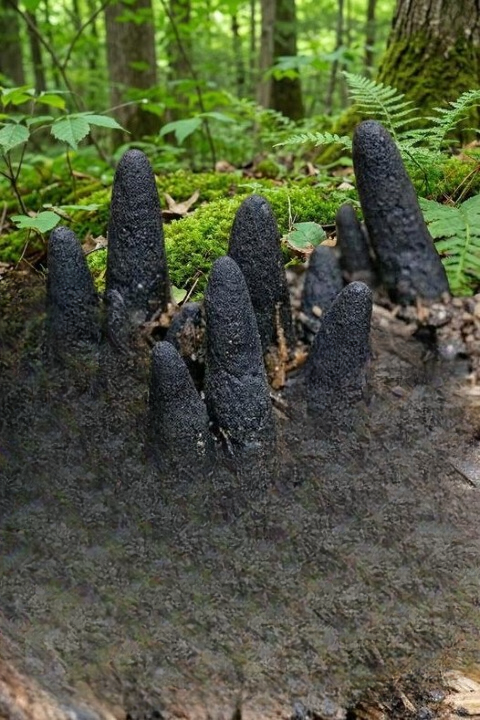
It can be startling to step into your yard and notice something unfamiliar pushing up through the mulch. Perhaps you spot several dark, upright shapes clustered together near a tree stump or scattered among wood chips. Their color is deep brown or nearly black, and their shape may remind you of slender fingers reaching upward from the soil.
At first glance, these unusual formations can appear mysterious. Some homeowners worry they might signal a plant disease, a pest problem, or something unsafe. However, in many cases, these dark protrusions are simply a naturally occurring woodland fungus known as Dead Man’s Fingers, scientifically called Xylaria polymorpha.
Despite its dramatic common name, this fungus is typically harmless. It plays a valuable role in the environment by breaking down decaying wood and helping return nutrients to the soil. What may look eerie or concerning at first is often just part of a healthy ecosystem at work beneath the surface.
This comprehensive guide will explore:
-
What these black growths are
-
Why they appear in mulch and soil
-
How to identify them correctly
-
Whether they pose any risks
-
How to manage them if desired
-
Their ecological benefits
-
How to prevent or reduce their appearance
-
Why fungi like this are essential to garden health
By the end, you’ll have a clear understanding of these natural formations—and perhaps even a new appreciation for the hidden processes supporting your landscape.
What Are These Black Protrusions in Mulch?
When you notice dark, finger-shaped structures growing from mulch, they are often fruiting bodies of a fungus that lives on decaying wood underground. The species most commonly responsible is Xylaria polymorpha.
This fungus belongs to a group known as ascomycetes, which produce spores inside specialized microscopic structures. The visible “fingers” are reproductive structures that release spores into the air, allowing the fungus to spread naturally.
Although their appearance may seem unusual, they are simply the visible portion of a much larger fungal network hidden beneath the soil.
Why Do They Appear in Mulch?
Mulch creates an ideal environment for many fungi. It provides:
-
Moisture retention
-
Organic material (wood chips, bark, roots)
-
Shade
-
Stable temperatures
Dead Man’s Fingers thrives on decaying hardwood. If your mulch contains partially decomposed wood or if there are buried tree roots beneath the soil, conditions are favorable for growth.
The fungus feeds on wood that is already dead. It does not typically attack healthy trees. Instead, it breaks down lignin and cellulose—the structural components of wood—turning them into simpler compounds that enrich the soil.
This process is part of natural decomposition. Without fungi performing this work, fallen branches and tree trunks would accumulate for decades.
Growth Pattern and Appearance
Understanding the physical characteristics of these fungi makes identification easier.
Shape
They grow upright, resembling short, thick fingers or small clubs.
Size
Most range from two to four inches tall.
Texture
-
Young growth: Soft, pale gray or whitish
-
Mature growth: Firm, dark brown to black
-
Surface: Smooth to slightly bumpy
Interior
If cut open when young, the interior is white. As it ages, it darkens.
Growth Habit
They often appear in clusters rather than as single isolated structures.
Because of their dark color and vertical orientation, they stand out against lighter mulch.
Seasonal Timing
These fungi most commonly appear during:
-
Spring
-
Fall
-
After extended rainy periods
They prefer damp conditions but can persist during drier spells once established.
Why the Name “Dead Man’s Fingers”?
The common name comes from their resemblance to blackened fingers emerging from soil. While the name may sound dramatic, it reflects appearance rather than danger.
Scientific naming, however, is more neutral. The species name polymorpha refers to its variable shapes and forms.
Are They Dangerous?
One of the first concerns homeowners have is safety.
The reassuring answer:
-
They are not toxic to touch.
-
They are not known to harm pets through casual contact.
-
They do not infect healthy plants.
They are not suitable for eating due to their tough, woody texture, but accidental contact is not considered hazardous.
As with any wild fungus, it’s best not to consume unidentified mushrooms. However, their presence alone is not a cause for alarm.
Ecological Importance
Fungi like Xylaria polymorpha serve as decomposers.
They:
-
Break down fallen wood
-
Release nutrients into soil
-
Improve soil structure
-
Support plant growth indirectly
Without decomposer fungi, forest ecosystems would struggle to recycle organic matter efficiently.
Your backyard is part of that broader ecological system.
Distinguishing from Other Fungi
Sometimes these growths are confused with:
-
Charred wood fragments
-
Decaying roots
-
Other dark fungi
Unlike typical mushrooms, they do not have caps or gills. They maintain a simple upright shape.
Their firm texture and clustered growth pattern are key identifying features.
Should You Remove Them?
Removal is optional.
Many homeowners choose to remove them for aesthetic reasons rather than safety concerns.
If you prefer to eliminate them:
-
Wear gloves.
-
Gently pull up the visible structures.
-
Remove any underlying decaying wood if accessible.
-
Dispose of material in yard waste.
Keep in mind that if wood remains underground, regrowth is possible.
Preventing Future Growth
Complete prevention may not be realistic, but you can reduce recurrence by:
-
Improving drainage
-
Avoiding overly thick mulch layers
-
Removing buried wood debris
-
Rotating mulch periodically
Dryer conditions are less favorable for fungal development.
Soil Health and Fungi
Healthy soil contains diverse microorganisms.
Fungi are essential components of this system. They:
-
Form symbiotic relationships with plant roots
-
Increase nutrient availability
-
Support biodiversity
The presence of decomposer fungi often indicates active organic breakdown—a sign of living soil.
Understanding Fungal Life Cycles
The visible “fingers” are temporary.
Most of the fungus exists as mycelium—thread-like structures underground.
When conditions are right, fruiting bodies emerge to release spores.
Afterward, they may dry out and disintegrate.
Mulch and Microbial Activity
Mulch supports beneficial microbial communities by:
-
Conserving moisture
-
Regulating temperature
-
Supplying organic material
Fungal growth is part of this dynamic process.
Aesthetic Considerations
If the appearance bothers you:
-
Remove visible growth promptly
-
Refresh mulch layers
-
Choose decorative ground covers
However, many gardeners choose to leave them, recognizing their ecological function.
When to Seek Expert Advice
In rare cases, fungal growth near structural wood (like wooden decks) may warrant professional inspection.
If you suspect decay affecting built structures rather than garden mulch, consult a licensed professional.
Psychological Reaction to Unfamiliar Growths
Humans tend to react strongly to unfamiliar shapes in familiar environments.
Unexpected growth can trigger concern simply because it breaks visual expectations.
Learning about these fungi often transforms unease into curiosity.
The Role of Fungi in Forest Ecosystems
In forests, fungi like Xylaria polymorpha are critical recyclers.
They convert:
-
Fallen logs
-
Branches
-
Leaf litter
into nutrient-rich soil.
Your garden mimics this natural cycle on a smaller scale.
Myths and Misconceptions
Myth: They indicate contaminated soil.
Reality: They indicate decomposing wood.
Myth: They spread disease to living trees.
Reality: They feed primarily on dead material.
Myth: They are dangerous to handle.
Reality: Normal garden precautions are sufficient.
Embracing Natural Processes
Gardens are living systems.
Unexpected fungi remind us that soil is active and dynamic.
Rather than seeing them as intruders, we can recognize them as participants in nature’s recycling system.
Environmental Benefits
Decomposition improves:
-
Soil fertility
-
Moisture retention
-
Carbon cycling
Fungi are central to these processes.
Long-Term Outlook
Most outbreaks are temporary.
As buried wood fully decomposes, the fungus loses its food source and gradually disappears.
Patience often resolves the situation naturally.
Final Thoughts: From Mystery to Understanding
Discovering unusual black growths in your mulch may initially feel unsettling. Yet in most cases, they are simply fruiting bodies of Xylaria polymorpha—a common decomposer fungus performing an essential ecological function.
They are typically harmless, temporary, and beneficial to soil health.
By understanding their role, you can replace concern with informed awareness.
Your garden is not just a collection of plants—it is a living ecosystem supported by countless unseen organisms working quietly beneath the surface.
Sometimes, those processes briefly become visible.
And when they do, they offer a fascinating glimpse into the hidden life of the soil.