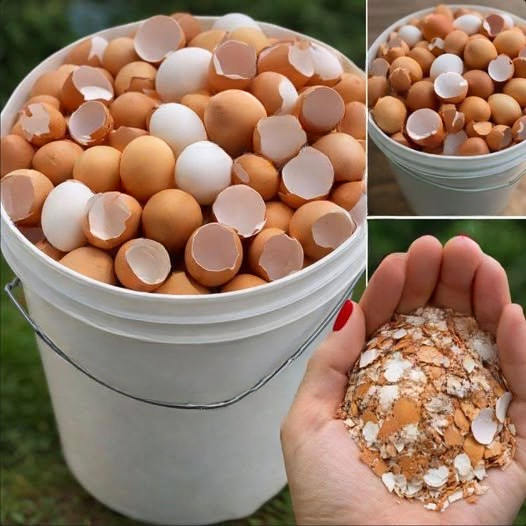
Most people crack an egg, use what’s inside, and immediately throw the shell into the trash without a second thought.
But eggshells are more than just kitchen waste. They contain minerals, can be reused in several practical ways around the home and garden, and may help reduce the amount of household waste that ends up in landfills.
While not every popular eggshell tip is supported by strong scientific evidence, there are several useful and environmentally friendly ways to give these shells a second life. Instead of tossing them away, consider how they might be repurposed around your home.
Why Eggshells Are Worth Saving
Eggshells are made primarily of calcium carbonate, the same compound found in many natural mineral sources. This gives them a unique structure that can be useful in gardening, composting, crafts, and other household projects.
Before reusing eggshells, it’s a good idea to rinse them thoroughly and allow them to dry completely. This helps reduce odors and makes them easier to store until needed.
1. Add Them to Compost
One of the easiest ways to reuse eggshells is by adding them to a compost pile or compost bin.
Crushed eggshells contribute minerals to compost and help create a more balanced mixture of organic materials. While they break down more slowly than fruit and vegetable scraps, they can still become part of nutrient-rich compost over time.
For faster decomposition, crush the shells into smaller pieces before adding them.
2. Use Them in the Garden
Many gardeners choose to incorporate crushed eggshells into their soil. Because eggshells contain calcium, they are often added around plants as part of an overall soil management strategy.
Finely crushed shells can be mixed into garden beds, container plants, or raised gardens. Keep in mind that eggshells release nutrients gradually and should not be viewed as a complete fertilizer replacement.
Healthy plants generally benefit from balanced soil management, proper watering, and appropriate nutrients.
3. Create Biodegradable Seed Starters
Empty eggshell halves can serve as small containers for starting seeds indoors.
Simply fill clean shell halves with potting soil and plant seeds according to package directions. Once seedlings are ready for transplanting, many gardeners place the shell directly into the soil, allowing it to break down naturally over time.
This approach offers a simple alternative to disposable plastic seed trays.
4. Support Sustainable Gardening Practices
Repurposing household materials can be a simple way to reduce waste and encourage more sustainable habits.
Whether used in compost, gardening projects, or seed starting, eggshells provide an opportunity to make use of something that would otherwise be discarded.
Small changes in daily routines can add up over time and contribute to a more environmentally conscious household.
5. Use Crushed Shells for Crafts and Decorations
Eggshells can also be used in a variety of creative projects.
Artists and hobbyists sometimes use crushed shells to create textured artwork, decorative mosaics, ornaments, and educational projects. The natural color and texture of eggshells make them a versatile crafting material.
For children, supervised craft activities can provide an opportunity to explore creativity while learning about recycling and reuse.
6. Make Educational Science Projects
Eggshells can be useful teaching tools for simple science demonstrations.
One popular experiment involves placing an egg in vinegar and observing how the shell reacts over several days. The process demonstrates the interaction between acids and calcium carbonate and provides a hands-on learning experience.
Educational activities like these can help children explore scientific concepts in an engaging way.
7. Help Reduce Household Waste
One of the biggest benefits of reusing eggshells is simply reducing waste.
Millions of eggs are consumed every day, and most shells end up in landfills. Finding practical ways to reuse them helps extend the life cycle of materials already entering the home.
Even if you choose only one or two reuse methods, the cumulative effect can make a meaningful difference over time.
8. Explore Creative DIY Uses
People continue to discover new ways to incorporate eggshells into household projects.
From decorative planters to gardening experiments and educational activities, eggshells offer a low-cost material for a wide variety of DIY ideas.
As with any project involving food-related materials, cleanliness and proper preparation are important for safety and hygiene.
Important Considerations
While many eggshell reuse ideas are popular, some commonly shared claims should be approached with caution.
For example, claims that eggshells can reliably sharpen blender blades, significantly alter coffee flavor, or serve as effective substitutes for commercial dental products may not be supported by strong scientific evidence. Additionally, homemade personal-care products may not be appropriate for everyone.
If using eggshells for gardening, household projects, or crafts, focus on practical applications that align with your needs and comfort level.
A Simple Step Toward Sustainability
Sustainable living doesn’t always require major lifestyle changes. Sometimes it starts with rethinking everyday habits and finding new uses for materials that would otherwise be discarded.
Eggshells are a perfect example. What many people see as waste can become a useful addition to a compost pile, a gardening project, a seed starter, or a creative craft.
By looking at common household items differently, we can often discover simple ways to reduce waste, save resources, and make better use of what we already have.
Final Thoughts
Eggshells may seem insignificant, but they demonstrate an important principle: not everything that looks like waste actually is.
Whether you add them to compost, use them in the garden, start seedlings, or incorporate them into creative projects, eggshells can serve a purpose long after breakfast is over.
The next time you crack an egg, consider setting the shell aside instead of throwing it away. A small change in habit may help reduce waste and inspire a more resourceful approach to everyday living.
Disclaimer: This article is for informational purposes only. Some popular household uses for eggshells may have limited scientific support. Always follow proper hygiene practices when handling food-related materials and consult qualified professionals regarding gardening, health, or safety concerns.