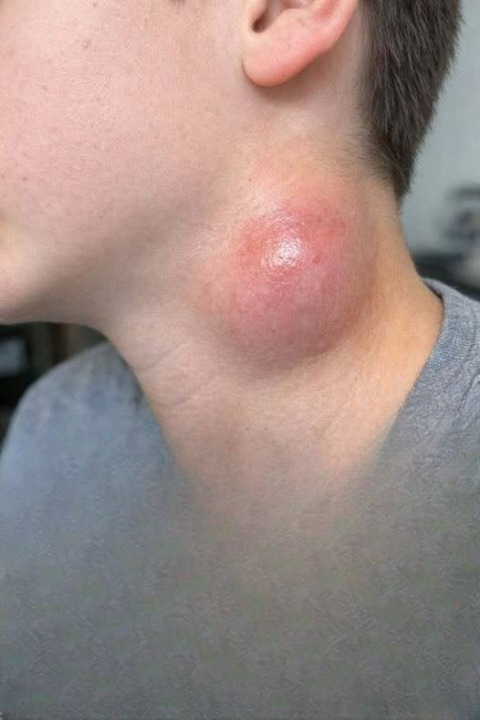
Few things frighten a parent more than discovering an unexpected lump on their child’s neck.
One moment everything seems normal. The next, you’re helping your child get ready for bed or brushing their hair when your hand brushes against a swollen area that wasn’t there before. Suddenly, your mind races through every worst-case scenario imaginable.
While that reaction is completely understandable, medical experts say that most neck lumps in children are far less alarming than parents initially fear.
Why Neck Lumps Are Common in Children
Children’s immune systems are constantly encountering new viruses, bacteria, and infections as they grow. One of the ways the body responds is by activating lymph nodes—small structures that help fight infection.
When lymph nodes become active, they often swell.
This means that a lump appearing in the neck after a cold, sore throat, ear infection, or other minor illness is frequently the result of the immune system doing exactly what it is supposed to do.
In many cases, these swollen lymph nodes gradually return to normal size once the underlying infection resolves.
When a Lump Is Usually Less Concerning
Although every child is different, certain characteristics are commonly associated with swollen lymph nodes caused by minor infections:
- Soft or slightly rubbery texture
- Mild tenderness when touched
- Ability to move slightly under the skin
- Recent history of a cold, sore throat, or similar illness
- Child otherwise acting normally
If the child is eating, drinking, playing, and behaving as usual, the situation is often less urgent.
However, that does not mean it should be ignored completely.
Warning Signs That Require Prompt Medical Attention
Parents should seek medical care immediately if a neck lump is accompanied by:
- Difficulty breathing
- Difficulty swallowing
- Excessive drooling
- Rapid enlargement of the swelling
- High fever
- Severe pain
- Significant redness spreading around the area
- Unusual drowsiness or weakness
These symptoms may indicate a more serious condition that requires urgent evaluation.
Other Possible Causes of Neck Lumps
While swollen lymph nodes are among the most common explanations, they are not the only possibility.
Neck lumps can also be caused by:
- Bacterial infections
- Congenital cysts present since birth
- Salivary gland problems
- Thyroid abnormalities
- In rare cases, tumors or other serious conditions
This is why persistent or unexplained swelling should always be assessed by a healthcare professional.
What Parents Should Avoid Doing
Finding a lump can trigger a strong urge to investigate further, but some actions may make the situation worse.
Avoid:
- Squeezing the lump
- Pressing repeatedly on the area
- Attempting to drain or pop it
- Applying unverified home remedies
- Ignoring concerning symptoms
Repeated manipulation can irritate tissues and potentially worsen inflammation.
When to Schedule a Medical Appointment
Even if the situation does not appear urgent, a doctor should evaluate a neck lump if:
- It lasts longer than several weeks
- It continues growing
- It feels unusually hard
- It remains fixed in place
- It repeatedly returns
- It is associated with unexplained weight loss, persistent fever, or night sweats
A healthcare provider may recommend blood tests, imaging studies, or additional evaluation depending on the circumstances.
Staying Calm Helps Everyone
Perhaps the most important thing for parents to remember is that panic rarely improves the situation.
Children often take emotional cues from the adults around them. Remaining calm, observing symptoms carefully, and seeking appropriate medical advice allows parents to respond effectively without creating unnecessary fear.
Most neck lumps in children turn out to have straightforward explanations and resolve without serious complications. The key is knowing when a lump can be monitored and when it requires prompt medical attention.
Final Thoughts
A sudden neck lump can be alarming, but it is not automatically a sign of a serious illness.
In many cases, it is simply evidence that a child’s immune system is actively fighting a common infection. Nevertheless, certain warning signs should never be ignored.
Pay attention to changes, monitor symptoms, and seek professional medical advice whenever you are uncertain. Early evaluation provides reassurance when the cause is harmless and allows timely treatment when further care is needed.
The goal is not panic—it is informed action.