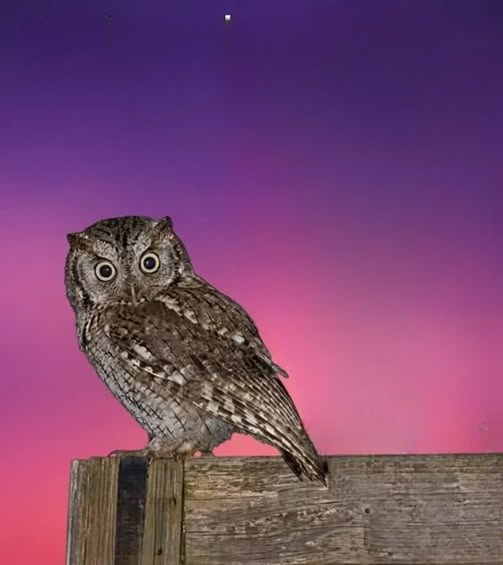
On calm, quiet nights—when the noise of the day fades and the world seems to slow—there is often a subtle shift in the atmosphere. It may be the faint rustle of leaves, a distant call echoing through the darkness, or the fleeting silhouette of wings gliding silently overhead. In these moments, one of nature’s most captivating creatures often makes its presence known: the owl.
Owls have intrigued humans for centuries. Their silent flight, piercing gaze, and nocturnal habits have inspired curiosity, admiration, and sometimes even superstition. But beyond the mystery lies a fascinating reality grounded in biology, ecology, and natural adaptation.
This in-depth guide explores everything you need to know about owls—from their remarkable physical abilities to their role in ecosystems, their cultural symbolism, and what it actually means when you see or hear one at night. By the end, you’ll have a deeper understanding of these extraordinary birds and why their presence is both natural and meaningful in its own way.
The World of Owls: An Introduction to a Unique Bird Group
Owls belong to the scientific order Strigiformes, a group that includes over 200 species found across nearly every continent on Earth. From dense forests to open plains and even urban environments, owls have adapted to a wide range of habitats.
They are primarily nocturnal, meaning they are most active at night. However, some species are crepuscular (active at dawn and dusk), and a few are even active during the day.
What sets owls apart from other birds is not just when they are active—but how they move, hunt, and interact with their environment.
Silent Flight: One of Nature’s Most Impressive Adaptations
One of the most remarkable traits of owls is their ability to fly almost completely silently. Unlike most birds, whose wings produce noticeable sound as they move through the air, owls have evolved specialized feathers that reduce noise.
How It Works
Their wings are designed with:
- Serrated leading edges that break up airflow
- Soft, velvety surfaces that absorb sound
- Fringed trailing edges that minimize turbulence
This unique combination allows owls to glide through the air without alerting prey. It’s not just impressive—it’s essential for survival.
Silent flight gives owls a major advantage when hunting, especially in low-light conditions where sound becomes just as important as sight.
Vision in the Dark: Built for Nighttime Precision
Owls are often associated with exceptional vision, and for good reason. Their eyes are highly adapted for low-light environments.
Key Features of Owl Vision
- Large eyes relative to their head size
- High sensitivity to light
- Forward-facing placement for depth perception
However, owl eyes are not as flexible as human eyes. They are fixed in their sockets, meaning owls cannot move them side to side.
The Head Rotation Advantage
To compensate, owls can rotate their heads up to 270 degrees. This allows them to scan their surroundings without moving their bodies—a crucial ability when staying hidden from prey or predators.
Extraordinary Hearing: Locating Prey Without Seeing It
While their vision is impressive, an owl’s hearing may be even more extraordinary.
Many owl species have asymmetrical ears, meaning one ear is positioned slightly higher than the other. This allows them to detect tiny differences in the timing and direction of sounds.
What This Means in Practice
An owl can:
- Detect movement beneath leaves or snow
- Pinpoint the exact location of prey in darkness
- Hunt even when visibility is extremely limited
In some cases, owls rely more on hearing than sight when capturing food.
Hunting and Diet: Nature’s Silent Predators
Owls are carnivorous birds of prey. Their diet varies depending on species and habitat, but commonly includes:
- Small mammals (mice, rats, voles)
- Insects
- Reptiles
- Small birds
Their hunting strategy is based on stealth, patience, and precision. They often perch quietly before swooping down अचानक on unsuspecting prey.
Why Owls Matter for Ecosystems
Owls play a vital role in maintaining ecological balance. By controlling populations of small animals—especially rodents—they help prevent overpopulation and protect crops in agricultural areas.
In this way, owls contribute to both natural ecosystems and human environments.
Masters of Camouflage
During the day, owls typically rest. To avoid detection, they rely on exceptional camouflage.
Their feathers often resemble:
- Tree bark
- Leaves
- Natural textures of their surroundings
This allows them to blend seamlessly into their environment. Even when perched in plain sight, they can be surprisingly difficult to spot.
Where You Can Find Owls
Owls are incredibly adaptable and can live in a wide range of environments:
- Forests
- Grasslands
- Mountains
- Deserts
- Urban areas
Some species have even adapted to city life, nesting in buildings and hunting in parks or quiet neighborhoods.
Their presence near human habitation is not unusual—it simply means the environment provides suitable food and shelter.
Owl Calls: Communication in the Night
One of the most recognizable aspects of owls is their vocalizations.
Their calls can include:
- Hoots
- Screeches
- Whistles
- Clicking sounds
Why Owls Call
These sounds serve practical purposes:
- Marking territory
- Attracting mates
- Communicating with other owls
To human ears, these calls can feel mysterious or even emotional—but they are simply part of natural behavior.
Cultural Interpretations: Owls in Human History
Throughout history, owls have been associated with various symbolic meanings.
In Ancient Greece
Owls were linked to Athena, the goddess of wisdom. As a result, they became symbols of knowledge and insight.
In Other Traditions
Different cultures have interpreted owls in various ways:
- Symbols of wisdom
- Representations of change or transition
- Guardians or watchers of the night
It’s important to note that these meanings are cultural interpretations—not reflections of the owl’s actual behavior.
What It Means When You See an Owl at Night
Seeing or hearing an owl can feel significant, especially in a quiet setting. But from a scientific perspective, their presence is usually explained by environmental factors.
Common Reasons Owls Appear
- Availability of food nearby
- Suitable nesting areas
- Territorial behavior
- Seasonal movement
In other words, an owl’s presence is part of natural ecological patterns—not a signal or message.
The Psychological Effect of Owls
Even though their behavior is natural, owls can have a strong emotional impact on people.
Why?
Because they represent something rare in modern life:
- Stillness
- Awareness
- Quiet observation
In a fast-paced world, encountering an owl can feel like a pause—a moment that draws attention to the present.
Owls and Urban Environments
Many people are surprised to learn that owls can thrive in cities.
Urban owls often:
- Nest in buildings or parks
- Hunt rodents in alleyways or open spaces
- Adapt to artificial lighting
Their presence in cities highlights their adaptability and resilience.
Common Myths About Owls
Myth 1: Owls Are Omens
There is no scientific evidence that owls predict events or carry symbolic messages.
Myth 2: Owls Are Rare
While some species are less common, many owls are widespread and regularly present in suitable habitats.
Myth 3: Owls Only Live in Forests
Owls can live in a variety of environments, including urban areas.
How to Respond If You Encounter an Owl
If you see or hear an owl:
- Observe quietly
- Avoid disturbing it
- Appreciate the moment
There’s no need for concern—owls are not dangerous to humans under normal circumstances.
The Role of Owls in Biodiversity
Owls are indicators of a healthy ecosystem. Their presence often suggests:
- Balanced food chains
- Suitable habitat conditions
- Stable environmental systems
Protecting owls also means protecting the ecosystems they depend on.
Conservation and Protection
Some owl species face challenges due to:
- Habitat loss
- Environmental changes
- Human activity
Efforts to protect owls include:
- Preserving natural habitats
- Reducing pollution
- Supporting wildlife conservation programs
Why Owls Continue to Fascinate Us
Owls exist at a unique intersection between science and human perception.
They are:
- Highly specialized predators
- Masters of stealth and adaptation
- Creatures that inspire reflection and curiosity
This combination makes them one of the most intriguing animals in the natural world.
Final Thoughts: Understanding the Presence of Owls
Owls do not need myths or symbolism to be meaningful.
Their significance comes from:
- Their role in ecosystems
- Their extraordinary adaptations
- Their quiet, efficient way of life
When you encounter an owl, you are witnessing a small part of a much larger natural system—one that continues to function quietly, even when unnoticed.
In the stillness of the night, their presence is a reminder that nature is always active, always evolving, and always full of life beyond what we immediately see.
And sometimes, simply noticing that is enough to make the moment feel special.