In today’s fast-paced and highly competitive retail environment, brands are constantly searching for ways to stand out and capture consumer attention. Many companies rely on bold visuals, large-scale advertising campaigns, or cutting-edge digital technology to make an impact. However, sometimes the most powerful ideas are rooted in simplicity.
A recent creative initiative by KFC demonstrates exactly that. Through its innovative “Out-Door” concept, the brand has redefined what it means to be “always open” by rethinking one of the most basic elements of physical retail spaces: the door.
Rather than adding new features, the campaign focuses on removing something familiar. By doing so, it transforms an everyday object into a powerful symbol of accessibility, availability, and modern consumer expectations.
This approach highlights a broader shift in marketing—where less can often mean more, and where creativity lies not in complexity, but in perspective.
A Simple Idea with a Strong Message
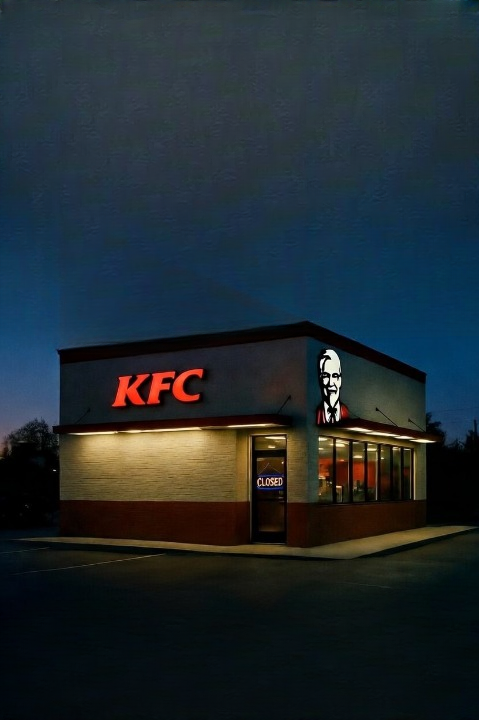
At its core, the “Out-Door” concept is built around a straightforward yet thought-provoking idea: what if a business removed its doors entirely to symbolize that it never closes?
Doors have always represented boundaries. They separate inside from outside, indicate whether a space is open or closed, and provide a sense of transition. By removing them, the traditional signals associated with availability are redefined.
The visual effect is immediate. A restaurant without doors naturally draws attention. People pause, look again, and begin to question what they are seeing. That moment of curiosity becomes the entry point for the brand’s message.
Instead of relying on conventional advertising, the building itself becomes the communication tool.
Turning Physical Space into a Marketing Experience
Modern marketing is no longer limited to billboards or digital ads. Increasingly, brands are transforming physical environments into interactive experiences. The “Out-Door” initiative is a strong example of this trend.
When customers approach a doorless storefront, they are not just visiting a restaurant—they are engaging with an idea. The absence of doors challenges expectations and encourages people to think differently about the concept of access.
This type of environmental storytelling is powerful because it feels natural. It does not interrupt the consumer experience; it becomes part of it.
Rather than telling people the brand is always open, the space shows it.
The Power of Subtraction in Marketing
Most marketing strategies are built on addition. Brands often introduce new features, new visuals, or new messaging to attract attention. However, this campaign takes the opposite approach.
By removing doors, something essential to traditional architecture, the concept stands out precisely because of what is missing.
This method works because it disrupts familiarity. People are conditioned to expect certain elements in a retail space. When those elements are altered or removed, it creates a moment of surprise.
Surprise leads to attention.
Attention leads to engagement.
And engagement is one of the most valuable outcomes in modern marketing.
Aligning with a 24/7 Consumer Lifestyle
The idea of being “always open” has taken on new meaning in recent years. With the rise of mobile apps, delivery platforms, and on-demand services, consumers have become accustomed to constant access.
Today’s customers expect convenience at all times of day. Whether it’s ordering food late at night or accessing services early in the morning, availability is no longer a bonus—it’s an expectation.
The “Out-Door” concept reflects this shift.
By removing physical barriers, the campaign symbolizes the removal of time-based limitations. It visually communicates that the brand is aligned with modern lifestyles, where schedules are flexible and needs can arise at any moment.
Repurposing Doors as Creative Storytelling Tools
An interesting aspect of the campaign is how the removed doors are reused rather than discarded.
Instead of treating them as waste, they are transformed into part of the storytelling experience. Placed outside the restaurant, these doors feature creative messaging that reinforces the idea of continuous accessibility.
This approach achieves several objectives:
- It reduces unnecessary waste
- It extends the campaign beyond the building itself
- It creates additional touchpoints for customer interaction
- It adds a layer of humor and creativity
By giving the doors a second purpose, the campaign becomes more than a visual statement—it becomes a narrative.
Blending Physical and Digital Experiences
Another key element of the initiative is its integration with digital tools.
Some installations include QR codes that allow passersby to access information quickly. With a simple scan, customers can find nearby locations, check availability, or explore services.
This feature connects the physical experience with the digital world, creating a seamless interaction.
Modern consumers often move between offline and online environments without thinking about it. Successful campaigns recognize this behavior and create bridges between the two.
The “Out-Door” concept does exactly that, ensuring the experience is not only creative but also functional.
Redefining Accessibility in Retail
Traditionally, accessibility in retail has been about location, hours, and convenience. However, this campaign expands that definition.
Accessibility becomes symbolic.
It is no longer just about whether a business is open—it is about how open it feels.
By eliminating visible barriers, the design suggests ease, inclusivity, and readiness to serve. It communicates that customers are welcome at any time, without hesitation.
This subtle shift in perception can have a meaningful impact on how people relate to a brand.
Encouraging Organic Engagement
One of the most valuable aspects of the campaign is its ability to generate organic attention.
People naturally share unusual or unexpected experiences. A doorless restaurant is something worth photographing, discussing, and posting online.
This type of user-generated content extends the reach of the campaign without additional advertising costs.
Instead of relying solely on paid promotions, the brand benefits from authentic engagement. When customers share their experiences, they become part of the marketing process.
This approach feels more genuine and often resonates more strongly with audiences.
The Role of Humor and Simplicity
Humor plays an important role in the success of the campaign. The messaging displayed on the repurposed doors often includes light, playful language that makes the concept approachable.
Rather than being overly serious or complex, the campaign maintains a tone that is easy to understand and enjoyable.
Simplicity is another key factor.
The idea is clear.
The execution is clean.
The message is easy to grasp.
In a world where consumers are constantly exposed to information, clarity can be more effective than complexity.
Reflecting Broader Trends in Retail Design
The “Out-Door” concept also reflects a larger shift in how physical retail spaces are designed.
Stores are no longer just places to make purchases. They are environments that communicate brand identity and create experiences.
As online shopping continues to grow, physical locations must offer something unique. Creative design, interactive elements, and memorable experiences help attract customers and keep them engaged.
This campaign demonstrates how even small changes can transform a space into something meaningful.
Understanding Consumer Psychology
From a psychological perspective, the removal of doors has an interesting effect.
Doors often represent boundaries or limitations. When they are removed, the space can feel more open and inviting.
This perception aligns with modern consumer expectations, where ease of access and minimal friction are highly valued.
People are drawn to experiences that feel effortless.
By visually removing obstacles, the campaign reinforces the idea that accessing the brand’s services is simple and convenient.
Maintaining Practical Functionality
While the concept is creative, it is important to note that it operates within practical guidelines.
The removal of doors is symbolic rather than literal in terms of safety and operations. Necessary measures remain in place to ensure that the environment is secure and functional.
This balance between creativity and practicality is essential.
A successful campaign must capture attention while still meeting real-world requirements.
Building Stronger Brand Identity
Consistency is a key factor in brand recognition. The “Out-Door” concept aligns well with a brand identity that emphasizes reliability, accessibility, and customer focus.
Rather than introducing an entirely new message, the campaign reinforces an existing promise in a new way.
This consistency helps strengthen trust.
Customers are more likely to connect with a brand that communicates clearly and consistently across different experiences.
Sustainability and Responsible Innovation
The decision to reuse the removed doors adds an element of sustainability to the campaign.
Even though the primary goal is creative expression, the reuse of materials reflects a thoughtful approach to resources.
Modern consumers are increasingly aware of environmental impact. Small actions that demonstrate responsibility can contribute to a more positive perception of a brand.
Inspiring Future Marketing Strategies
The “Out-Door” initiative may inspire other brands to rethink their approach to marketing and design.
It shows that innovation does not always require advanced technology or large budgets. Sometimes, reimagining something familiar can lead to powerful results.
This mindset encourages creativity at every level.
It invites brands to look at their environments, processes, and messaging from a new perspective.
The Importance of Experiential Marketing
Experiential marketing focuses on creating memorable interactions rather than simply delivering messages.
This campaign fits perfectly within that framework.
Customers do not just see the idea—they experience it.
That experience makes the message more memorable and more impactful.
In a crowded market, creating moments that stand out can make a significant difference.
Adapting to Changing Consumer Expectations
Consumer behavior continues to evolve, influenced by technology, culture, and lifestyle changes.
Brands that adapt to these shifts are more likely to remain relevant.
The “Out-Door” concept reflects an understanding of these changes. It recognizes that accessibility, convenience, and experience are key priorities for modern consumers.
By aligning with these expectations, the campaign strengthens its connection with its audience.
Final Thoughts: When Less Becomes More
The success of the “Out-Door” campaign lies in its simplicity.
It does not rely on complex visuals or overwhelming messaging. Instead, it uses a single idea, executed thoughtfully, to communicate a clear message.
By removing something as ordinary as a door, the campaign creates something extraordinary.
It demonstrates that:
- Creativity can come from rethinking the familiar
- Simplicity can be powerful
- Physical spaces can tell meaningful stories
- Marketing can be both functional and engaging
In a world filled with noise, sometimes the most effective way to be heard is to do something unexpected—but simple.
And in this case, that meant taking the door away.