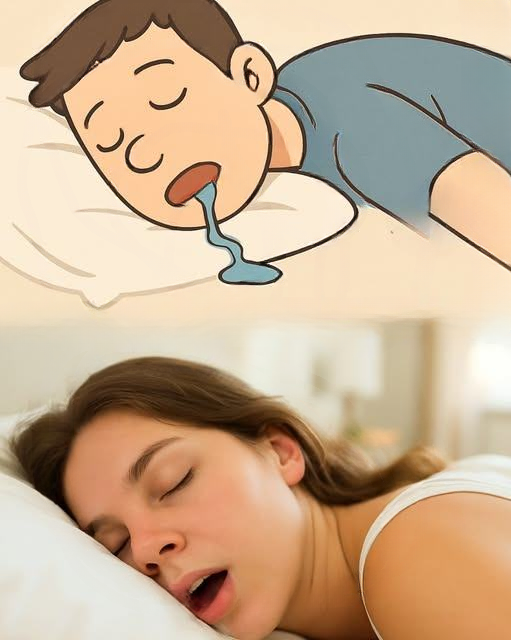
Drooling during sleep is something many people experience at some point, even if it’s not often discussed openly. Waking up to a damp pillow might feel embarrassing or unusual, but in most cases, it’s completely harmless. In fact, it can even be a subtle sign that your body has entered a deep and restorative stage of rest. Still, when drooling becomes frequent or appears suddenly without explanation, it may be worth taking a closer look.
To understand why drooling happens, it helps to know what your body does during sleep. As you drift off, your muscles begin to relax—including those that control your jaw and mouth. At the same time, your swallowing reflex slows down. During deeper stages of sleep, particularly REM sleep, your body becomes even more relaxed. Because of this, saliva can build up in your mouth instead of being swallowed, eventually escaping from your lips.
One of the simplest explanations for drooling is your sleeping position. People who sleep on their side or stomach are far more likely to drool because gravity naturally pulls saliva outward. In contrast, sleeping on your back tends to reduce drooling, as saliva stays in the mouth and is more likely to be swallowed. For many people, simply adjusting their sleeping posture can significantly reduce or eliminate the issue.
Another very common cause is nasal congestion. When your nose is blocked due to allergies, a cold, or sinus problems, your body switches to breathing through your mouth. Mouth breathing increases the chances of drooling because it keeps the lips open and disrupts normal saliva control. Fortunately, this type of drooling is usually temporary and resolves once the underlying congestion clears.
Certain health conditions can also play a role. For example, Gastroesophageal Reflux Disease may lead to increased saliva production as your body tries to neutralize stomach acid. This extra saliva can contribute to drooling, especially during sleep. Similarly, some medications can either increase saliva production or affect muscle control in the mouth, making drooling more likely.
In many cases, however, drooling is simply a sign that your body is deeply relaxed. People who are extremely tired or who enter deep sleep quickly may drool more than usual. Rather than being a problem, it can indicate that your body is getting the rest it needs.
That said, there are situations where drooling may signal something more serious. Neurological conditions can interfere with the muscles responsible for swallowing and controlling saliva. Disorders such as Parkinson’s disease or the aftereffects of a stroke can make it difficult for the body to manage saliva properly. In these cases, drooling may occur not only during sleep but also while awake.
Another condition to be aware of is sleep apnea. This disorder causes repeated interruptions in breathing during sleep, often leading to mouth breathing and disrupted muscle control. People with sleep apnea may also experience loud snoring, gasping during the night, and excessive daytime fatigue. Drooling can sometimes be an additional sign that something isn’t quite right with sleep quality.
It’s important not to jump to conclusions, though. Occasional drooling is extremely common and rarely indicates a serious issue. What matters more is noticing patterns. If drooling becomes frequent, worsens over time, or is accompanied by other symptoms—such as difficulty breathing, poor sleep, or unusual tiredness—it may be worth consulting a healthcare professional.
For those who simply find drooling uncomfortable or inconvenient, there are a few easy ways to manage it. Changing your sleeping position is often the most effective first step. Addressing nasal congestion through proper treatment can also make a big difference. Staying hydrated and reviewing any medications with a doctor may help if they are contributing factors.
In some cases, a medical evaluation may be recommended. A doctor might suggest a sleep study or other assessments to better understand what’s happening during rest. These tests can help rule out conditions like sleep apnea or identify other underlying causes.
Ultimately, drooling during sleep is usually nothing to worry about. It’s often just a reflection of how relaxed your body becomes during deep rest. While it can sometimes be linked to medical conditions, for most people, it’s simply part of the body’s natural sleep process.
The key takeaway is awareness, not alarm. Your body communicates in subtle ways, and small changes can offer useful insights into your overall health. By paying attention to patterns and understanding the possible causes, you can better interpret what your body is telling you—and decide when, if ever, it’s time to take action.