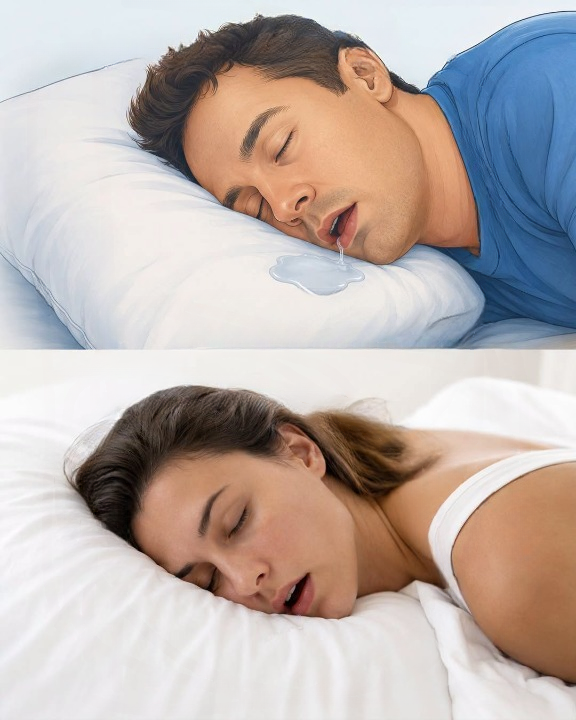
Waking up with drool on your pillow can feel uncomfortable or even embarrassing, but in most cases, it is completely normal. It is one of those bodily functions people rarely talk about, yet almost everyone experiences it at some point in their lives.
Far from being a sign of poor hygiene or a health problem, nighttime drooling is usually just a simple result of how the body behaves during deep sleep.
To understand it properly, it helps to look at what is happening inside the body while you are asleep.
What Your Body Is Doing While You Sleep
Sleep is not a single, uniform state. It moves through different stages, including light sleep, deep sleep, and REM sleep. During deeper stages, your body shifts into a state of full physical relaxation.
That relaxation affects several key functions:
- Muscles loosen, including those in the face and jaw
- Swallowing becomes less frequent
- Awareness of saliva in the mouth disappears
When you are awake, you swallow constantly without thinking about it. This keeps saliva from building up. But during deep sleep, that automatic swallowing reflex slows down significantly.
At the same time, the muscles that keep your mouth closed may relax slightly. This can allow the jaw to drop open just enough for saliva to escape.
So drooling is not an “active” process. It is passive—caused by relaxation and reduced reflex control.
Why Saliva Builds Up at Night
Saliva is constantly produced by your body, even when you are asleep. Its job is to:
- Keep your mouth moist
- Help with digestion
- Protect teeth and gums
- Wash away bacteria
During the day, this saliva is regularly swallowed. At night, production does not stop, but swallowing slows down.
This creates a simple imbalance: saliva is still being made, but it is not being cleared as efficiently.
If the mouth is closed and you are sleeping on your back, this usually causes no issue. But if the mouth opens slightly or gravity assists its flow outward, drooling can occur.
The Role of Sleep Position
Your sleeping position is one of the biggest factors in whether you drool or not.
People who sleep:
- On their side
- On their stomach
are more likely to experience drooling.
This is because gravity naturally pulls saliva toward the opening of the mouth in these positions. When the head is tilted, there is a clear path for saliva to exit instead of being retained.
On the other hand, sleeping on your back reduces this effect. In that position, saliva tends to remain inside the mouth or gets swallowed more easily during lighter sleep stages.
This is why some people notice drooling only on certain nights, depending on how they sleep.
Mouth Breathing and Nasal Blockage
Another major cause of drooling is mouth breathing.
When nasal breathing is difficult, the body automatically switches to breathing through the mouth. This can happen due to:
- Seasonal allergies
- Nasal congestion from colds or flu
- Sinus infections
- Structural issues such as a deviated septum
Mouth breathing keeps the jaw slightly open during sleep. This increases the chance that saliva will escape rather than remain inside the mouth.
It can also dry out the mouth, which may trigger the body to produce even more saliva to compensate.
This combination—more saliva and an open mouth—makes drooling more likely.
Digestive and Medical Influences
In some cases, drooling can be linked to digestive or medical conditions.
One common example is acid reflux. When stomach acid moves upward into the esophagus, the body may respond by producing extra saliva. This helps neutralize the acid and protect the throat.
During sleep, this increased saliva can accumulate and lead to drooling.
Certain medications, neurological conditions, or muscle control issues can also affect swallowing or jaw control, though these cases are far less common.
For most people, however, drooling is not connected to illness—it is simply a normal sleep-related occurrence.
When Drooling Is Completely Normal
Occasional drooling is very common and usually nothing to worry about.
It is especially normal if:
- You are in deep sleep
- You sleep on your side or stomach
- You have mild nasal congestion
- You occasionally breathe through your mouth
- You are very relaxed during sleep
Many people only notice it occasionally, such as after a particularly deep or uninterrupted night of sleep.
In these cases, drooling is simply a sign that your body reached a deep rest state.
When It Might Be Worth Looking Into
Although drooling is usually harmless, there are situations where it may be worth paying closer attention.
You should consider speaking with a healthcare professional if you notice:
- A sudden increase in drooling without explanation
- Difficulty swallowing during the day or night
- Frequent choking or coughing during sleep
- Persistent nasal blockage affecting breathing
- Other neurological or muscular symptoms
These signs do not automatically indicate a serious problem, but they can help identify underlying conditions that may need treatment.
Simple Ways to Reduce Nighttime Drooling
If drooling is bothersome, a few small adjustments can often help reduce it.
Some practical strategies include:
1. Changing sleep position
Sleeping on your back can reduce the effects of gravity on saliva flow.
2. Treating nasal congestion
Managing allergies or sinus issues can improve nasal breathing and reduce mouth breathing.
3. Improving sleep posture
A supportive pillow can help keep your head in a position that encourages closed-mouth breathing.
4. Staying hydrated
Proper hydration helps regulate saliva consistency and reduces irritation that can increase saliva production.
5. Managing acid reflux if present
Avoiding late meals and certain trigger foods can reduce nighttime saliva surges linked to reflux.
These adjustments are simple but often effective when drooling becomes frequent or disruptive.
The Bottom Line
Drooling while sleeping is usually a completely normal bodily function. It happens when natural saliva production continues during sleep, while swallowing slows down and the mouth opens slightly due to relaxation or sleep position.
In most cases, it is not a sign of illness or poor health. It is simply one of many ways the body behaves when it enters a deep rest state.
While it can be inconvenient or embarrassing, it is generally harmless—and often temporary.
Understanding why it happens can make it feel less like a problem and more like a reminder of just how deeply the body relaxes when it finally gets the rest it needs.