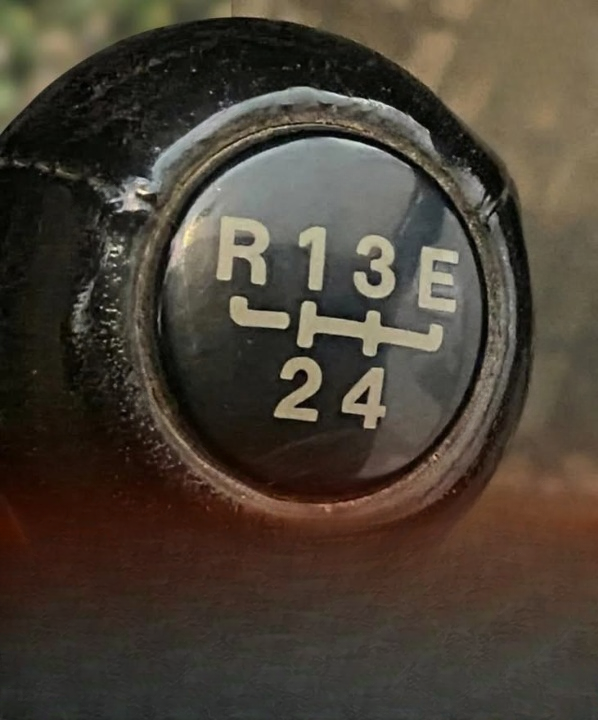
Car gear selectors are designed to be simple and intuitive, but many drivers still come across symbols that raise questions. One of the most commonly misunderstood markings is the letter “E” that appears on certain automatic or semi-automatic gear systems. While it may seem mysterious or even technical, its meaning is actually quite practical.
Despite viral posts suggesting complicated explanations, the “E” is usually associated with economy driving mode, a feature designed to improve fuel efficiency and optimize vehicle performance under normal driving conditions.
What the “E” Mode Stands For
In most vehicles where it appears, the “E” on the gear selector or driving mode system stands for Economy or Eco mode. This setting adjusts how the car behaves to reduce fuel consumption and improve efficiency.
When a driver selects or activates “E” mode, the vehicle’s system typically modifies several functions, including:
- Shift timing in automatic transmissions
- Engine response to acceleration
- Air conditioning power usage
- Overall fuel delivery and throttle sensitivity
The goal is to prioritize fuel savings over performance.
How Economy Mode Works
In normal driving mode, a car is tuned for balanced performance. That means quicker acceleration, more responsive throttle input, and standard fuel usage.
When “E” mode is activated, the vehicle becomes more conservative in how it uses energy. For example, the transmission may shift to higher gears sooner, keeping the engine at lower RPMs. This reduces fuel consumption but can also make acceleration feel slower or less responsive.
In some modern vehicles, Eco mode also limits climate control power slightly to reduce engine load. While this may not be noticeable in mild weather, it can contribute to better overall efficiency.
Why Cars Have This Feature
Economy modes were introduced as manufacturers responded to rising fuel costs and stricter environmental regulations. The idea is to give drivers a simple option to reduce fuel usage without needing to change driving habits drastically.
For city driving, traffic congestion, or long highway trips at steady speeds, Eco mode can be particularly effective. It helps extend fuel range and reduce emissions, making it both cost-effective and environmentally friendly.
When “E” Mode Might Not Be Ideal
While Economy mode has clear benefits, it is not always the best choice in every driving situation.
For example, drivers may want to avoid Eco mode when:
- Merging onto highways where quick acceleration is needed
- Driving on steep inclines or mountainous roads
- Carrying heavy loads that require more engine power
- Situations where immediate throttle response is important for safety
In these cases, standard or sport modes may provide better control and responsiveness.
Common Misunderstandings About the “E” Setting
Many drivers first encountering the “E” label assume it stands for something technical like “Engine,” “Electric,” or even “Emergency.” Social media posts often amplify confusion by suggesting hidden or complex meanings.
In reality, the feature is designed to be simple. It is not a secret function or hidden system—it is just a driving mode that prioritizes efficiency.
Another misconception is that Eco mode damages the engine or reduces performance permanently. This is not true. The mode only temporarily adjusts how the car operates while it is active. It does not cause long-term mechanical changes.
How Drivers Can Benefit From Using It
Using Economy mode strategically can help drivers save fuel over time, especially for those who commute daily or drive long distances.
Some practical tips include:
- Use Eco mode during steady highway driving
- Activate it in city traffic where frequent acceleration is unnecessary
- Turn it off when you need stronger acceleration or responsiveness
By switching between modes based on driving conditions, drivers can achieve a better balance between performance and efficiency.
The Role of Modern Vehicle Technology
Today’s cars are increasingly equipped with multiple driving modes, often including Eco, Normal, Sport, and sometimes even customizable settings. These modes reflect the growing sophistication of vehicle engineering, where software plays a major role in controlling performance.
Eco mode is part of a broader trend toward smarter energy management in vehicles, especially as hybrid and electric technologies become more common.
Final Thoughts
The “E” on car gear systems is not a hidden mystery—it simply stands for Economy mode, a feature designed to improve fuel efficiency and reduce energy consumption.
While it may not be suitable for every driving situation, it is a useful tool for everyday commuting and long-distance travel. Understanding when and how to use it can help drivers save money on fuel while also reducing environmental impact.
In the end, what seems like a small symbol on a gear selector actually reflects a larger shift in automotive design: making driving more efficient, adaptable, and intelligent.