It usually starts the same way.
You walk into the kitchen early in the morning. The house is quiet. Maybe it rained overnight. You shuffle toward the coffee machine—and then you see it.
A tiny, glistening trail.
Silver.
Shimmering.
Suspicious.
You follow it.
And there it is.
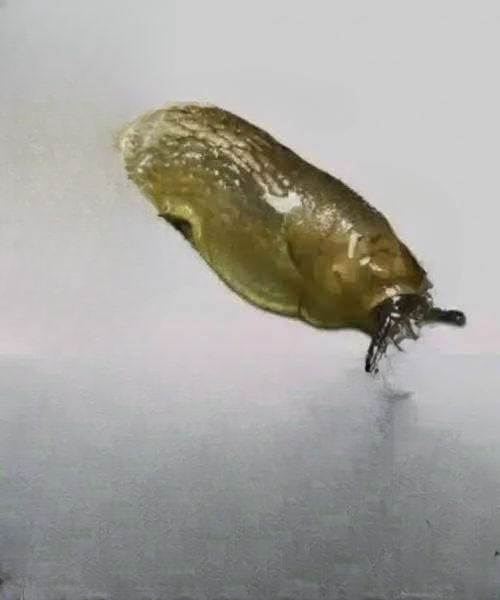
A slug.
Slowly inching across the tile like it owns the place.
Your first reaction?
Probably not awe.
Probably not admiration.
Probably something along the lines of: “How did you get in here?”
For many people, slugs are nothing more than slimy intruders—garden pests that appear after rain, nibble on leaves, and leave behind trails no one asked for.
But what if their presence means something more?
Not in a mystical, supernatural way—but in a biological, environmental, and even scientific sense.
Because beyond their slippery appearance, slugs are far more important than we often realize.
And yes—if one shows up in your house, it may actually be telling you something.
Let’s take a closer look.
The Truth About Slugs: More Than Just Garden Pests
Slugs belong to the class Gastropoda, the same broad group that includes snails. The main difference? Slugs either lack a visible external shell or have a very reduced internal one.
To many, that just makes them look… unfinished.
But biologically speaking, they are remarkably sophisticated.
They have:
-
A muscular foot that allows them to glide across surfaces.
-
Tentacles equipped with sensory organs.
-
A specialized mouth structure called a radula, which works like a tiny rasp to scrape food.
-
The ability to produce mucus that serves multiple survival functions.
And that mucus? It’s one of the most fascinating parts of their biology.
But we’ll get to that.
First, let’s address the question behind the headline:
What does it mean if a slug visits your house?
What a Slug in Your House Actually Means
When a slug appears indoors, it’s usually because of environmental conditions—not symbolism.
Slugs are highly sensitive to:
-
Moisture levels
-
Temperature
-
Light exposure
They thrive in damp, cool environments. After rainfall, especially heavy or sustained rain, their habitats can become flooded or overly saturated.
If a slug enters your home, it may mean:
-
There is a moisture source nearby (leaky pipes, damp basements, condensation).
-
There are accessible entry points like cracks under doors or small gaps in walls.
-
Outdoor vegetation close to the house is creating an inviting habitat.
-
The surrounding soil retains high humidity.
In other words, a slug visit is often a signal about your environment.
It may be telling you:
“There’s moisture here.”
And moisture matters—not just for slugs, but for your home’s structural health as well.
In that sense, a slug sighting can serve as a subtle environmental indicator.
Slugs as Ecosystem Recyclers
Now let’s zoom out beyond the house and into the garden, forest, or field.
Slugs are essential participants in natural recycling systems.
They feed on:
-
Fallen leaves
-
Decomposing plant matter
-
Fungi
-
Organic debris
By consuming decaying material, they help break it down into simpler components.
This process:
-
Returns nutrients to the soil
-
Supports microbial activity
-
Improves soil fertility
-
Encourages plant growth
Without decomposers like slugs, forests and gardens would accumulate layers of dead plant material.
They are part of nature’s cleanup crew.
Unpleasant to some? Yes.
Crucial? Absolutely.
Soil Fertility and Nutrient Cycling
Healthy soil depends on constant nutrient cycling.
When plants die, their nutrients don’t disappear—they must be recycled.
Slugs contribute by:
-
Fragmenting organic matter
-
Enhancing decomposition rates
-
Producing waste that enriches soil
Their droppings contain partially digested plant material that microorganisms can process further.
This means slugs indirectly support:
-
Crop growth
-
Wild plant regeneration
-
Biodiversity
So when we see a slug in the garden, we’re seeing a small but important link in a much larger chain.
A Key Part of the Food Web
Slugs are not just recyclers.
They are also food.
Many animals rely on slugs as a nutrient-rich meal source.
These include:
-
Birds
-
Toads
-
Frogs
-
Hedgehogs
-
Beetles
-
Small mammals
Remove slugs entirely, and the ripple effect could impact multiple species.
Nature operates through balance. Even creatures that seem insignificant serve a role.
Slugs are prey.
And prey species are foundational to ecological stability.
The Surprising Science of Slug Mucus
Now let’s talk about slime.
Because yes—slug slime is scientifically remarkable.
Slug mucus isn’t just slippery goo.
It has:
-
Adhesive properties
-
Protective qualities
-
Moisture retention abilities
Some types of slug mucus can become extremely sticky under stress, helping them cling to surfaces to avoid predators.
Researchers have studied slug mucus for potential applications in:
-
Medical adhesives
-
Wound healing
-
Surgical glues
Its structure allows it to bond strongly while remaining flexible.
Nature has spent millions of years refining biological materials. Slugs are one small example of that ingenuity.
Slugs and the World of Skincare
It may surprise some people to learn that certain gastropod secretions—particularly from snails—have influenced skincare research.
While slugs and snails are not identical, their mucus shares certain properties of interest in dermatological studies.
In cosmetic science, researchers explore mucus compounds for:
-
Hydration support
-
Barrier protection
-
Skin-repairing potential
The interest lies in the biological components that promote regeneration in the animals themselves.
Slugs rely on mucus to protect delicate tissues from injury and dehydration.
That same biological strategy has inspired laboratory research into skin-care formulations.
It’s a reminder that even the least glamorous creatures can contribute to innovation.
Why Slugs Appear After Rain
Rainfall creates ideal conditions for slug activity.
They require moisture to:
-
Move effectively
-
Avoid dehydration
-
Protect their bodies
Their soft tissues are vulnerable to drying out. Without sufficient humidity, they can perish quickly.
After rain, they emerge because:
-
Surfaces are damp
-
Air humidity rises
-
Food becomes accessible
So if you see multiple slugs outside after a storm, it’s not an invasion.
It’s biology.
Are Slugs Harmful?
In general, slugs are not dangerous to humans.
They do not:
-
Attack people
-
Bite aggressively
-
Intentionally cause harm
However, like many wild organisms, they can carry bacteria and parasites. This is why it’s important to avoid direct handling without protection.
Basic hygiene—washing hands after garden work—is sufficient precaution.
Inside the home, they can:
-
Leave slime trails
-
Damage houseplants
-
Indicate excess moisture
But they are not aggressive threats.
Slugs as Environmental Indicators
Because slugs are sensitive to moisture and pollution, they can function as environmental indicators.
Their presence may suggest:
-
Healthy organic matter levels
-
Moist microclimates
-
Minimal pesticide exposure
In ecological research, gastropods are sometimes studied to understand environmental changes.
A sudden disappearance of slugs in an ecosystem may signal environmental stress.
So ironically, their presence often reflects environmental balance.
Cultural Views of Slugs
Throughout history, slimy creatures have often been misunderstood.
Slugs have sometimes symbolized:
-
Slowness
-
Laziness
-
Discomfort
But symbolism often ignores biology.
In reality, slugs are:
-
Efficient decomposers
-
Adaptable survivors
-
Important ecological connectors
Sometimes cultural perception lags behind scientific understanding.
The Psychology of Disgust
Why do so many people react strongly to slugs?
Part of it is evolutionary.
Humans evolved to avoid substances that:
-
Appear wet and unfamiliar
-
Might signal decay
-
Carry potential pathogens
Slugs check many of those boxes visually.
But visual discomfort does not equal ecological irrelevance.
Understanding reduces fear.
What to Do If You Find a Slug Indoors
If a slug appears in your house:
-
Avoid crushing it (which creates more mess).
-
Use gloves or paper to relocate it outside.
-
Identify possible moisture sources.
-
Seal entry points if necessary.
-
Reduce damp conditions.
Simple prevention steps:
-
Fix leaks
-
Improve ventilation
-
Keep door thresholds sealed
-
Avoid overwatering plants near walls
Slugs aren’t entering out of malice.
They’re following moisture.
The Broader Lesson
When we encounter something unexpected—especially something unpleasant—we often react first and question later.
But curiosity changes perspective.
The slug on your kitchen floor might represent:
-
A moisture imbalance
-
A recent rain event
-
A thriving garden ecosystem
-
A reminder of interconnected systems
Instead of seeing only slime, we can choose to see a living participant in a complex environmental network.
Slowness as Strength
Slugs move slowly.
In a world obsessed with speed, that can seem like weakness.
But slowness allows:
-
Energy efficiency
-
Careful navigation
-
Survival in vulnerable bodies
Slugs have survived for millions of years.
That’s not accidental.
It’s adaptation.
Appreciating the Overlooked
Not every important creature is majestic.
Not every ecological hero is beautiful.
Some are small.
Slimy.
Uncelebrated.
But essential.
Slugs remind us that value isn’t always obvious at first glance.
Final Thoughts: When a Slug Visits
So what does it mean when a slug visits your house?
It probably means:
-
There’s moisture nearby.
-
Environmental conditions are favorable for them.
-
Nature is closer than you think.
But it also offers something deeper.
It offers a chance to reconsider how we view the small, the overlooked, and the misunderstood.
Slugs help recycle nutrients.
They support wildlife.
They contribute to soil health.
They inspire scientific research.
They are not glamorous.
They are not charming.
But they are part of the delicate balance that sustains life.
The next time you see one gliding slowly across a path after rain, you might still wrinkle your nose.
That’s human.
But perhaps you’ll also recognize that this tiny, soft-bodied creature is doing work most of us never see.
And that—even in its quiet, slimy way—it matters.