Imagine you’re walking through a quiet woodland trail in early autumn. Fallen leaves blanket the ground, the air feels cool and damp, and shafts of light filter through tall trees. Then you see something that stops you in your tracks.
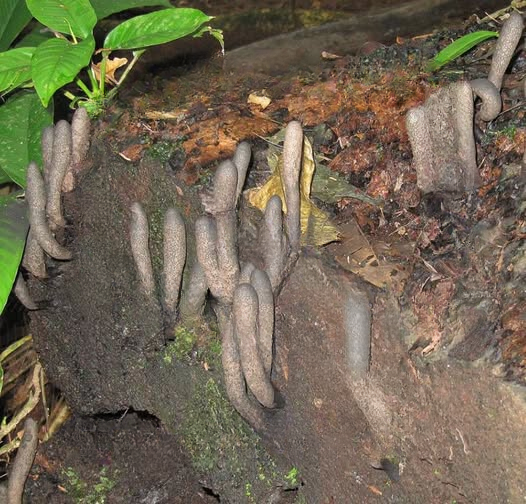
From the forest floor, what appears to be a blackened human hand is emerging from the soil. Several “fingers” stretch upward, rigid and dark, pushing through decaying leaves. For a split second, your mind races. Is it a prop? A prank? Something far more serious?
Fortunately, it’s neither mysterious nor dangerous. What you’ve encountered is a fascinating woodland organism commonly known as Dead Man’s Fingers. Its scientific name is Xylaria polymorpha, and despite its eerie appearance, it plays an important and beneficial role in forest ecosystems.
In this comprehensive guide, we’ll explore:
-
What Dead Man’s Fingers really are
-
Why they look like human fingers
-
Where and when you can find them
-
Whether they’re safe to touch
-
Why they are not considered edible
-
Their ecological importance
-
How they reproduce
-
How to distinguish them from other fungi
-
Common myths and misunderstandings
-
Why unusual fungi deserve appreciation
By the end, you’ll see this strange fungus not as something frightening—but as one of nature’s most intriguing recyclers.
What Is Dead Man’s Fingers?
Dead Man’s Fingers is a species of fungus that grows primarily on decaying hardwood. It belongs to a group of fungi known for producing elongated, club-like structures rather than traditional mushroom caps.
Unlike the classic mushroom shape—with a cap and stem—this fungus grows in finger-shaped projections that cluster together in small groups. These projections can resemble:
-
Blackened fingers
-
Charred sticks
-
Twisted roots
-
Small, upright clubs
The resemblance to a hand emerging from the ground is accidental—but undeniably striking.
The Scientific Identity
The organism is formally known as Xylaria polymorpha.
The name comes from Greek and Latin roots:
-
“Xylaria” refers to wood, highlighting its preference for decaying timber.
-
“Polymorpha” means “many forms,” acknowledging its variable shapes.
Although it looks dramatic, it’s simply one of many wood-decaying fungi that quietly work beneath the forest canopy.
First Impressions: Why It Looks So Unsettling
The unsettling quality of Dead Man’s Fingers comes from three main features:
-
Color – Mature specimens turn deep charcoal or black.
-
Shape – They grow upright and taper slightly at the top.
-
Texture – Older growth appears dry, cracked, and somewhat leathery.
When several grow together, they may resemble knuckles or multiple digits clustered side by side.
In dim light—especially in foggy or shaded forests—the resemblance becomes even more convincing.
But rest assured: it is not connected to anything human. It’s simply fungus doing what fungus does.
How It Grows and Develops
Dead Man’s Fingers undergo a noticeable transformation during their life cycle.
Early Stage
-
Pale gray or white
-
Soft and somewhat flexible
-
Slightly smooth surface
Mature Stage
-
Dark gray to black
-
Hardened and woody
-
Rough, cracked outer layer
Aging Stage
-
Dry and brittle
-
May shrink slightly
-
Gradually decomposes
The change in color and texture often makes people think they’re seeing something burnt or decayed.
Where Can You Find Dead Man’s Fingers?
This fungus prefers specific conditions.
Habitat
It typically grows on:
-
Decaying hardwood stumps
-
Buried tree roots
-
Rotting logs
-
Old tree bases
Common host trees include:
-
Oak
-
Beech
-
Maple
Rather than appearing randomly in open fields, it’s most often found in wooded areas with abundant decomposing wood.
When Does It Appear?
Dead Man’s Fingers are most visible:
-
Late summer
-
Autumn
-
Early winter
However, because they harden and persist after maturing, you may see them year-round—sometimes even protruding through light snow.
Their long-lasting structure makes them more noticeable than many short-lived mushrooms.
Why Do They Resemble Human Fingers?
The resemblance is purely coincidental.
The elongated form helps with:
-
Spore dispersal
-
Structural stability
-
Exposure to air currents
The upright shape allows spores to be released efficiently into the surrounding environment.
Nature didn’t design them to look like hands. That’s simply how our brains interpret the shape.
Humans are wired to recognize familiar patterns—especially human anatomy.
This psychological effect is known as pareidolia: seeing meaningful shapes where none were intended.
Are They Safe to Touch?
Yes, Dead Man’s Fingers are generally safe to touch.
They do not:
-
Emit toxins through skin contact
-
Cause burns or irritation
-
Release harmful fluids
However, as with any wild fungus:
-
Wash your hands afterward.
-
Avoid rubbing your eyes.
-
Be cautious if you have mold sensitivities.
Fungal spores can trigger allergies in sensitive individuals, particularly during peak spore release periods.
Can You Eat Dead Man’s Fingers?
Technically, they are not known to be toxic.
However, they are considered inedible.
Why?
-
Extremely woody texture
-
Fibrous interior
-
Bitter taste
-
No culinary value
Even when young and softer, they lack appealing flavor or nutritional benefit.
Attempting to chew one would feel like gnawing on a piece of bark.
Foragers generally ignore them.
Their Role in the Forest Ecosystem
This is where Dead Man’s Fingers truly shine.
They are saprophytic fungi, meaning they feed on dead organic matter.
Their primary job:
-
Break down decaying hardwood
-
Convert wood into simpler compounds
-
Return nutrients to the soil
Without organisms like this fungus, forests would become clogged with undecomposed wood.
The Decomposition Process Explained
When a tree dies:
-
Its wood contains complex molecules like lignin and cellulose.
-
These compounds are tough and slow to degrade.
Fungi like Dead Man’s Fingers produce enzymes that:
-
Break down lignin
-
Break down cellulose
-
Release nutrients
This allows:
-
Soil enrichment
-
New plant growth
-
Continued forest renewal
They are natural recyclers.
Supporting Biodiversity
As they break down wood, they create:
-
Softened habitats
-
Nutrient-rich soil
-
Microenvironments
These benefit:
-
Insects
-
Microorganisms
-
Mosses
-
Seedlings
Even though they look eerie, they support life in quiet but meaningful ways.
How They Reproduce
Dead Man’s Fingers reproduce by releasing spores.
These microscopic spores:
-
Drift through the air
-
Land on suitable wood
-
Germinate under moist conditions
Once established, the fungus spreads internally within the wood before emerging as visible structures.
The finger-like projections are reproductive structures designed to release spores efficiently.
How to Identify Them Correctly
If you encounter something similar, look for:
-
Clustered upright “fingers”
-
Black or dark gray surface
-
Growth from decaying hardwood
-
Woody texture
They are typically 1–3 inches tall, though some can grow slightly larger.
Avoid confusing them with:
-
Roots emerging from soil
-
Burned sticks
-
Other dark club fungi
Observation of the base growing from wood is key.
Similar Species
There are related species in the Xylaria genus that look similar.
However, Xylaria polymorpha is one of the most commonly encountered.
Professional identification may require:
-
Microscopic examination
-
Spore analysis
-
Close inspection of surface texture
For casual hikers, the common name and visual identification are usually sufficient.
Myths and Misconceptions
Because of its appearance, Dead Man’s Fingers often inspire stories.
Common misconceptions include:
-
It’s toxic to touch.
-
It signals buried remains.
-
It’s rare or dangerous.
-
It’s harmful to living trees.
None of these are true.
It feeds on dead wood—not living trees—and poses no threat to humans.
Why Nature Produces Unusual Forms
Fungi exhibit incredible diversity in shape.
Some look like:
-
Cups
-
Coral
-
Brains
-
Jelly
-
Clubs
Dead Man’s Fingers simply represent one of many unusual growth patterns in the fungal kingdom.
Nature prioritizes function over appearance.
Appreciating the Strange Side of Nature
We often admire:
-
Colorful flowers
-
Majestic trees
-
Bright mushrooms
But unusual organisms deserve attention too.
They remind us that:
-
Ecosystems are complex
-
Beauty can be unconventional
-
Function matters more than form
Dead Man’s Fingers may not win beauty contests, but they are vital to forest health.
Why You Shouldn’t Remove Them
While harmless, it’s best to leave them in place.
Removing fungi:
-
Disrupts decomposition
-
Interrupts spore release
-
Disturbs microhabitats
Photography is a better souvenir than picking.
Observing Them Responsibly
If you encounter them:
-
Avoid stepping directly on them.
-
Do not dig up surrounding soil.
-
Leave the wood intact.
Respecting natural habitats ensures others can observe them too.
Educational Value
Dead Man’s Fingers provide an excellent teaching opportunity.
They help explain:
-
Decomposition
-
Nutrient cycling
-
Fungal biology
-
Forest ecology
For students and nature enthusiasts, they spark curiosity.
Why Their Presence Is a Good Sign
Seeing Dead Man’s Fingers indicates:
-
Active decomposition
-
Healthy fungal diversity
-
Functioning nutrient cycles
They are part of a thriving woodland ecosystem.
The Bigger Picture: Forest Renewal
Forests rely on continuous cycles:
-
Growth
-
Death
-
Decomposition
-
Renewal
Fungi are essential in step three.
Without them, step four cannot happen efficiently.
Dead Man’s Fingers are quiet participants in that cycle.
Final Thoughts: From Eerie to Essential
At first glance, Dead Man’s Fingers can seem alarming. Their dark, hand-like appearance sparks imagination and perhaps even unease.
But beneath that dramatic exterior lies something simple and beneficial:
A fungus doing its job.
Xylaria polymorpha is not dangerous, not mysterious, and not a sign of anything sinister.
It is:
-
A decomposer
-
A recycler
-
A soil builder
-
A forest helper
Next time you see what looks like fingers reaching from the earth, pause before reacting.
Look closer.
Appreciate the intricate systems at work beneath your feet.
Nature is full of forms that challenge our expectations. Sometimes the strangest shapes serve the most important roles.
And in the quiet world of the forest floor, Dead Man’s Fingers are simply part of the cycle of life—strange, fascinating, and entirely necessary.