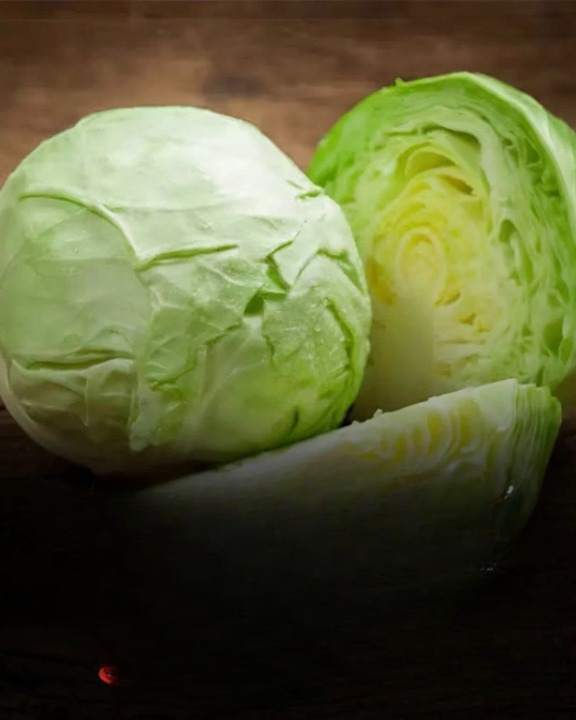
Cabbage has a reputation that borders on innocence. It’s cheap, widely available, packed into salads, soups, stir-fries, and fermented dishes across nearly every culture. For many, it represents the definition of “safe healthy food.” But like most things in nutrition, the truth isn’t universal—and for certain people, cabbage can shift from comfort food to something that quietly triggers very real problems.
This isn’t about fear or food shaming. It’s about biology. And biology doesn’t treat everyone the same.
When “Healthy” Doesn’t Feel Healthy
For a large portion of the population, cabbage is perfectly fine—even beneficial. It contains fiber, vitamin C, and compounds that support gut health and detoxification pathways. But the same properties that make it valuable for some can make it uncomfortable or even problematic for others.
One of the key concerns is its natural compound goitrin, found in cruciferous vegetables like cabbage. In large or frequent amounts—especially when eaten raw—goitrin may interfere with iodine uptake in the thyroid in sensitive individuals. For most people with healthy thyroid function and adequate iodine intake, this isn’t an issue. But for those with hypothyroidism or existing thyroid imbalance, excessive raw cabbage consumption may contribute to hormonal disruption over time.
It doesn’t mean cabbage is “dangerous.” It means dose, frequency, and individual condition matter more than blanket nutrition advice.
The Digestive System Doesn’t Always Agree
If you’ve ever eaten a large bowl of raw cabbage salad and later regretted it, you’re not alone.
Cabbage contains complex carbohydrates and sulfur-containing compounds that can be difficult for some digestive systems to break down. During fermentation in the gut, these compounds produce gas—sometimes a lot of it. For people with sensitive digestion, IBS, or gut inflammation, this can translate into bloating, cramps, discomfort, or irregular bowel movements.
This is why some people feel great after eating cabbage, while others feel like they’ve been “punished” for eating something healthy. The difference isn’t imagination—it’s gut microbiome variation and digestive sensitivity.
Cooking cabbage often helps significantly, breaking down some of the tougher fibers and making it easier on the stomach. But raw forms remain the most likely to trigger symptoms in sensitive individuals.
Histamines and Hidden Reactions
Another lesser-known aspect of cabbage—especially fermented versions like sauerkraut or kimchi—is its potential histamine content.
Histamines are natural compounds involved in immune responses. In fermented foods, they can accumulate. For people with histamine intolerance or sensitivity, this may lead to reactions that feel confusing or unrelated to food: skin itching, flushing, headaches, nasal congestion, or even eye irritation.
In more extreme but rare cases, individuals report stronger inflammatory responses, including visible redness or irritation in the eyes. While this is not common, it highlights an important truth: “healthy fermented food” is not universally safe for every immune system.
Kidney Sensitivity and Oxalates
Cabbage also contains oxalic acid, a naturally occurring compound found in many plant foods. In people with healthy kidney function, it is usually processed without issue.
However, for those with a history of kidney stones or impaired kidney function, oxalate intake can contribute to stone formation risk over time when consumed in large amounts or as part of a high-oxalate diet.
This doesn’t mean cabbage alone causes kidney stones. It means it can be one small factor in a larger dietary pattern that matters more for vulnerable individuals than for the general population.
The Bigger Misunderstanding About “Superfoods”
The problem isn’t cabbage.
The problem is the idea that any single food can be universally good for everyone.
Nutrition culture often divides foods into simplistic categories: superfoods, detox foods, anti-inflammatory foods. But real human bodies don’t read labels. They respond to chemistry, genetics, gut bacteria, immune sensitivity, and medical conditions.
For one person, cabbage may improve digestion and support gut bacteria diversity. For another, it may cause discomfort, hormonal sensitivity, or inflammatory reactions.
Both experiences are valid.
Listening to Your Body Matters More Than Trends
One of the most overlooked aspects of nutrition is personal feedback.
If a food consistently makes you feel bloated, fatigued, itchy, or uncomfortable, that is information—not weakness or overreaction. Your body is communicating in the only language it has.
The healthiest approach is not avoidance based on fear, but awareness based on response:
- Notice how your body reacts after eating cabbage
- Pay attention to raw vs cooked differences
- Watch portion sizes and frequency
- Consult a healthcare professional if symptoms are persistent or severe
Sometimes the solution isn’t eliminating a food entirely, but adjusting how you consume it.
So Should You Avoid Cabbage?
For most people: no.
For some people: possibly, or at least reduce it.
Cabbage is not an enemy—it is simply a food with compounds that interact differently depending on the person eating it. The key is not blind avoidance or blind enthusiasm, but awareness.
Because in nutrition, the most important rule is often the simplest one:
What nourishes one body may irritate another.