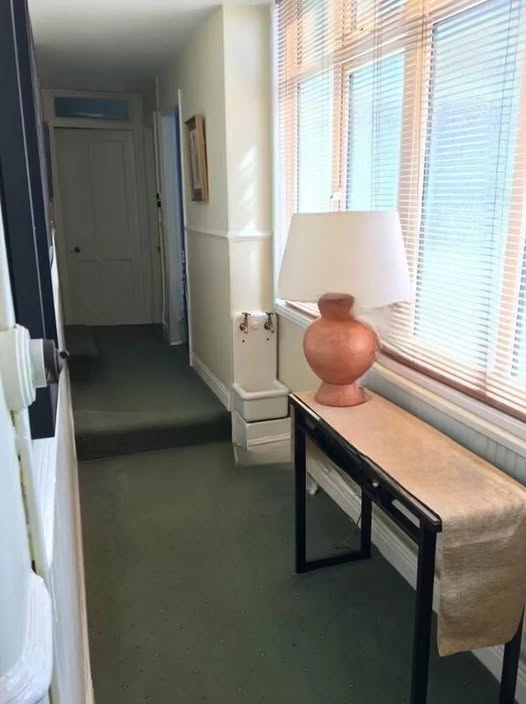
Walk through enough older homes, and eventually you’ll stumble across something that feels completely out of place.
A tiny sink.
Not in a bathroom.
Not in a kitchen.
Just sitting quietly in a hallway.
For many modern homeowners, the sight is baffling. Why would anyone install a sink in a corridor where people simply pass through? It seems impractical, unusual, and perhaps even the result of a remodeling mistake from decades ago.
Yet these small hallway sinks were not accidents.
In fact, they served a surprisingly practical purpose and offer a fascinating glimpse into how people lived before modern plumbing became commonplace.
A Different Time in Home Design
To understand hallway sinks, it helps to imagine life in the late 19th and early 20th centuries.
Today, most homes contain multiple bathrooms. Even modest houses often have a primary bathroom, a guest bathroom, and sometimes additional powder rooms.
That convenience simply didn’t exist in many older homes.
Indoor plumbing was still evolving, and many houses had only a single bathroom. In some cases, that bathroom was located upstairs or tucked away at the far end of the house.
A quick trip to wash your hands wasn’t always quick.
As a result, homeowners and builders looked for practical ways to improve everyday hygiene without adding expensive additional bathrooms.
The hallway sink became one of those solutions.
When Hallways Were More Than Passageways
Modern hallways are often little more than transitional spaces.
You walk through them on your way somewhere else.
But in older homes, hallways frequently played a much larger role in daily life.
They served as informal gathering spaces where family members paused to talk, guests removed coats and hats, and household activities flowed from one room to another.
Because these areas were central to the home’s daily movement, placing a small sink there made perfect sense.
Rather than climbing stairs or crossing multiple rooms to reach a bathroom, family members could wash their hands immediately upon entering the home or before sitting down for meals.
The sink was conveniently located where people already passed throughout the day.
The Rise of Modern Hygiene
The popularity of hallway sinks also coincided with major changes in public understanding of health and cleanliness.
During the late 1800s and early 1900s, scientific discoveries began transforming attitudes about hygiene.
As germ theory gained acceptance, people increasingly understood that cleanliness could help prevent illness.
Handwashing gradually became more important in everyday life.
However, homes weren’t designed with multiple wash stations the way many modern buildings are.
Kitchens were busy workspaces, and bathrooms were often limited in number.
Hallway sinks offered a practical compromise.
They provided a dedicated place for washing hands and freshening up without requiring an additional full bathroom.
For families embracing newer hygiene habits, that convenience was significant.
Small But Surprisingly Useful
Many hallway sinks were intentionally compact.
Some were barely large enough to comfortably wash both hands at once.
That wasn’t considered a flaw.
These sinks weren’t intended for bathing, laundry, dishwashing, or other large tasks.
Their purpose was simple:
- Washing hands
- Rinsing faces
- Freshening up after returning home
- Cleaning up before meals
Because they were designed for brief use, they could remain small and unobtrusive while still serving an important function.
In many homes, they featured separate hot and cold water taps, a common plumbing design of the era.
While adjusting the temperature often required some trial and error, the setup was considered perfectly practical at the time.
Solving a Common Household Problem
Imagine hosting a gathering in a home with only one bathroom.
Guests arrive, children run in from outside, and family members prepare for dinner.
Suddenly, everyone needs access to the same sink.
Without alternatives, congestion quickly develops.
The hallway sink helped ease that problem.
People could wash their hands without occupying the bathroom, leaving the primary facilities available for other needs.
In many ways, these sinks functioned much like today’s powder rooms or guest bathrooms—providing convenience without requiring a major expansion of the home’s plumbing system.
Why They Seem So Strange Today
One reason hallway sinks confuse modern homeowners is that their original purpose has largely disappeared.
Today’s homes prioritize privacy and convenience differently.
Additional bathrooms became common throughout the 20th century, reducing the need for standalone wash stations.
As lifestyles changed, hallway sinks gradually fell out of favor.
Many were removed during renovations.
Others remained in place but lost their original context.
As a result, modern observers often assume they served unusual purposes.
Common guesses include:
- Foot-washing stations
- Utility sinks
- Shoe-cleaning areas
- Decorative features
- Plumbing mistakes
The reality is far less mysterious.
They were simply practical solutions to everyday household needs.
Preserving a Piece of History
For homeowners lucky enough to still have one of these unusual sinks, they offer something increasingly rare: a visible connection to the past.
Every architectural feature tells a story about how people once lived.
Hallway sinks reveal an era when homes operated differently, when convenience wasn’t taken for granted, and when creative design solutions helped families adapt to limited plumbing infrastructure.
They’re reminders that many modern comforts evolved gradually rather than appearing overnight.
Still Useful Today?
Surprisingly, hallway sinks can still serve practical purposes.
A conveniently located sink remains useful for quick handwashing, gardening cleanup, or helping guests avoid crowded bathrooms during gatherings.
Even when they aren’t used regularly, they often become conversation pieces.
Visitors inevitably ask the same question:
“Why is there a sink in the hallway?”
And that simple question opens the door to a fascinating story about changing lifestyles, evolving hygiene practices, and the ingenuity of earlier generations.
A Small Feature With a Big Story
At first glance, a hallway sink looks like an odd design choice.
But once you understand its history, it becomes clear that it was a thoughtful response to the realities of everyday life in another era.
Before multiple bathrooms became standard, before modern plumbing made handwashing effortless, these small sinks helped bridge the gap between convenience and necessity.
So the next time you encounter one in an older home, don’t dismiss it as a strange relic.
Take a closer look.
That little sink once played an important role in daily life, helping generations of families stay clean, comfortable, and connected in a world that worked very differently from our own.
Sometimes the most puzzling features of old homes turn out to be the most practical—and the most interesting.