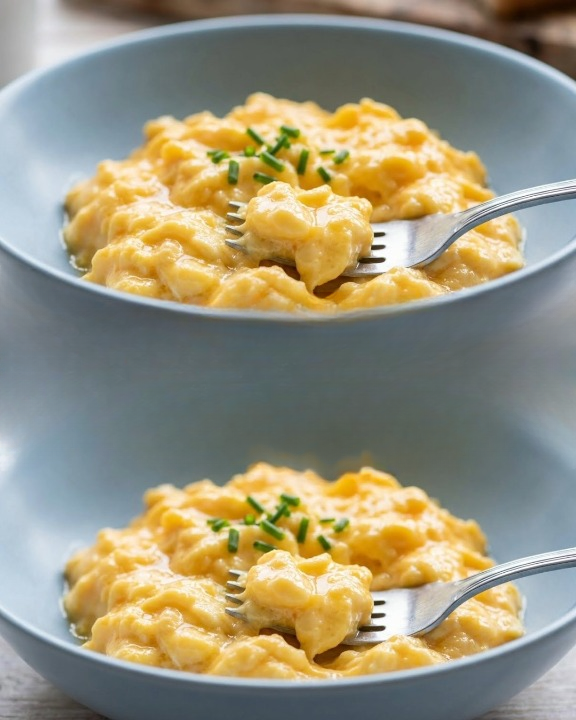
Scrambled eggs are often considered one of the simplest dishes in the kitchen. Most people learn to make them early in life: crack a few eggs into a bowl, whisk them together, pour them into a hot pan, and stir until cooked.
Simple. Familiar. Reliable.
But according to celebrity chef Gordon Ramsay, most of us have been making scrambled eggs the wrong way all along.
His now-famous scrambled egg technique has attracted millions of views online, inspired countless home cooks to rethink their breakfast routine, and transformed a basic morning staple into something that feels worthy of a fine-dining menu.
What makes the recipe so remarkable isn’t a long list of ingredients or complicated culinary skills. Instead, it’s a series of small but deliberate techniques that completely change the texture, flavor, and overall experience of eating scrambled eggs.
The result is a dish that’s creamy, silky, rich, and surprisingly luxurious.
The Difference Begins Before the Eggs Even Hit the Pan
One of the first things that surprises people about Ramsay’s method is what he doesn’t do.
Most recipes begin by whisking eggs in a bowl before cooking. Ramsay skips this step entirely.
Instead, he cracks the eggs directly into a cold saucepan and adds butter before any heat is applied. The mixing happens during the cooking process itself.
At first, this approach feels unusual. Many home cooks instinctively reach for a whisk because that’s how they’ve always done it.
Yet this simple change creates a noticeably different texture. Rather than starting as a fully blended liquid, the eggs gradually come together while cooking, producing softer curds and a more delicate consistency.
The Secret Is Constant Heat Control
Perhaps the most important part of the recipe is the way the eggs are cooked.
Instead of leaving the pan on steady heat, Ramsay repeatedly moves it on and off the burner throughout the cooking process.
For approximately thirty seconds, the pan remains on the heat while the eggs are stirred continuously. Then it is removed from the heat for about ten seconds while the stirring continues.
This cycle repeats several times.
Although it may seem unnecessary, this technique gives the cook precise control over how quickly the eggs cook. The result is eggs that remain soft and creamy instead of becoming dry or rubbery.
Many people don’t realize how quickly eggs can overcook. Even after leaving the stove, residual heat continues cooking them.
By constantly controlling the temperature, Ramsay prevents that common problem.
Butter Plays a Bigger Role Than Most People Realize
Butter isn’t merely added for flavor.
In this recipe, it becomes part of the cooking process itself.
As the butter melts and combines with the eggs, it contributes richness while also helping create the silky texture that has made this dish famous.
The butter integrates gradually as the eggs cook, producing a consistency that feels closer to a delicate custard than traditional scrambled eggs.
The result is surprisingly luxurious for a dish made from ingredients most people already have in their refrigerator.
The Ingredient That Changes Everything
Just when the eggs appear finished, Ramsay introduces a final ingredient that many home cooks rarely use.
A small spoonful of crème fraîche.
This addition serves two important purposes.
First, it slightly cools the eggs, helping stop the cooking process before they become overdone.
Second, it adds an extra layer of creaminess and richness that elevates the entire dish.
While some people substitute sour cream or omit the ingredient altogether, those who try the original version often describe it as the step that truly transforms the recipe.
It adds subtle tanginess while enhancing the smooth texture that makes the eggs so memorable.
Even the Seasoning Is Different
Another surprising aspect of the method involves salt.
Most cooks season eggs before cooking.
Ramsay waits until the very end.
The reasoning is simple. Adding salt too early can draw moisture from the eggs and alter their texture during cooking.
By seasoning after the eggs are nearly finished, he preserves their creamy consistency while still delivering plenty of flavor.
It’s a small adjustment that many people report makes a noticeable difference.
Why So Many Home Cooks Love This Recipe
Part of the appeal lies in its simplicity.
The recipe requires only a handful of ingredients:
- Eggs
- Butter
- Salt
- Pepper
- Crème fraîche
- Fresh chives (optional)
There are no complicated sauces or expensive ingredients.
Instead, the focus is entirely on technique.
That’s what makes the recipe so satisfying to master. Once people understand the rhythm of moving the pan on and off the heat, they often find themselves producing restaurant-quality scrambled eggs in just a few minutes.
The Perfect Pairing
These eggs are often served with toasted bread, particularly sourdough, which provides a crisp contrast to the soft texture of the eggs.
Some people add smoked salmon, avocado, or sautéed mushrooms, but many prefer them completely plain.
When a dish is prepared this carefully, it doesn’t need much else.
A hot cup of coffee and a slice of toast are often enough.
A Lesson in Cooking Fundamentals
Perhaps the most interesting thing about Ramsay’s scrambled eggs isn’t the recipe itself.
It’s what the recipe teaches.
Great cooking isn’t always about complicated ingredients or advanced techniques.
Sometimes it’s about paying closer attention to details.
Heat.
Timing.
Texture.
Patience.
By approaching even a humble breakfast food with care, Ramsay demonstrates how small adjustments can completely transform the final result.
Final Thoughts
For many people, scrambled eggs are simply a quick breakfast eaten without much thought.
But Gordon Ramsay’s approach turns them into something special.
Creamy rather than dry.
Rich rather than bland.
Elegant rather than ordinary.
The method may feel unfamiliar at first, especially if you’ve spent years making eggs the traditional way. Yet countless home cooks who try it discover that the extra attention pays off immediately.
After one bite, it’s easy to understand why this recipe has become famous around the world.
Because sometimes the simplest dishes are the ones that reveal just how much difference technique can make.