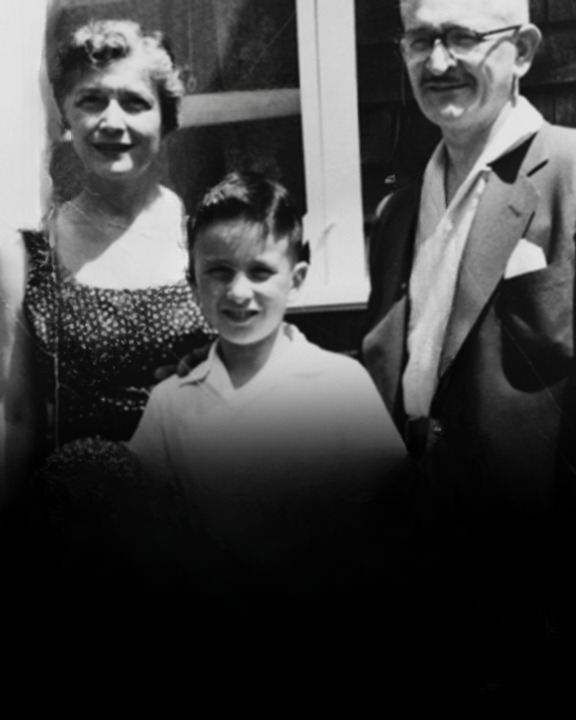
Some careers rise smoothly, step by step, almost predictably. Others fracture early, shaped by instability and loss, and only later find a form strong enough to hold them together. The life of Don McLean belongs firmly to the second category—a story where rejection, grief, and persistence eventually converged into one of the most recognizable songs in modern music history.
Long before fame, McLean’s childhood carried a weight that would later echo through his writing. He grew up in an environment marked by emotional volatility and physical punishment, experiences he has spoken about in later years with unusual candor. There was little sense of safety or consistency, even within the family structure that should have provided it. His sister’s struggles with addiction added another layer of instability, a quiet but persistent undercurrent of tension that shaped his early understanding of the world.
But the moment that altered him most came when he was fifteen.
His father—his emotional anchor—collapsed and died in front of him. The suddenness of the loss left no room for comprehension. It wasn’t simply grief; it was disorientation at the collapse of the only stability he had known. McLean would later describe crying for two years, a statement that reflects not just sadness but the prolonged psychological aftermath of early trauma.
Alongside grief came a lingering, irrational guilt. The kind that often follows traumatic loss in adolescence—the belief that something could have been done differently, even when logic says otherwise. That emotional residue stayed with him, quietly shaping how he processed life, relationships, and eventually, art.
Music became the first place where that inner pressure could go.
Because of asthma, McLean spent extended periods away from typical school life, often in isolation. In that space, he began teaching himself guitar and studying voice control with unusual discipline. His breathing technique became a defining feature of his singing style, allowing him to hold long, uninterrupted vocal lines that carried emotional intensity without breaking. What began as adaptation became artistry.
Still, early talent did not translate into immediate success. Before recognition arrived, McLean endured rejection after rejection—reportedly more than seventy times. Record labels dismissed him. Opportunities evaporated. For many aspiring musicians, that level of rejection becomes the end of the story. For McLean, it became repetition—another version of endurance layered onto everything else.
When his debut album Tapestry (Don McLean album) arrived, it was met with modest attention rather than breakthrough acclaim. It was respected but not transformative. The shift would come two years later with a song that would define not only his career, but an era of American music.
That song was American Pie.
At first listen, it felt like a simple folk-rock narrative. But it quickly revealed itself as something far more complex: a layered meditation on cultural change, memory, and loss, partially inspired by the death of Buddy Holly and the shifting identity of post-1950s America. McLean himself once called it a “rock’n’roll dream sequence,” though even that description feels insufficient for its cultural weight.
The song didn’t just succeed commercially—it became a phenomenon. Listeners debated its meaning, dissected its lyrics, and projected their own interpretations onto its sprawling structure. It reached the top of the charts, sold millions of copies, and turned McLean into a global figure almost overnight.
But fame did not simplify his life.
Even as his career expanded, his personal world remained complicated. Relationships strained under pressure, marriages ended, and public narratives about his life became increasingly conflicting over time. As with many artists of his scale, the contrast between public success and private difficulty created a lasting tension that followed him through later decades.
Yet McLean’s work continued to show a different side of him—one rooted in empathy and observation. Songs like Vincent demonstrated a sensitivity that extended beyond autobiography. Inspired by Vincent van Gogh, the song became a portrait of another person’s isolation, translating visual art into emotional sound. It remains one of his most enduring works precisely because it feels inhabited rather than performed.
That duality—between internal pain and external expression—sits at the center of McLean’s legacy.
The boy who grew up in instability and loss did not disappear; he became the lens through which the artist understood the world. The rejection he endured before success did not vanish either; it became part of the resilience that sustained him long enough to create work that would outlive the circumstances that shaped it.
Today, McLean stands as a figure defined not only by achievement but by contradiction. His music is celebrated for its emotional depth, even as his personal history remains complex and, at times, disputed in its interpretation. But that complexity is also what makes his story human.
Because beneath the fame and analysis, there remains a consistent thread: a young man who experienced loss too early, searched for meaning in sound, and eventually created music that gave shape to feelings others struggled to name.
Rejection did not end his story.
It became part of its foundation.
And from that foundation came a song that continues to echo across generations—not because it explains everything, but because it allows people to feel something they recognize, even if they cannot fully define it.