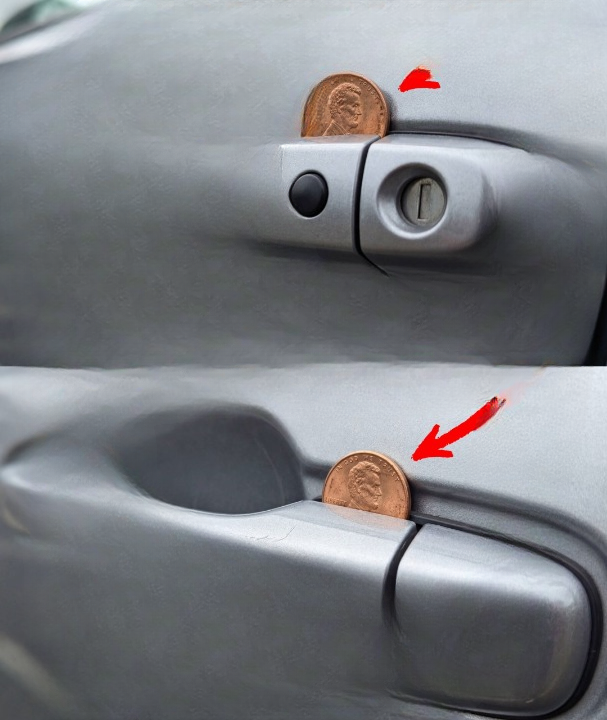
You’re walking toward your car in a parking lot, keys in hand, thinking about your next destination. You press the unlock button — or insert your key — and something doesn’t feel right. The lock doesn’t respond as expected. The door won’t open smoothly. For a moment, you assume it’s just a mechanical issue.
Then you notice something unusual: a coin wedged inside the passenger-side door handle.
Your mind starts racing. Was this accidental? Is it harmless? Or could it be connected to a vehicle tampering attempt?
Over the years, stories have circulated online suggesting that criminals sometimes place small coins—often pennies or nickels—into car door handles as part of a distraction or interference tactic. While there is no widespread verified data proving this is a common theft method, it’s still worth understanding what the claim involves, how modern car locks work, and what practical steps you should take if you notice something out of place.
In this comprehensive guide, we’ll explore:
-
The origin of the coin-in-door-handle claim
-
How vehicle locking systems function
-
Whether this tactic is technically plausible
-
What you should do if you spot something unusual
-
Practical, proven vehicle safety strategies
-
Why critical thinking matters when evaluating viral warnings
Let’s take a calm, evidence-based look at the situation.
Where Did the Coin-in-the-Door-Handle Story Come From?
The idea gained attention through viral social media posts and articles shared across automotive blogs and lifestyle websites, including outlets such as MotorBiscuit.
According to the circulating story, a small coin is inserted into the passenger-side door handle. The claim suggests this prevents the central locking system from fully engaging, leaving the vehicle unsecured while the owner believes it’s locked.
However, it’s important to stress:
-
Law enforcement agencies have not widely confirmed this as a common tactic.
-
There is limited documented evidence supporting widespread use of this method.
-
Many automotive security experts classify it as an urban legend or highly situational possibility.
That doesn’t mean tampering never happens. It simply means we should approach the claim thoughtfully rather than fearfully.
How Modern Car Locking Systems Actually Work
To evaluate whether a coin could interfere with your vehicle, it helps to understand how locking systems function.
Most modern vehicles rely on:
-
Electronic central locking systems
-
Key fob remote signals
-
Internal latch mechanisms
-
Computerized security modules
When you press your key fob:
-
A radio signal is sent to the vehicle.
-
The vehicle’s control unit activates internal lock actuators.
-
The locking mechanism engages from inside the door panel.
In many newer vehicles, the exterior keyhole isn’t even connected directly to the full locking system. It’s often a backup feature.
Because of this design, simply placing a coin in the exterior handle may not realistically disable the electronic locking system in most modern cars.
However, in older vehicles with purely mechanical locking systems, interference might theoretically be possible if something obstructs the latch movement.
Why the Passenger-Side Door Is Often Mentioned
The viral explanation typically focuses on the passenger-side door. The reasoning behind this claim is that drivers usually check the driver’s side first. If that side appears locked, they may assume the entire vehicle is secure.
If the passenger-side mechanism were obstructed and prevented from locking properly, the vehicle might remain partially unsecured.
Again, while theoretically possible in certain older mechanical systems, this is not widely documented as a common criminal technique.
The Psychology Behind Viral Safety Warnings
Stories like this spread quickly because they tap into common fears:
-
Being watched without knowing
-
Being targeted unexpectedly
-
Losing control of a situation
-
Personal safety concerns
When a warning is simple (“If you see a penny, it means trouble”), it’s easy to remember and share.
But viral safety tips often lack nuance. Some are based on isolated incidents. Others are misunderstandings. A few are entirely fabricated.
That’s why balanced awareness is more helpful than alarm.
What Should You Do If You Notice a Coin in Your Door Handle?
Whether the coin is harmless, accidental, or intentional, the smartest response is calm and methodical.
Step 1: Stay Calm
Avoid jumping to conclusions. A coin could have been placed there accidentally or even as a prank.
Step 2: Assess Your Surroundings
Take a quick look around:
-
Is the area well lit?
-
Are there people nearby?
-
Do you feel safe?
Trust your instincts without panicking.
Step 3: Avoid Immediate Distraction
If something feels unusual:
-
Don’t fumble with your phone excessively.
-
Don’t crouch down in a vulnerable position.
-
Maintain awareness of your environment.
Step 4: Remove the Object Carefully
If safe to do so, remove the coin or foreign object and inspect the handle.
Step 5: Test Your Locks
Use your key fob to:
-
Lock the vehicle.
-
Unlock it.
-
Confirm all doors respond properly.
Step 6: If You Suspect Tampering
If you notice:
-
Scratches around the lock
-
Loose handles
-
Unusual resistance
-
Damage to wiring
Contact local authorities or a trusted mechanic for inspection.
Important: Not Every Coin Indicates Criminal Activity
It’s entirely possible that:
-
Someone accidentally dropped it.
-
A child placed it there.
-
It slipped from a pocket and lodged in the handle.
-
It was a random act with no malicious intent.
Not every unusual object signals danger.
Critical thinking is essential.
Common Vehicle Theft Methods (Backed by Data)
Rather than focusing on viral myths, it’s more helpful to understand verified theft techniques.
Modern vehicle theft often involves:
1. Keyless Entry Relay Attacks
Criminals use signal amplifiers to capture your key fob’s radio signal from inside your home.
2. Key Reprogramming Devices
Some tools can reprogram electronic keys via onboard diagnostics ports.
3. Physical Break-Ins
Smashing windows remains one of the most common theft methods.
4. Unlocked Vehicles
Surprisingly, many thefts occur simply because vehicles were left unlocked.
Focusing on proven vulnerabilities is more productive than worrying about unlikely scenarios.
Practical Ways to Improve Vehicle Security
Regardless of the coin myth, strong vehicle security habits are always wise.
Park Smart
-
Choose well-lit areas.
-
Park near building entrances.
-
Avoid isolated corners of parking lots.
Lock Every Time
Even if stepping away briefly, always lock your vehicle.
Remove Valuables
Visible electronics, bags, and purses invite opportunistic theft.
Use Steering Wheel Locks
Visible deterrents reduce the likelihood of targeting.
Install a Car Alarm
Modern alarm systems add additional protection layers.
Consider GPS Tracking Devices
Tracking systems can help recover vehicles if stolen.
Understanding Mechanical Interference: Is It Technically Possible?
In older vehicles with manual locks:
-
An obstruction in the handle could interfere with movement.
-
A lodged object might prevent the latch from fully engaging.
However, modern car designs separate exterior handle movement from central locking motors. A coin would likely not disable electronic locking.
Automotive engineering has evolved significantly over the past two decades.
Why Urban Legends Persist
Urban legends endure because they:
-
Offer simple explanations
-
Provide a sense of “inside knowledge”
-
Encourage sharing as a warning
-
Appeal to safety instincts
They often mix a small possibility with dramatic storytelling.
But when examined closely, many lack consistent documentation.
When to Contact Authorities
You should contact law enforcement if:
-
You see someone actively tampering with vehicles.
-
Your car shows signs of forced entry.
-
Property is missing.
-
You feel unsafe in your environment.
Avoid calling emergency services based solely on a coin unless there are additional suspicious factors.
Situational Awareness: Your Best Defense
Instead of focusing on a single tactic, cultivate general awareness:
-
Walk confidently.
-
Keep keys ready before reaching your vehicle.
-
Avoid prolonged phone use while walking alone.
-
Scan parking areas before unlocking your car.
Preparedness is more effective than paranoia.
Technology Has Changed Car Theft
Modern vehicles often include:
-
Immobilizer systems
-
Encrypted key fobs
-
Rolling security codes
-
Alarm-triggered alerts to smartphones
These features make simple mechanical tricks less viable than in decades past.
If your vehicle is newer, it likely includes advanced protections.
What Automotive Experts Say
Many automotive professionals note:
-
They rarely encounter confirmed cases involving coins.
-
Lock failures are usually mechanical wear issues.
-
Central locking malfunctions are typically electrical.
Routine maintenance often explains locking problems more than tampering does.
Could This Tactic Ever Work?
In theory, yes — under specific circumstances:
-
Older vehicles
-
Purely mechanical locking systems
-
Poorly maintained door mechanisms
But as a widespread organized theft strategy? There is limited credible evidence supporting that claim.
Balanced Perspective Matters
It’s wise to be cautious.
It’s unwise to assume every anomaly equals danger.
Being informed means:
-
Staying aware
-
Evaluating evidence
-
Responding calmly
-
Avoiding viral panic
Extra Safety Tips for Parking Lots
Parking lots are common locations for vehicle-related crimes. Improve safety by:
-
Parking under lights
-
Holding keys between fingers only if comfortable (not as a weapon)
-
Walking with purpose
-
Returning to stores if feeling unsafe
-
Using security escorts when available
Personal awareness reduces vulnerability.
What If the Lock Truly Doesn’t Work?
If your key won’t turn:
-
Try another door.
-
Use the key fob.
-
Replace key fob batteries.
-
Inspect for debris in the keyhole.
-
Consult a mechanic.
Lock cylinders can fail due to:
-
Dirt buildup
-
Rust
-
Mechanical fatigue
-
Temperature changes
Mechanical failure is often more likely than sabotage.
How to Reduce Anxiety About Viral Warnings
When encountering viral safety claims:
-
Check multiple reputable sources.
-
Look for official law enforcement statements.
-
Avoid relying solely on social media posts.
-
Separate anecdotal stories from documented trends.
Information literacy is part of modern safety.
Are There Similar Parking Lot Myths?
Yes. Other widely circulated but poorly documented claims include:
-
Zip ties on car handles as tracking signals.
-
Bottles behind tires indicating stalking.
-
Flyers on windshields used for abduction setups.
While isolated incidents may occur, widespread organized patterns are rarely confirmed.
That doesn’t mean ignore everything — just evaluate carefully.
The Bigger Picture: Vehicle Safety Is Multi-Layered
True vehicle protection involves:
-
Smart parking habits
-
Consistent locking
-
Physical deterrents
-
Electronic security
-
Insurance coverage
One small coin is unlikely to bypass multiple security systems.
Final Thoughts: Awareness Without Alarm
If you ever notice a coin lodged in your car’s door handle:
-
Stay calm.
-
Check your surroundings.
-
Remove it if safe.
-
Verify your locks function correctly.
-
Seek help only if additional suspicious signs are present.
While the story of the “penny trick” continues circulating online, there is limited verified evidence showing it as a common or effective criminal method — especially for modern vehicles.
However, the broader message still holds value:
Stay aware.
Protect your vehicle.
Think critically.
Avoid panic.
Vehicle safety isn’t about reacting to every viral warning. It’s about building consistent habits that reduce risk in practical, realistic ways.
And sometimes, a coin in your door handle might just be… a coin.
By focusing on informed awareness rather than fear, you stay safer — and smarter — wherever the road takes you.